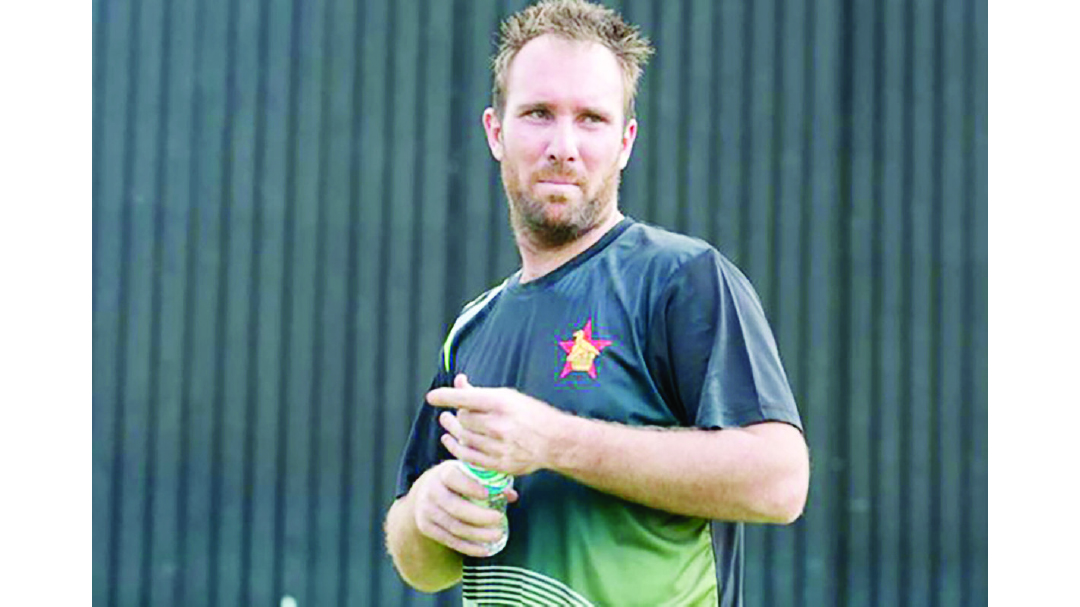
FORMER Zimbabwe cricket captain Brendan Taylor is set to return to international cricket after serving a three-and-half year ban for breaching the sport’s anti-corruption code.
Taylor has been named in Zimbabwe’s 16-member squad for the second Test against New Zealand next week.
“I certainly did think it was all done, but here I am — and it’s an overwhelming feeling of gratitude,” Taylor said in a statement issued by Zimbabwe Cricket on Wednesday.
“I have to pinch myself a little to realise that I’m actually here. I’ve been soaking it all up and embracing every moment. It’s just been a really nice integration.
“The last year and a half has certainly been dedicated to my return. I’ve put in an immense amount of work — from fitness to the technical side to diet — and I’m feeling a lot leaner, fitter and mentally stronger.
“That’s only been possible through sobriety.”
The ICC banned Taylor in January 2022 after he admitted to four charges under the anti-corruption code stemming from an incident in 2019 when he said he accepted US$15,000 from businessmen in India, who asked him to fix international games.
Taylor claimed he took the money but never fixed any games.
He also was found guilty of an anti-doping offense after testing positive for the stimulant Benzoylecognine, which is a cocaine metabolite.
Taylor’s return to international cricket comes 25 years since Hansie Cronje’s life was turned upside down, and cricket was thrown into crisis, by a scandal which rocked the sport.
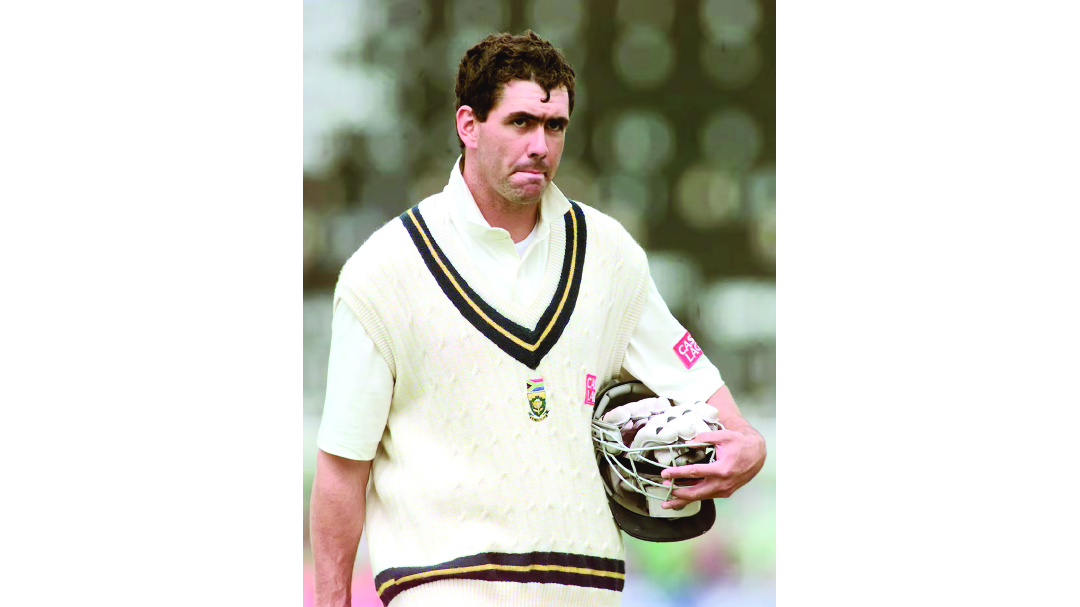
Cronje was handed the captaincy of the Proteas in 1994 and his astute tactics and calm assurance gave him a statesmanlike air as he turned the team into a formidable international side.
However, there was a darker side to Cronje. Especially when it came to money.
A love of money meant Cronje was also one of the most accessible cricket captains around and he was regularly visited by people, particularly while on tour in South Asia.
It led to dealings with unscrupulous characters.
In particular, those involved with betting, and there was an early portent of what was to come in 1996.
Before a one-off ODI between South Africa and India, tagged on to the end of a Test tour as a benefit match for Mohinder Amarnath, Cronje called a meeting in their Mumbai hotel for the players to consider an offer of US$250,000 to throw the match.
It was rejected, but it showed how secure Cronje was in his position.
Fast forward to Nagpur in 2000, Cronje attempted to coerce South Africa batter Herschelle Gibbs and seam bowler Henry Williams into spot-fixing offences.
Both men agreed, but subsequently did not carry out the instructions.
Both Gibbs and Williams were non-white players but suggestions it was racially motivated are dismissed by those who know Cronje.
INDIAN POLICE FILES
When Delhi police released transcripts of recorded conversations between Cronje and Indian bookmaker Sanjeev Chawlar in early April 2000 it was met with denials from the man himself and South African cricket officials, and wider disbelief.
Cronje was initially identified in the calls by a quirk of fate.
Pradeep Srivastava, the deputy commissioner of Delhi’s crime department, had been working on extortion cases and taken some tapes home with him.
One of Srivastava’s children had listened to a wire-tap cassette, left in the home hi-fi system, and asked his father why he had a recording of Cronje’s voice.
Srivastava’s son had watched a post-match interview with Cronje on Indian television the previous day and recognised his voice.
With the net closing, Cronje came clean.
At 3am on 11 April 2000 he confessed to Rory Steyn, a South African security consultant working for the Australia cricket team, in a Durban hotel where the pair were staying.
“I walked into his suite and all the lights were on,” Steyn remembered.
“He had a handwritten document and said ‘you may have guessed, but some of the stuff that is being said against me is actually true’.”
A couple of months later, Cronje attended the King Commission where he was offered immunity from prosecution in exchange for full disclosure.
During three days of cross examinations, broadcast on television and radio, which gripped South Africa and the cricket world, Cronje gave his side of the story.
Or at least some of it, given the input of his own lawyers.
He admitted to taking large sums of money, as well as accepting a leather jacket ffor his wife Bertha, in exchange for giving information to bookmakers and asking his team-mates to play badly.
But he claimed South Africa had never “thrown” or “fixed” a match under his captaincy.
“To my wife, family, and team-mates, in particular, I apologise,” he said during a rather robotic reading of an opening statement lasting 45 minutes.
Cronje was banned from cricket for life, unsuccessfully challenging the suspension.
DEATH IN THE MOUNTAINS
Further investigations into the truth of what Cronje said during the inquiry were halted when he died in a plane crash in June 2002.
Cronje boarded a small cargo aircraft in Johannesburg which went down in mountainous terrain amid poor weather conditions while attempting to land at George airport.
Cronje, then working as an account manager for a manufacturer of heavy-duty construction equipment, was flying back to see his wife at their home near Fancourt Estate, a luxury golf resort.
His death was put down to weather, pilot error and possible instrument failure, but nevertheless prompted conspiracy theories.
Former Nottinghamshire captain Clive Rice, who played three ODIs for South Africa, called Cronje’s death “very fishy” and linked it to the subsequent death of Bob Woolmer, the former South Africa coach who was in charge of Pakistan when he died.
“Certain people needed him [Cronje] out. Whether it was one, two, or 15 people that were going to die it didn’t matter,” said Rice, who passed away in 2015.
“Hansie was the one that was going to have to go and if they could cover it up as a plane crash then that was fine.”
Eerily, Cronje himself had predicted in speeches, and written in a magazine, of the potential to “die in plane crash” because of the “constant travel by air”.
Ed Hawkins, a specialist betting investigative journalist, dismissed the notion that bookmakers were somehow behind the incident.
“I’ve never found any information basically worth my time or effort to launch a full-scale investigation,” Hawkins said.
Steyn called it “ludicrous” to suggest there was a “conspiracy to murder him by bringing the plane down.”
Cronje’s ashes were placed in a memorial at his beloved Grey College.
A generation has now passed since the former South Africa captain’s murky involvement with bookmakers came to light, but his legacy remains a complex one.
His death at the age of 32 meant he was denied an opportunity at redemption within a sport he felt so connected to. The currency Cronje should have been remembered for was the number of runs he scored as an inspirational captain, rather than deposits in bank accounts in his name in the Cayman Islands. – Sports ReporterBC Sport/Arab News