Chronicle Editor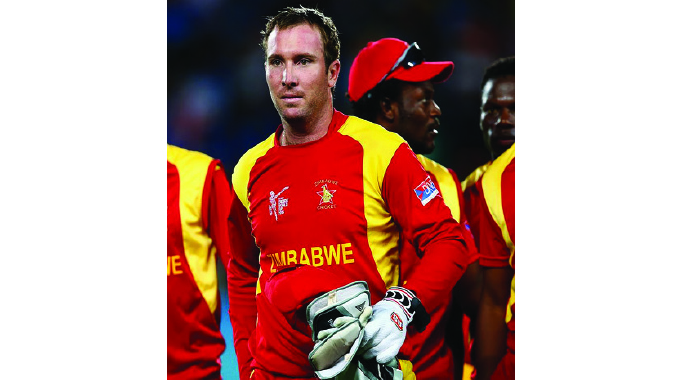
Ricky Zililo, Senior Sports Reporter
THE random selection of athletes for drug tests could have helped disgraced former Zimbabwe cricket captain Brendan Taylor escape being nabbed after he admitted playing some matches while high on cocaine for about two-and-a-half years.
Taylor was banned from all forms of cricket for three and a half years after pleading guilty of breaching the International Cricket Council (ICC) Anti-Corruption Code and the ICC Anti-Doping Code.
He also tested positive for cocaine in his last match for Zimbabwe in Ireland last year.
Taylor was nabbed in September last year in Belfast when anti-doping officials selected him for a random test and he retained a positive result for the stimulant Benzoylecognine, a cocaine metabolite.
The former Zimbabwe wicketkeeper and batsman had initially claimed to have only used cocaine during a drunken orgy in a hotel room in India after being tapped for spot-fixing by Indian bookmakers in October 2019 when he collected a down payment of US$15 000.
Upon his return from India and before failing a doping test, Taylor played six Tests between February 2020 and July 2021 against Sri Lanka (2), Bangladesh (1) and Pakistan (3).
During the same period, he played seven T20s, against Bangladesh (2) and Pakistan (5).
He also played in 12 one-day internationals against Bangladesh (3), Pakistan (6) and three against Ireland.
By his own admission to the Daily Mail, Taylor said he beat the doping system in between the tours.
“I might have beaten a few tests in the past two-and-a-half years, but it got me when I was heading for destruction,” he said.
“By then, I’d given up on cricket and where I was going in life. I locked myself in rooms for hours and hours and somehow managed to train with no sleep. If you live by the sword, I guess you die by the sword.”
But how did he manage to go for so long undetected and does this expose Zimbabwean sport’s anti-doping system?
“Testing is done randomly and he might have been lucky that during those periods of testing he wasn’t picked.
The other thing might be that maybe at the time that he was being tested he wouldn’t have used any prohibited substance,” said Nicholas Munyonga, head of sport’s anti-doping agency.
“I must hasten to say ZC is one of the sport codes that does lots of testing.
With so many games, target testing is mostly random in competitions.
There’s nothing exposing us as a country because tests are done, we carry out anti-doping education programmes.
“Everything is done according to international standards.
There are six international standards that we follow.
Even the education in as far as doping is concerned is done per international standards and the sample analysis is done per international standards.
So, the code is the same as that of the world anti-doping.
It’s the same code used by any national association, country, international federation and any major games organisers.
Therefore, there’s no compromise in our anti-doping systems.”
Munyonga said his agency hasn’t received complaints warranting target testing of athletes.
He said in Taylor’s case, “what’s more important from a sporting view is to be quick to identify athletes that are having mental health problems.
Mental health is a reality, we’ve seen it happening at international level where certain athletes have withdrawn from competitions because of mental health issues.
At the end of the day there’s a lot of work that we need to do that can assist these athletes.”
He said the Sports Integrity Bill that the Ministry of Youth, Sport, Art and Recreation is working on seeks to address issues of doping and match-fixing.
“The Sports Integrity Bill covers issues that relate to illegal betting, match-fixing and doping control.
All these issues need to be addressed holistically and I’m quite happy that the Ministry is working on a bill that will work as a tool to put up policies that will ensure we enhance and support our athletes,” said Munyonga.
A local counsellor Mthandazo Ndlovu said: “A big percentage of our sports people take substances that harm their bodies in the long run and what is important is to keep on educating them about the dangers this poses.
“In Taylor’s case, my hope is that he rehabilitates fully and the first step is admitting that he has a problem, which he has done.
Being honest to oneself from the start of the process is key to rehabilitation.”
Ndlovu has been conducting awareness programmes in Bulawayo and most football teams hire him to counsel their players and warn them about the long-term dangers of substance abuse.
– @ZililoR


 Online Reporter