Online Reporter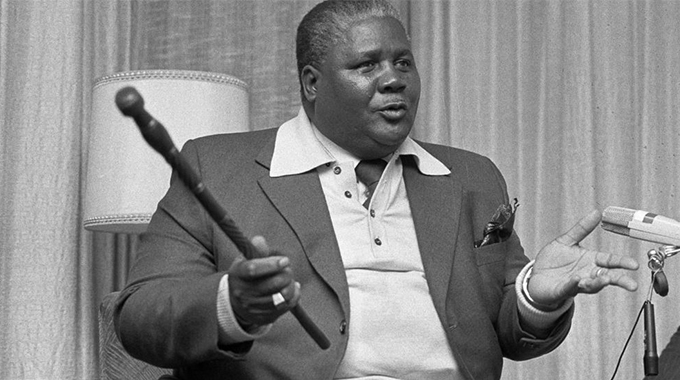
Bruce Ndlovu, Sunday Life Reporter
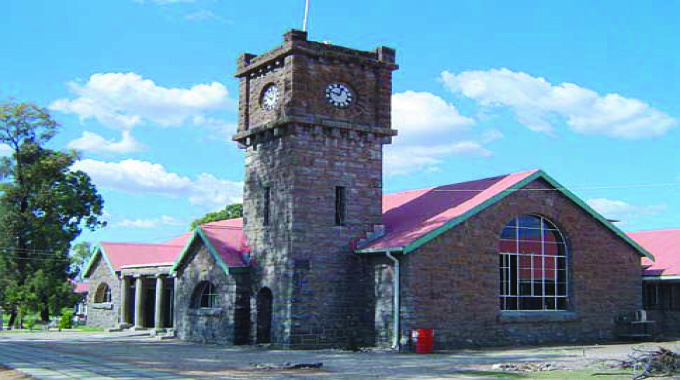
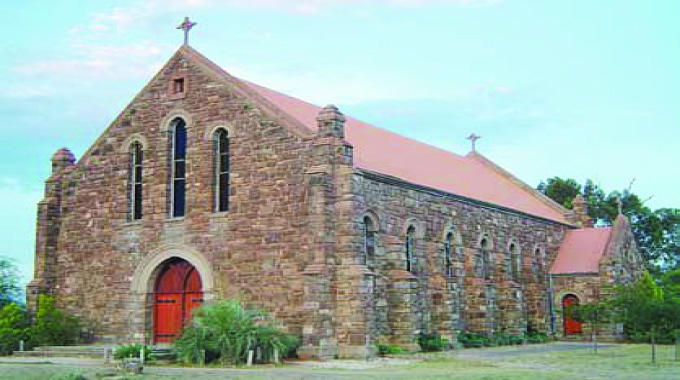
IF one were to visit St Joseph’s (Semokwe) in Kezi, Matabeleland South Province, they might be forgiven for thinking they had stumbled into a small urban hub rather than a remote rural outpost.
Getting there is not easy, the road is not for the faint-hearted. It is a rugged, dusty trail, where the terrain threatens to separate your skeleton from your skin, depending on the vehicle one is travelling in.
While the rural sights can be breath-taking, it is a journey that demands to be endured, not enjoyed. After a gruelling journey through this notoriously dry patch of the country, St Joseph’s feels like an oasis strategically dropped in the middle of a desert. Here, businesses, ranging from hardware shops to restaurants, pubs and bars, thrive, adding a distinct urban flavour to the rural backdrop.
In one corner, a state-of-the-art fuel station has sprung to life, quenching the thirst of the few cars that pass through its gates during long, heat-soaked days.
In another corner, a large mall is beginning to take shape. If you ask young businesspeople, they will tell you that business is thriving in the area because of the enterprising spirit that seems to possess young people who hail from the area.
If you ask older villagers, however, some might whisper the name of Thomas Nyongolo Letswansto Nkomo, the father of the late liberation icon and Vice-President, Joshua Mqabuko Nyongolo Nkomo.
Back in the day, when the country’s populace was expected to be subservient, suppressing any hints of business acumen or ambition, Nyongolo broke new ground, establishing a guest house and tea room near the southern gate of St Joseph’s Mission. This was after his return from the prestigious Tiger Kloof Educational Institute in South Africa, where he was sent to study by the London Missionary Society.
“He was one of three people sent to Tiger Kloof College by missionaries to do their studies,” recalled Father Innocent Makawule Ndlovu, the parish priest at St Joseph’s Mission.
“He was sent together with Ntelela Malaba and Mahlathini Ncube. When they came back, they seemed to have collectively agreed to have children because Thomas Nyongolo sired Joshua Mqabuko in 1917 and Mahlathini sired Ester Ncube in 1923. At the same time, Ntelela also had a child.”
When he returned to his native Zimbabwe, Nyongolo was not only driven by his desire to start a family, but he was also moved by the need to revolutionise business for black people in his home area.
“When he was at St Joseph’s, Nyongolo had a very good relationship with the priests. Due to that symbiotic relationship and rapport that existed between the missionaries and Nyongolo, we saw him opening a then state-of-the-art guest house within the premises of the mission. This is something that would not have happened if he had not had a good relationship with the church,” he said.
At first, the idea of selling tea sounded bizarre to villagers at St Joseph’s. After all, this was something that many thought was meant to be given out for free. But Nyongolo had other ideas.
In his tea room, tea was not just served — it was performed. Villagers were taught etiquette, blowing on hot tea was frowned upon and slurping was taboo. Customers were not just served tea, they were educated on how to drink it with grace and dignity. His tea room was part café, part classroom.
“With this move, he revolutionised entrepreneurship in the region because you can imagine how revolutionary it was for someone to open a tea house in the 1950s. Black people in those days knew tea as something that was just given out. Most did not know that it was something that could be sold, and that coffee shops were something that existed. Tea without milk is called, umphahambe, which translates to ‘give him or her’ so he can be on his way.’ It is something that you give to a visitor to get rid of them. Once they drink their tea, they can be on their way,” said Father Ndlovu.
While his son became famous for leading the liberation struggle that finally brought independence to Zimbabwe, Father Ndlovu said the actions of Nyongolo were also crucial in pioneering a spirit of entrepreneurship that endures to this day.
After all, the war his son waged was not only about political independence but economic liberation.
“So, we are grateful that Thomas Nyongolo changed the concept of what tea is to the ordinary person. Despite the fact that we were in the rural areas, our people did not deserve to drink inferior tea. They could drink well-made tea, with milk and it could be served with bread that was buttered with margarine and jam. So, it was a move that was seen as serving the community and the people responded accordingly. Nowadays, we have a lot of restaurants that have mushroomed precisely because Thomas Nyongolo Nkomo revolutionised that concept. Before him, cooked food was not widely sold back then. Such a move, in those times, was revolutionary on its own and it has cascaded down to today’s generation,” he said.
Father Ndlovu said his father’s approach to life and his values might have played a role in spurring Joshua Nkomo to turn into the leader that he eventually became.
With the Nyongolo family already firmly established in the area due to his father’s business acumen, Joshua would find it a lot easier to sell his ideas to the community on his return.
“After the death of Thomas Nyongolo, his son did a lot of work fighting for the liberation of the country. He was eventually detained at his homestead and he was followed everywhere by white policemen. At that time, he started inspiring the people in the area and showing them that they were being oppressed in their own country. So influential was he that even the parish priest at St Joseph’s, Father Albert Starch Ngwenya, put down his Bible and went to join the liberation struggle due to his teachings. Ngwenya went to Zambia, Angola and Russia and became a freedom fighter. A lot of people started following the example of Thomas’ son. There were so many people to mention who lost their lives during that time. In his way, Joshua was carrying on his father’s work,” he said.
On Tuesday the country and revolutionary forces at large will commemorate the death of Dr Nkomo who passed on, on 1 July 1999.