admin
admin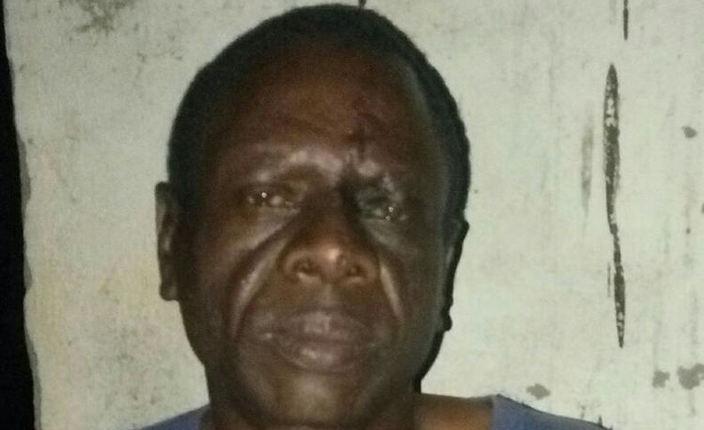
Freedom Mutanda and Sifelani Tonje Post correspondents—
As usual, we start with some of the comments from our readers.Cde Chama Chamapinduzi had this to say: ‘‘thanks for Cde Zvionere’s story. It reminded me that the evil spirits of those who wanted to kill Cdes through food poisoning during the liberation struggle is still among us. This is exhibited through the following ways:
Burning plantations
Raping innocent defenceless girls;
Stealing government aid from the people;
Misuse of public funds;
Stealing from donors;
Bribery;
Sexual favours for jobs and places at colleges.
Is this what we fought for? Definitely not. As comrades, we need to join hands to fight this evil spirit in order to meet the general intentions of those who died for this country. When we were at Doroi, we used to sing this song: vakomana tichafara taitora Zimbabwe. So, we need to enjoy because takaitora. Let’s fight the evil spirits.
Tawanda Mhlanga says: ‘‘your story on Cde John Jongwe aka Stanley Mauto Zvionere was brilliant. I learnt a lot. Some of the lessons will help today’s youths.
Commitment-he was committed to join the war at such a tender age.
Endurance-as they were at training, food was little and one would only eat once.
Passion-he was passionate about the war. See how he comments about his gun.
Lastly, he was intelligent.
I believe if our young people practise these values wholeheartedly, some of our problems will vanish. Cdes, you were not at the front but you are doing a good job of telling us these stories.
Leslie Sibiya says: ‘‘I lost a sister in the struggle. The stories are like paying a special tribute. Thank you guys.
In 1960, Anison Bandama and Ever Mujati Sithole had smiles that went to high heaven as they gave the world Bothwell Bandama, a bouncing baby boy. He is our unsung hero of the week. His story is a typical war movie; the difference is that this is no movie script but a story of how Zimbabwe got her independence as the guerrilla goes with us through the fear inspiring exploits and near death experiences he faced during the war of liberation.
Into the lion’s den-Tangai attack
‘‘Cde musafura; tiri tese!’’ A gruff voice called out.
Those words jolted me from my tense moment. I was about to shoot at whoever was about to enter the cave. The battle had been very bad to my comrades and I.
Previously at Tangai, I had been involved in a bruising battle with the Rhodesian forces. We put up a spirited fight against the helicopters, arumanyas and the ground forces advanced towards us. We realised we were hemmed in and apparently it dawned on us that whatever we were doing was doomed to fail as the enemy had done its homework.
Some of my fellow fighters opted to flee from the fighting zone; that was an error of the highest order. Rhodesian soldiers mercilessly used their heavy machine guns as they mowed down my friends in arms. The regime forces had positioned themselves around the command centre.
The battle got hot, tense and desperate on our part. The battle had turned on its head as the slaughter went on. From 21 fighters, 10 were alive and it appeared as if we would not survive to live another day.
A bomb hit an outcrop near where I was lying; it exploded; bomb fragments lodged themselves into my buttocks; excruciating pain pierced my very being. I ignored it as I concentrated on the fighting at hand which would make me survive or die. I crawled to another position and continued firing at the enemy.
I felt no hunger. Kunzwa nzara kugarika (feeling hunger is a sign that everything is all right; you will be in peace.) With the battle at full throttle, I crept towards a deep cave that I had seen on an earlier reconnaissance.
The cave’s mouth was very narrow but I negotiated my way into the cave. Apparently, I didn’t negotiate successfully, for I fell and landed on my shoulders. I winced in pain as I thought I had dislocated my shoulder. The pain gnawed at my very existence but I knew I could not cry for that would land me into more trouble that I would not extricate myself from.
Just at the time that sleep encroached into my consciousness, I heard a noise of someone trying to get into the cave. I froze and then I realised that it was not a time to be afraid. In war situations, it is kill or be killed. There was no way I would be taken away as a prisoner of war to be paraded through-out Bocha as a bounty for the regime soldiers.
If it was a Rhodesian soldier, ndinopika namai vangu, tinofa tese, I swore. I cocked my gun, released the safety catch and my finger was ready to pull the trigger if the need arose.
The comrade spoke, ‘‘don’t fire comrade; we are together!’’ I sighed in relief.
He got in. We stayed there until dawn. We could hear the soldiers cursing, huffing and puffing as they counted the war dead. It was shocking and ghoulish the way they laughed as they kicked the bodies to confirm that indeed they were dead —a case of flogging a dead horse.
They gloated that they had overwhelmed us. After what seemed eternity and when we were very sure that the white soldiers had gone, we slowly planned a way out of the cave.
My comrade in arms used a log that I handled desperately to pull me out of the cave. With a grimace and having summoned all my willpower, I held on and went out of the cave and into safety.
A horrendous spectacle awaited us outside. Corpses were strewn around; my blood brothers had died. These were people who were prepared to die for me, die for Zimbabwe; we didn’t know each other but we had a blood allegiance that will forever be part of me. Tears fell down on my heart and certainly it was a heart-rending sight that will be etched in my mind for as long as I live.
Howard Kuzipa, a mujibha, had run to the povo and informed them of the massacre that had visited us. Some parents dared to come and see what had happened.
We regrouped at Domboremhara although we were not yet out of the woods, for the Selous Scouts combed the area smoothly and these highly trained regime forces never took anything to chance. They monitored our movements with the efficiency of an eagle. We engaged them and defeated them but we went to Charasika because our morale went down with the high kill rate that went against us.
Rhodesian soldiers on horseback ambushed us at Bezel Bridge. We were seven and we fled because we realised that we had been out thought, outgunned and outmanoeuvred.
The beginning
I stayed with my maternal grandparents at Nyanyadzi where I did my Grade 1 in 1965. Later, I transferred to Chibuwe where I continued my school; the late Mujoji Simango was the head and one of my teachers was Bhila. I was relatively short and my performance at school was average; thus, I repeated. Eventually, in 1974, I dropped out of school in 1975 when I was in Grade 7. I repeated several times because I was of average intelligence.
We heard stories about the ‘boys’ who had trained to come and liberate us. Kid Marongorongo and Solomon Masango featured prominently in those stories.
Whites called my father ‘‘boy’’ and it beat me how a white brat could have the audacity to call an elderly person ‘‘boy’’ which to me with the benefit of hindsight, was embarrassing and humiliating. It was disturbing to say the least. The brutalisation of the African psyche was there for everyone to see.
At that time, there were no guerrillas bossing whites around in the Chibuwe area although our parents and us listened to Radio Laurenco Marques (Maputo) that beamed FRELIMO songs and ideology to us after 25 June 1975 when Mozambique gained independence. I remember a song, ‘‘ife vana FRELIMO zawana’’ that we liked very much.
As we played outside and we carried out our normal chores, we would playfully sloganeer, ‘‘viva FRELIMO! Abasha chikonyoka! Abasha chipikirozhozha!’’
We heard about nationalist leaders such as Sithole, Mugabe, Nkomo and Chitepo among others and we thought it was the ideal time to go to war. I was slight of build but I was determined to be one of those who took up the cudgel to fight a Goliath in our midst.
One cloudy night in August 1975, my friends and I decided to go and join the Kid Marongorongos of this world. Tandanai Munhape, Morgan Mahlupeko, Sikulikile Chiororo, Jamu Makwenya and I decided to skip the border and join the comrades. We gathered at Chibuwe School; Ndunduma, Rimbi, Mwangazi and Nyangamba were the areas we passed through on foot on our way to Espungabeira.
We briefly stayed at a Sangatare’s (secretary of a FRELIMO branch) home where our numbers had swelled to 25. Unganai Hlabisano met us and we were glad to meet one of our own. Lorries took us to Matshazi posto, a small township, almost like a garrison town for the FRELIMO government.
We went to Chibawawa.
Food shortages hit us prompting us to engage in illicit activities such as chirenje where we exchanged our clothes with cassava as the Madeira people supported us. At times, we held hands to catch wild animals that we would roast. It was there that I met my brothers Eliah, Godfrey and Sidwell who had come to be trained as well.
I came face to face with President Mugabe; I remember he had a checked jacket which was designer made and he had Morris Tsana as his bodyguard. He urged us to remain resolute. That was in 1976 at Mangundi base, Katoronga in Chibawawa district. The war took a new dimension as Cde Mugabe became the new leader of ZANU and spearheaded the war.
We take you through the training next week as Cde Epson Chigebengwa takes us through his war time story. He would give you blow by blow accounts of some nerve wrecking contacts.
Don’t lose an opportunity to read about the climax of this suspense filled story of a comrade who went to war when he was a mere Grade 7 graduate but today, he is a proud holder of a Diploma in Education. Buy a copy of your favourite newspaper, The Manica Post next week.
For your views and comments please call, sms or whatsapp on 077582734 or email us at [email protected]


 Online Reporter