daniel chigunwe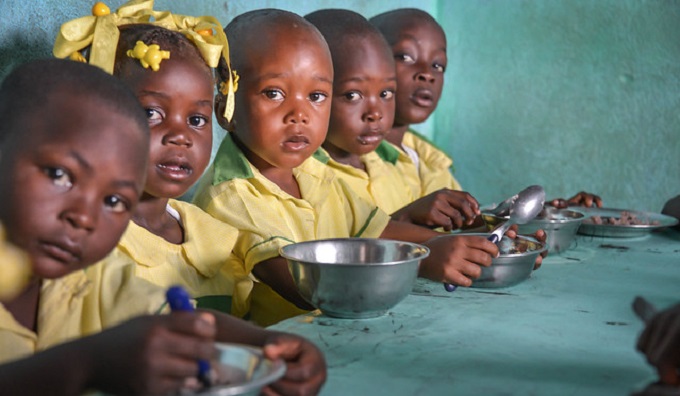
Rumbidzayi Zinyuke–Senior Health Reporter
Chimanimani District has recorded a marked decline in malnutrition in children under five owing to the implementation of campaigns to encourage breastfeeding and ensure better nutrition.
The district recorded an increase in malnourished children after Cyclone Idai in 2019.
Malnutrition, in all its forms, includes under-nutrition with wasting, stunting, and underweight, plus inadequate vitamins or minerals, overweight, obesity, and the resulting diet-related non-communicable diseases.
Chimanimani district nutritionist Ms Ennesy Makaure said the “cure rate”, which reflects the number of children who would have been cured of malnutrition, increased to 85 percent in June this year from 75 percent in 2020.
The Ministry of Health and Child Care, with financial support from UNICEF, under the Health Development Fund supported by the European Union, UK Aid, Sweden, Irish Aid and Gavi, has been implementing targeted programmes that are aimed at improving breastfeeding patterns, while also increasing access to nutritional food for mothers and children.
Ms Mukaure said the village health worker programme had been instrumental in improving health outcomes.
“The village health worker programme is a tool and a strategy that has been giving us positive outputs since Cyclone Idai where we have been rolling out the feeding and emergencies programme for infants and young children,” she said.
“The village health workers have been able to go to the communities where they have support groups that teach mothers how to feed children. They encourage them and support them to breastfeed. Although we still have some challenges, the programme itself has given us much better results. We are hoping to continue supporting the programme until we achieve our vision of zero malnutrition cases in Chimanimani.”
However, through the village health worker programme, Ms Makaure said the district had seen an increase in breastfeeding rates while infant and young children feeding had also improved.
The Ministry of Health encourages mothers to exclusively breastfeed their children for the first six months and introduce solid foods after that to supplement breast milk until the age of two.
While Chimanimani has been known as a food self-sufficient district, Cyclone Idai destroyed food reserves for most families and the subsequent droughts worsened the household shortages. Women in the district say breastfeeding patterns were disrupted by the cyclone disaster.
Ms Sarudzai Mandava from Chingwekwe Village said at one point, she could not afford to feed her child regularly as she was waiting for food rations.
“After Cyclone Idai, we would not get time to breastfeed our children because we had to go and queue for food,” she said. “Most of our babies would eat left-over food with the older children.
“Sometimes we would sleep in the queue so there was no time to breastfeed exclusively. Also because mothers did not have access to food regularly, they did not generate enough milk for the child. So we really experienced challenges.
“But during the Covid-19 pandemic, we could breastfeed because movement was limited so we had time with the babies.”
Ms Joyce Mupambiro from Ngangu said the community-based health workers had assisted them to improve and maintain good breastfeeding patterns to ensure the health of their children.
Another mother, Ms Christine Mupodyi, said to minimise the costs associated with supplementary feeding, community health workers encourage them to use resources locally available.
“Here in Chimanimani, we are fortunate we have many nutritious foods locally available,” she said. “We have avocados, bananas sweet potatoes and other fruits so the health workers encourage us to feed these to our children.”
Village health worker, Ms Rudo Chizikani, from Ndadzingwa Village said the women she worked with were all breastfeeding properly and had no case of malnutrition in her village.
“During Cyclone Idai, we saw an increase in the number of children who had deteriorated into the yellow zone and a few in the red zone because mothers did not have time to feed their children on time,” she said. “We worked with them and now l don’t have any child who is in below normal weight.”
With the help of village health workers, the mothers have also formed health clubs as a way of educating each other on best ways to raise their children, as well as growing nutrition gardens.
Gogo Janet Chihlangu, another village health worker from Taakanyi Village, said the health workers were playing a significant role in improving the general health of young children.
“We are working together with the mothers from the time they give birth,” she said. “We teach them how to take care of the baby and if we see that the mother is not coping, we recommend that she gets support from family members and others in the community.
“We also monitor the growth of the child and we give these mothers as much knowledge about taking care of babies as possible. We teach them to give their children a balanced diet. We do not focus on food bought from stores because we don’t have the money to buy, but we encourage them to use what is readily available for them.”
Through the lessons, Gogo Chihlangu said, women had started nutrition gardens and had joined health clubs where they are taught about infant and young child care.
“They are responding well and are eager to learn from each other,” she said.



 Online Reporter