


 Sundaymail Editor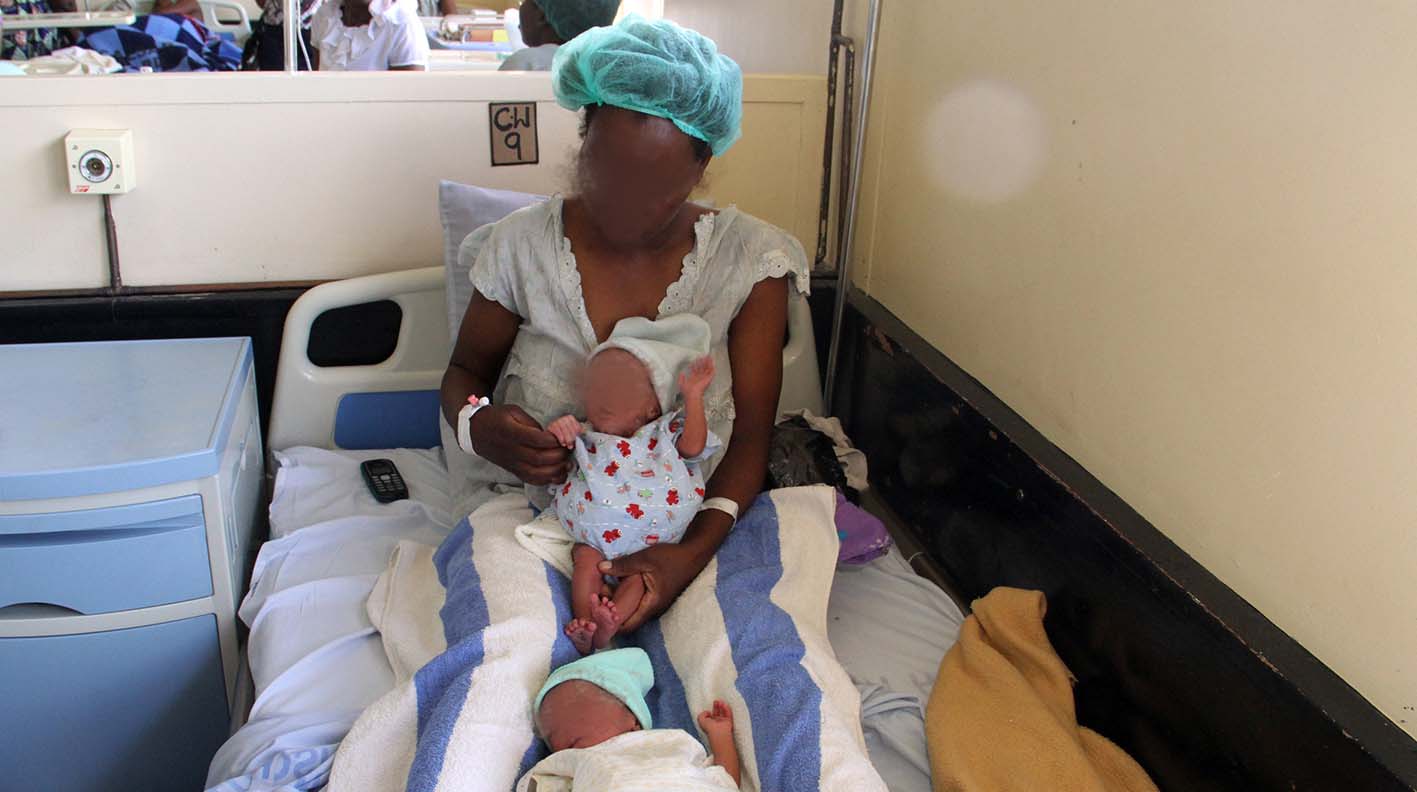
Veronica Gwaze
HEALTH service delivery at council-run clinics continues to deteriorate, as patients, especially pregnant women, currently find themselves between a rock and a hard place, with staff at various clinics making demands, including bribes.
The Sunday Mail Society has learnt that several council-run clinics in high-density areas are now forcing expecting mothers to bring their own linen and blankets on admission.
The healthcare staff argue that they are facing acute shortages of supplies at the facilities, which are run by the opposition Citizen Coalition for Change (CCC)-led city council.
Patients are finding themselves at the receiving end despite paying medical bills in full.
Those who fail to comply with the order are immediately turned away.
Budiriro, Glen Norah (Rutsanana) and Glen View polyclinics have been identified as some of the health facilities where the practices are taking place.
The husband of a 24-year-old mother from Budiriro narrated to this publication how his wife almost gave birth at a clinic reception recently.
“My wife was turned away because she did not bring her own blankets and sheets. I tried to negotiate with them but to no avail. It was only after realising that they were not bending on their demand that I had to dash home.
“I came back and found her in pain, and unattended at the reception. Surprisingly, they were refusing to admit her despite the fact that she was already in labour and had paid her maternity booking fees well in time,” explained the distraught husband.
Mai Nicole also shared her horrific experience.
“I was told to go and get some linen from home but the state I was already in could no longer permit me to do so. One of the ‘sympathetic’ nurses then suggested that I give them some money so that they make a plan for me. I paid and got the stuff (linen and blankets), which they initially claimed was not available.”
Speaking in an interview, Harare City Council (HCC) spokesperson Innocent Ruwende said corrupt activities at their clinics were disrupting the local authority’s effort to offer improved services.
He urged the public to report any challenges they encounter.
HCC runs at least 15 health facilities.
“We have adequate linen and blanket supplies at all our clinics. We always invite residents and all stakeholders to work constructively with the council to continue improving health service delivery,” said Mr Ruwende.
“We are prepared to deal with cases that come to our attention. Demanding bribes or even asking service seekers to bring their own bedding is a dismissible offence.”
He added that the council recently commissioned state-of-the-art laundry machines at the Beatrice Road Infectious Diseases Hospital.
“Each of the heavy-duty laundry machines, with a dryer, cost at least US$200 000. It is one of our many ways of trying to provide accessible and quality health services despite the prevailing economic challenges.”
Lethargy
Harare Residents Trust director Precious Shumba blamed the council for the lethargic approach to issues.
“We have received a lot of complaints from residents regarding bribes, linen and blanket issues. Unfortunately, council is very rigid and does not wish to competently confront the rot,” argued Mr Shumba.
He urged the authorities to strictly monitor and control their nursing staff. He said they should also offer the workers better remuneration packages.
The nurses, he notes, feel undervalued, which has given rise to cases of corruption and unprofessional conduct.
“We have witnessed a number of donations and purchases of linen at various clinics. However, some of the health personnel are reportedly sharing the linen, blankets and even the drugs for resale,” added Mr Shumba.
“It is most unfortunate that reports by the public are never attended to. We want these cases to be thoroughly investigated and the culprits to be appropriately disciplined.”
Zimbabwe Nurses Association president Enock Dongo defended his members and put the blame on council leaders.
By demanding expecting mothers to bring their own linen and blankets, Mr Dongo said, the clinics are trying to improvise.
“Service seekers should not blame health workers because there are genuine linen and blanket shortages in clinics. This is being done in good faith. In some cases, the clinics have the linen but issues of laundry are a huge challenge considering that the available laundry machines are overwhelmed,” he said.
“Linen should be changed after every delivery, which then becomes a huge challenge if there is no access to laundry, so it is better for expecting mothers to bring their own.
“If anyone is not satisfied, they need to approach the authorities at a particular clinic to understand the situation.”
Women support groups, he added, should speak up and make sure the responsible authorities are put to task to ensure that resources are made available.
“This is not a good image for our health delivery system. Some families have one or no sets of linen and to ask them to bring some to the clinic is a huge burden.”
Mr Dongo also noted that some of the challenges were being caused by poor remuneration.
Some of the nurses interviewed by this publication confirmed the shortage.
“We cannot ignore pregnant mothers. But for us to be able to deliver them, we have to find the best possible ways to do so,” they said.
‘Buying safe delivery’
Some of the expecting mothers claimed they were being forced to pay bribes to midwives on duty in exchange for safe delivery.
The official maternity booking fee is pegged at US$25 at the council-run clinics but pregnant women are, however, made to cough an additional US$20 as a bribe.
Those who resist are immediately punished by being referred to central hospitals.
Cathrine Katiyo, a single and unemployed mother, struggled to get maternity booking fees until a well-wisher came to her rescue.
After making her payment and getting stuff for the baby from family members and friends, she looked forward to her delivery day at Rutsanana Polyclinic.
However, on the day, the midwife on duty demanded an incentive to execute her duty.
“She asked me to pay her US$20 if I wanted a ‘safe delivery’. I was stranded, in pain and emotional at the time. I don’t go to work and even struggled to raise the maternity fee. I tried to negotiate with no luck. I had to call a relative to come to my rescue since they were prepared to see me suffer to the end,” she revealed.
While council stipulates that the maternity booking fees can be paid in local currency at the official bank rate, some of the clinics demand USD cash payments.
The fee is supposed to cover maternity booking, all the eight ante-natal care visits, delivery, post-natal and child care up to five years.
Meanwhile, cases of nursing staff who are stealing and selling prescription drugs to patients continue unchecked.
In such cases, patients are sweet-talked into buying the medication from an individual at a lesser charge than the official price at the health facility.
The drugs would have been officially declared out of stock.



 Bongani Ndlovu
 Online Reporter