

 admin
admin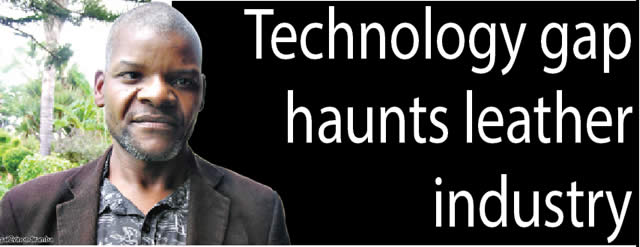
 Oliver Kazunga Senior Business Reporter—
THE leather sector in Bulawayo is struggling to exploit opportunities in the regional and international markets due to lack of modern technology. In an interview on the sidelines of an export awareness seminar on Friday, Bulawayo Leather Cluster secretary Fungai Zvinondiramba said ageing equipment in their factories was one of the major constraints affecting their competitiveness.
“We’ve got challenges in terms of technology that we’re using right now. The technology we have was recovered from closed companies. “As of now if you look at our products they’re not competitive on the market because of the machines that we’re using,” he said.
The export awareness seminar was organised by the country’s export promotion agency, ZimTrade. Zvinondiramba said in the past Zimbabwe had a history of producing the best leather not only in the region but internationally.
“There’s also the challenge of tanneries that are processing the leather. “These are also not properly capacitated so they’re not producing quality leather that we can go with especially on the regional market where South Africa is now far ahead in terms of machinery,” he added.
Zvinondiramba said the leather sector in Bulawayo was also constrained to penetrate the export market due to working capital challenges. “As a cluster we don’t need funding for an individual but we would love to have a revolving fund for the cluster so that it works for everyone who wants to use it,” he said.
In 2013, the government launched the Leather Sector Strategy to revive and attract investment opportunities that lie along value addition.
Asked about how effective the Leather Sector Strategy has been to their operations, Zvinondiramba said:
“After the launch of the document, we had a training that was sponsored by the Comesa (Common Market for Eastern and Southern Africa) and after the training we decided to form a cluster, which is simply part of the leather sector value chain.
“That document guides us in as much as how we engage with other sectors in the value chain. “That document in itself gave us an inspiration to come together to put a cluster and work together and even end up with a big factory as a cluster and this is where we’re are going”.
The Bulawayo Leather Cluster has 25 active members. The idea behind the formation of the leather cluster is to organise people to come together for development.
“As of now most of our people still need training at leather operatives where people can be taught to design the products and software issues related to managing projects so that they are profitable for the entrepreneur,” he said.
In the past seven years, Zimbabwe’s leather exports have remained depressed compared to previous years. According to ZimTrade, exports of footwear, leather articles and upholstery leather declined from $60,5 million in 2002 to $3,3 million in 2014.
The country’s main exports of leather products include footwear and upholstery leather as well as handbags.


 Online Reporter
 derick.khumalo