admin
admin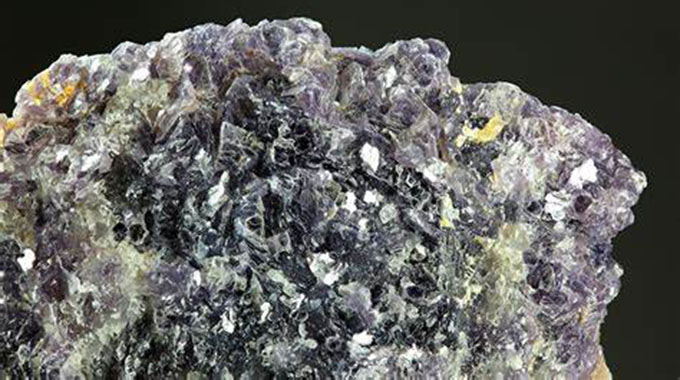
Golden Sibanda
The developer of Zimbabwe’s most promising lithium project, Prospect Resources, says further bulk lithium tests on the metal content of ore from the main site of its Arcadia project yielded further positive results.
The Australia Stock Exchange-listed lithium developer said the latest results from tests by an external independent part confirmed higher mineral recovery potential of the Arcadia lithium mining project.
Lithium has gained global prominence over the past few years on the back of growing demand for the mineral, as the world moves towards an era where most vehicles would be powered by electric batteries.
Demand will be driven by rapid expansion in the lithium-ion battery industry as world demand for hybrid and electric vehicles, energy storage systems and high-drain portable electronics continues to grow.
With only a single producer, Zimbabwe is the world’s fifth largest lithium producer and Government has designated the mineral as one of the minerals expected to drive economic growth in short to medium term.
Other lithium projects in the country include Bikita Minerals (already in production), Jimbata’s Kamativi lithium project and the Zulu Lithium project near Gwanda, which are now at different stages of development.
Prospect said after the release of the Definitive Feasibility Study (DFS) for the Arcadia lithium project in November 2018, it continued with bulk metallurgical variability testing of the ore at the Arcadia project.
The recently concluded bulk testing was focused on dense media separation and spiral treatment of bulk ore samples taken from the upper and main pegmatite zones within the proposed pit at Arcadia.
“The results of this bulk test work, together with the results of a review of the metallurgical database support the recovery factors employed in the DFS and indicate the potential for an overall increase in Project lithium recovery from 67,9 percent to plus 70 percent,” Prospect said.
A DFS, such as the one Prospect conducted late last year, are the most detailed studies on technical feasibility/specifications and commercial viability and determine definitively whether to proceed with the project.
The ASX listed miner said the bulk test work was undertaken at independent third-party facilities to provide impartiality and ensure quality control, which confirmed the amenability of Arcadia ore to deliver premium low iron petalite concentrate product.
Prospect’s managing director, Sam Hosack, said in a statement the test work results demonstrated the quality of the project and the company’s ability to de-risk and optimise the project prior to development.
“The investment we have made into technical validation and value engineering for the project supports our ability to successfully deliver on the Arcadia Lithium Project,” Hosack said.
The lithium mining firm said it had conducted the test programmes to further optimise design and operating parameters in order to de-risk the plant construction and project ramp-up to production.
The extensive metallurgical test work programme will exceed similar programmes completed by peer projects; given Arcadia’s ore body contains petalite in addition to commonly produced spodumene.
Mr Hosack said the company had attracted market leading professionals to join its team, including individuals with extensive experience in DMS, gravity and flotation processing of lithium bearing minerals.
‘With these initiatives being undertaken by leading independent specialist organisations, we are delivering on a high level of quality for each initiative and de-risking the project as we go into development,” he said.
“Prospect will continue to invest in building upon Arcadia’s existing strong project economics by optimising the plant construction, pit design and efficient operation of the project.”
With extended petalite recovery and concentration bulk test work nearing completion, the company said it was undertaking spodumene metallurgical bulk test work, to conclude the post-DFS test work and develop a revised global lithium recovery result.
As electric vehicles are about to reach tipping point in penetration, investment in lithium-ion battery technology and production is rising rapidly.
Global demand for lithium metal is projected to rise 8,9 percent per year through 2019 to 49,350 tonnes. In lithium carbonate equivalent (LCE) terms, the value of the global lithium market is projected to reach $1,7 billion.



 Online Reporter