Chronicle Editor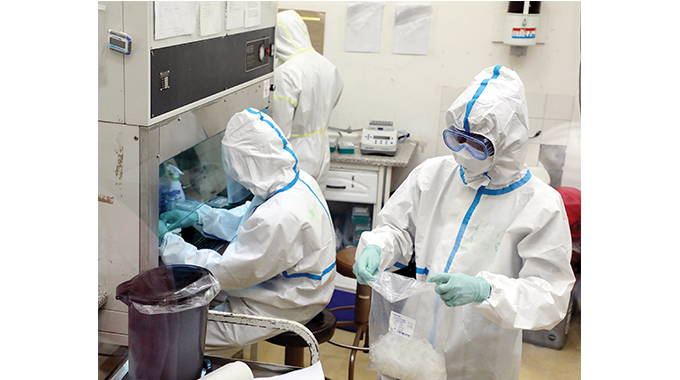
Dingilizwe Ntuli, Sports Editor
AFTER more a year of no action, sport is poised to resume after Cabinet gave the go ahead on condition laid down Standard Operating Procedures (SOP) are adhered to.
The Sports and Recreation Commission this week sent all the country’s national sports associations (NSA) the SOPs that will allow them to train or hold competitions.
Topping the SOPs is PCR testing of everyone involved, players, officials and support staff.
Venues also have to be regularly sanitised to ensure the health and safety of athletes and officials is not compromised.
PCR testing must be conducted at least 48 hours before training and thereafter every 14 days.
Should the respective NSAs want to engage in competition like a league programme, testing has to be ramped up and the SOP requires that PCR testing be done at least 48 hours before a match.
Every organised team is now obliged to keep a logbook with details of all athletes and associated support staff entering and exiting venues they use.
Furthermore, clubs and teams are now required to employ a Covid-19 compliance officer who will ensure that all SOPs are strictly adhered to so that training sessions and competitions don’t become super spreaders of the virus.
Most NSAs have for months been clamouring for the return of their respective sports, arguing that continued suspension had hindered athletes’ capacity to eke out a living.
Football was at the forefront of calling for lifting of the blanket suspension of sport, with Division One coaches warning that some teams would struggle to assemble a squad at the restart, as most players had now resorted to other means for survival.
But now that the suspension has been lifted, what next for these NSAs?
They had always expressed readiness to resume, but are they really ready now after being furnished with set conditions for resumption.
It would appear the readiness most were claiming was simply based on temperature checks and sanitisation before training and matches.
It was obvious from the beginning that the bio-bubble system would not work locally since teams always struggled to camp ahead of matches during the pre-Covid era.
That had been a major concern, but government eased those concerns by acknowledging that most NSAs and their affiliates lacked the financial muscle to adopt that route.
It’s quite interesting that there has been little talk since the announcement on lifting of the suspension of sport, especially after the SOP was pronounced.
They must have realised that even without the bio-bubble, financial costs involved would still be quite substantial.
Whereas before Covid-19 hardly any costs went into training as players simply came and left, now they have to budget for tests and employ an individual to ensure full adherence.
The cost of testing may be beyond the reach of most clubs and teams considering the numbers involved.
For example, a rapid test costs US$15 and a PCR test is around US$60, and a football team usually comprises 18 players on match day.
Therefore the cost of PCR testing for players alone is US$1 080 before every league match.
When costs of testing the technical staff and club officials are added, most teams will most definitely not afford as this could cost about US$1 500.
And this is not a monthly cost, but what each team has to spend at least 48 hours before a match. When tests conducted before training and in between, and before matches are added up, it’s no wonder that there is now silence.
So unlike before when teams at least got some form of income from gate takings, they now have to fork out even more without anything in return if they don’t have a sponsor.
So, basically there is now a huge cost attached to training when previously nothing was spent.
Teams were generally struggling to fulfill fixtures and pay players before and things could even get worse now.
Maybe the NSAs, teams and clubs were ready to resume as before with small adjustments, and were never ready for the conditions.
Not much is known about what form of assistance NSAs can offer their affiliates, but Zifa received US$1.5 million as Covid-19 relief funds from Fifa last.
What we know is that there were claims its distribution was controversial, with some virtually dormant affiliates receiving the same chunk as other operational organisations.
But maybe the question should be whether what Zifa distributed to affiliates last year was a pittance compared to what is needed for just one team to go through a season.


 Online Reporter