daniel chigunwe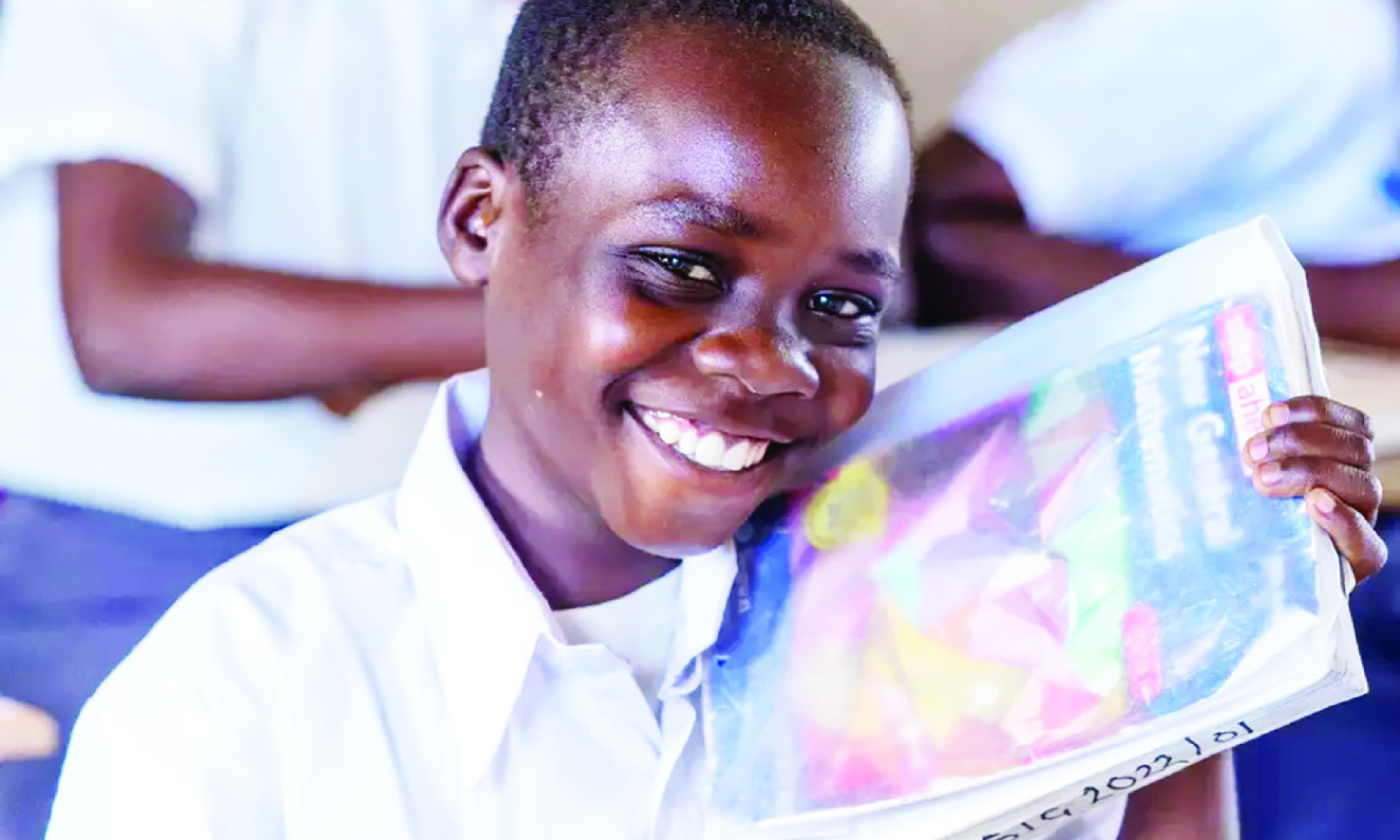
Chiunga Primary School in Manicaland Province’s Buhera District just had 50 pupils learning under trees and three teachers who would scramble for the two available chairs when it opened in 2003.
Textbooks were non-existent, and teachers relied on old lifestyle and fashion magazines to create comprehension exercises for learners. Many locals preferred their children to walk to schools 10 kilometres away rather than enrol at an institution they viewed as hopeless.
“To call it a school was just a misnomer. Many people in this area saw us as a shame,” said school headmaster Tawanda Mhosva.
“It’s all in the past now. We have become like a magnet; everyone wants to bring their children here,” he said. He gushed about how the satellite school is now better equipped than many surrounding schools and currently boasts of being one of the rural district’s highest performers.
Mhosva attributes the school’s changed fortunes to the cash disbursements made possible through the School Improvement Grant (SIG), a multi-donor initiative currently funded by the UK Government.
The grant supports registered P3 primary and secondary schools that are financially constrained. SIG provides funding to financially constrained P3 registered and satellite (primary and secondary) schools and schools for children with special needs. The funds cover non-personnel and non-capital resource demands, enabling schools to meet their basic needs.
The beneficiary schools have been receiving the funds since 2013 to date.
Beneficiary schools across the country receive annual disbursements that they use to fund their most basic non-salary and non-personnel needs, such as teaching and learning materials like textbooks, chalk, and class furniture.
UNICEF manages the disbursement of funds and provides technical support in partnership with the Ministry of Primary and Secondary Education to improve access to quality education for vulnerable and disadvantaged children.
The transformative power of the SIG is on show at Chiunga Primary School, which has transformed from a laughing stock to the pride of the Buhera District. Since November 2014, the school has consistently received support under the SIG, enabling it to buy furniture and textbooks that have vastly improved the teaching and learning environment.
Before receiving the grant, the school enrolled 132 learners and four teachers.
Learners would sit on the floor during lessons. Five desks donated by a neighbouring school were only for teachers, but even then, there weren’t enough chairs for them.
“We had to resort to composite classes because teachers were insufficient. Teachers didn’t want to stay because of the living conditions,” said Mhosva. Composite classes refer to a system where a single teacher takes charge of learners from multiple stages, such as teaching grades 1, 2 and 3 in the same class.
Fast forward 10 years later, and the school is a beacon of academic excellence.
“Our pass rate for Grade Seven examinations averaged 25 per cent before we started receiving SIG in 2014. It has now ranged above 70 percent for the past five years,” said Mhosva.
Enrolment is up to 293 learners (143 boys and 150 girls), with nine teachers.
“Enrolment is increasing yearly because parents who were not coming to our school because of its once bad state are now flocking here because they are seeing the positive changes brought about by SIG Regular,” said Mhosva.
On a recent day, Grade Seven learners preparing for end-of-year public examinations attended a Social Studies lesson in a furnished class. They used textbooks to research on an assignment. The grant also provided funds for the purchase of various revision books.
Each class has its own teacher, and every teacher has a desk with drawers. Composite classes are now history, and most subjects’ textbook-to-pupil ratio now stands at 1:1 for most subjects.
Excellence at the school doesn’t end in the classroom.
“We purchased sports equipment using part of the funds, and we are proud that our volleyball team is the current district champion,” said Mhosva.
It is a massive feat for a school that receives little parental support.
Because of widespread poverty, many parents are unable to pay fees, leaving the school in dire need of external financial support. According to Mhosva, more than half of parents do not pay fees regularly because they can’t afford it.
The massive baobab trees that are common in the area provide a source of income for many local people. They sell the fruits or use the tree bark to make mats for sale. Others survive by selling firewood.
Tirivanhu Mutomba, the District Schools Inspector for Buhera, said the situation is pervasive in the district, which is an arid area with few economic opportunities.
“People in this district can hardly afford to feed their families, let alone pay fees or buy textbooks for their children. SIG Regular has become a cornerstone in the upgrading of satellite schools. Our children can now read and research,” he said, adding that some of the schools still lack enough classroom blocks for them to be registered.
In the past, it was common for satellite schools in the area to produce zero per cent pass rates.
“But we no longer have schools recording zero percent at Grade seven. We are above the national average, which is 48 percent, and we did 48,8 percent in 2023,” said Mutomba.
He said “almost all” of the district’s 28 satellite primary and secondary schools benefit from the grant.
However, he suggested that schools be allowed to buy items such as computers from SIG funds as many learning institutions lack effective teaching and learning in Information Communication and Technology because of the absence of resources.
Parents in the area said their children enjoy going to school because of the textbooks and furniture.
“We provided labour, bricks, sand and stones and also brewed traditional beer, which we sold to pay builders who constructed the classroom blocks.
“But the textbooks, chairs and desks were out of our reach. Sometimes, we would cut down trees to make benches, but they were inadequate and substandard,” said Robert Tarambiwa, the School Development Committee chairperson.
The SIG has provided hope for a brighter future for learners from disadvantaged families despite their underprivileged backgrounds.
“We have enough textbooks, so studying is not a problem. I am already looking forward to the exams,” said Tehilla (11), who wants to be a nurse after school. — unicef.org



 Online Reporter