Online Reporter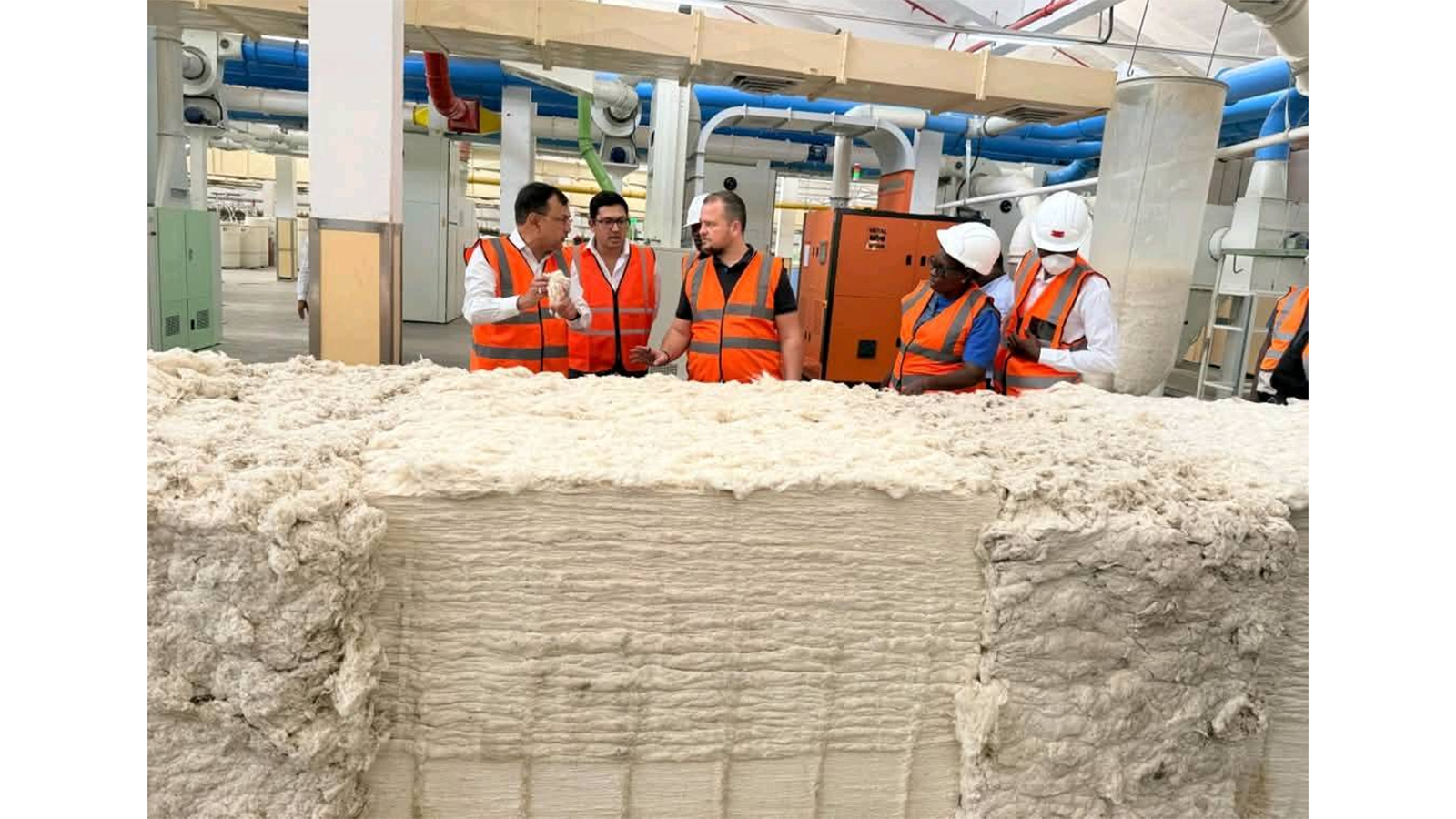
Martin Kadzere
ZIMBABWE’S textile industry, which has been facing problems for more than two decades, may now be on the cusp of revival.
Thanks to massive recent investment, the sector is finally showing strong prospects of a rebound. It will restore thousands of jobs and, most importantly, significantly reduce the country’s dependency on cheap imports from Asian markets, setting the stage for further expansion.
Zimbabwe’s textile industry plays a central role in the entire cotton-to-clothing value chain. It is strategically positioned to stimulate economic activity along every stage, starting with the cotton farmer, extending through the ginneries, spinners and weavers and ending with the clothing manufacturers. Prior to the turn of the millennium, the textile industry was a beacon of hope, providing employment opportunities for millions and contributing significantly to the country’s gross domestic product. It was dominated by iconic brands like David Whitehead Textiles; Merlin; and Zimbabwe Spinners and Weavers.
Regrettably, the collapse of domestic companies, driven by various factors, including a tough operating environment and sanctions, which prevented essential retooling, created a supply void.
The country became dependent on fabrics imported from key global suppliers, particularly those in Asia.
Some policymakers and industry analysts agree that there is an urgent and critical need to safeguard the “early green shoots” of the textile industry’s revival.
The protection is essential in order “to nurture this nascent growth” and ensure it successfully develops into a stable, viable and sustainable industry capable of contributing significantly to the economy.
As such, the decision by the Government in the 2026 National Budget to impose a 300 percent customs duty on selected imported polyester staple fibres and dyed woven fabrics of cotton, they believe, is a key step in strengthening the country’s cotton-to-clothing value chain.
“What the Minister (of Finance, Economic Development and Investment Promotion Minister Professor Mthuli Ncube) has done aligns with the national interests and will keep the country on a growth trajectory,” said the Parliamentary Portfolio Committee on Industry and Commerce chairperson, Mr Clemence Chiduwa, in an interview last week. He acknowledged that, while some stakeholders might view such policies as a burden, the primary objective was safeguarding national interests.
He stressed the urgency of the matter, saying: “If we don’t have the policies to support utilisation of the capacities that we have, it means going for more decades importing . . . we can’t do that.”
Mr Chiduwa said, while some stakeholders might view the policy as a “bitter pill”, the Government’s focus remained squarely on the greater good and the national objective of transforming the country.
Analysts say the policy “is considered timely and refreshing, coinciding with major retooling efforts in the sector”.
“The revival of companies like David Whitehead Textiles has brought state-of-the-art technology into operation,” analyst Mr Tobias Musara said.
“Established players such as Paramount Garment also continue to thrive, successfully exporting their products to Western countries.” A trade expert warned that Zimbabwe risks missing out on lucrative regional opportunities if its protectionist measures are not paired with a robust strategy for local value addition, given its status as a member of Africa’s free trade areas like the African Continental Free Trade Area (AfCFTA), the Common Market for Eastern and Southern Africa (COMESA) and the Southern African Development Community (SADC).
“What is critical is the urgent need to add value to raw cotton to meet a minimum threshold of at least 35 percent to 60 percent of local content in the textile sector,” he said.
“Achieving this benchmark is essential for domestic textiles to qualify for preferential tariffs within COMESA and SADC.”
Economic analysts feel the success of the National Development Strategy 2 hinges on Zimbabwe moving towards a country free from imports, as they called for robust policies to encourage local production.
Considerable efforts in recent years have already seen the country reduce its reliance on foreign-sourced goods, particularly cooking oil, milk, margarine and sugar.
Despite the progress, policymakers and analysts maintain the positive trajectory must be “well nurtured” to ensure long-term benefits, including foreign currency savings and the creation of high-quality jobs, in line with the Government’s vision of attaining an upper middle-income economy by 2030.
“The goal should be a complete structural shift from an import-dependent economy to a production-driven one,” economist Amos Mtetwa said in an interview on Thursday. He said a major focus of this plan is the implementation of a comprehensive value chain strategy, which involves supporting every stage of production from raw material to finished product.
The Government has already identified 32 specific value chains within the agriculture sector alone, where the potential for import substitution and export growth is highest.
For these chains to succeed, specific, targeted policies are required to stimulate industrialisation, Mr Mtetwa noted.
He said the cooking oil industry is a successful precedent for these protectionist measures. Similar policies were implemented in that sector, yielding “great results”. Zimbabwe is now self-sufficient in cooking oil production and has even started exporting surplus.
He noted that this success has encouraged other operators to “come and set up shop here”, demonstrating the power of supportive policies to attract investment and achieve local sufficiency.
In a similar move to bolster self-sufficiency, the Government has introduced tighter import controls on grains, oilseeds and related products through Statutory Instrument (SI) 87 of 2025.
While not a complete ban, the regulations permit imports only for contractors who prove genuine necessity.
These rules introduce a phased local sourcing mandate for agro-processors. They must source at least 40 percent of raw materials locally by April 1, 2026, increasing to 100 percent by April 1, 2028.
A key protective mechanism is that, if the price of importing a commodity is lower than the local producer price, as set by the Government, the importer must pay the price difference into the Agricultural Revolving Fund.
The levy is specifically designed to prevent cheap imports from undercutting and displacing local farmers and producers.
Zimbabwe Agribusiness Forum vice president Mr Felix Vengesai said by ring-fencing resources through the import levy, administered by the Agricultural Marketing Authority, the Government is creating a sustainable funding mechanism for value chain development and farmer empowerment.
However, clothing manufacturers have expressed concerns over the customs duties, arguing that the blanket application of the tariffs unfairly includes product ranges that domestic manufacturers are not yet producing.
They claimed that, with local processors still operating at low capacity, the protective policy is prematurely restricting essential imported materials and is not well-timed.
Edgars Stores Limited chief executive officer Mr Savious Mushosho said: “This development will not benefit the cotton-to- clothing industry but will result in high prices for clothing and promotion of smuggling of both fabrics and finished garments.
“Local fabric manufacturers have no capacity to produce the range of fabrics required in fashion and what they produce only suits a narrow range. We are already buying what they are producing and augmenting with imports to meet our customers’ ever-changing fashion needs.”
It is understood that a critical stakeholder meeting is scheduled to be held this week to discuss the specific concerns.
A research is reportedly being undertaken by CTC and NCC to come up with a proper recommendation on how to revive the cotton-to-clothing sector.