Online Reporter
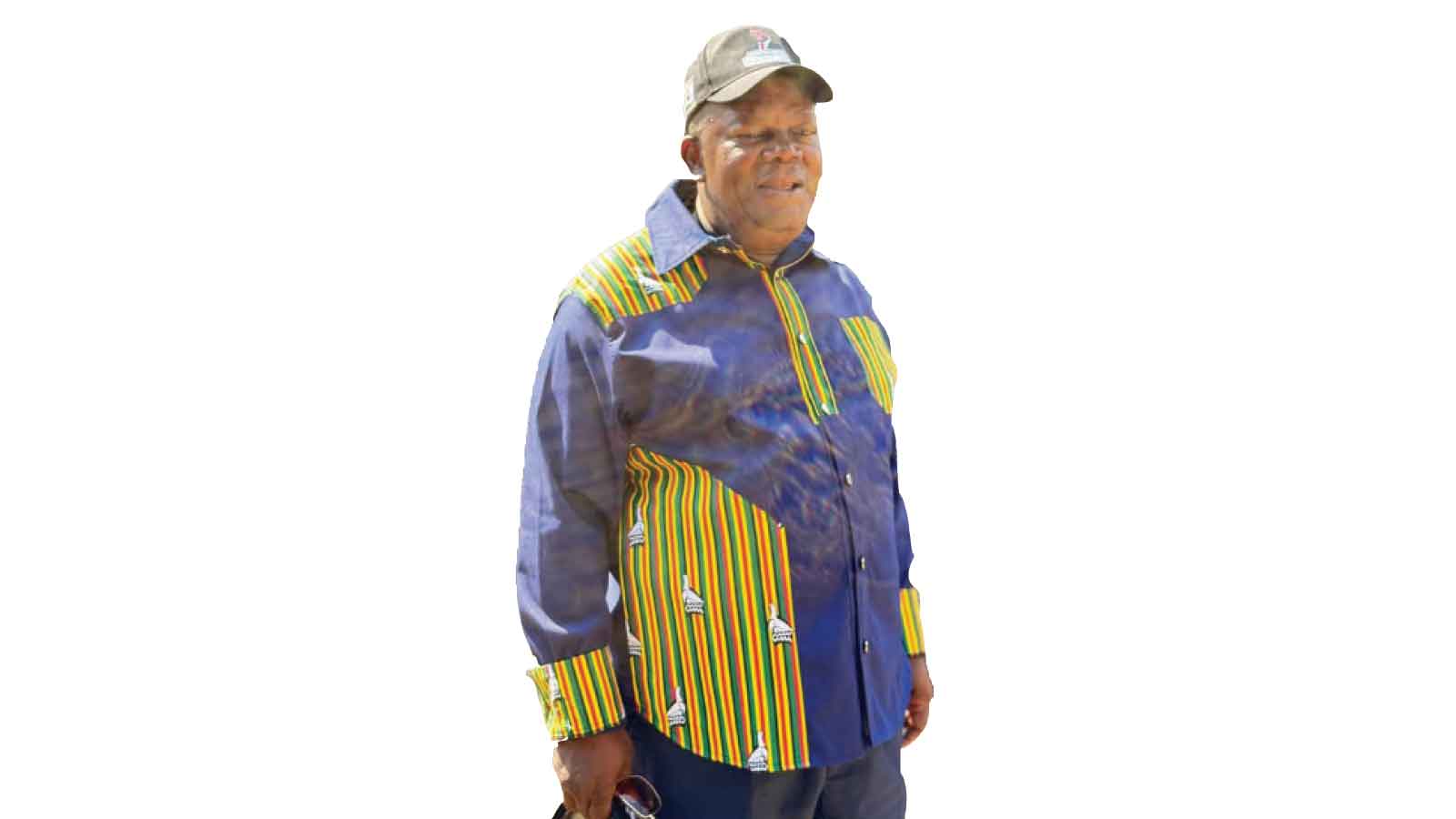
Following last week’s account of how he survived the 1976 Nyadzonya attack, CDE SAMUEL MAKUREYA, whose nom de guerre was Knox Zvichapera, chronicles to our Society Editor PRINCE MUSHAWEVATO his experiences in military training and the trauma of enduring yet another brutal Rhodesian bombing in Mozambique.
*********************
Q: Can you tell us what happened after the Rhodesians blew up what you referred to as “a vital bridge” at Pungwe River?
A: It was a major setback for us because that was the big bridge our trucks used for transporting freedom fighters between Chimoio and Tete. However, a temporary bridge was later constructed for convenience. When we met after the Nyadzonya attack, local citizens were present and terrified by what had happened. We were transported to Doroi in trucks.
In fact, we were the first group to establish the Doroi Camp. People were arriving from different corners. Initially, there was only a single base. While at Doroi, still in 1976, some commanders came to see the freedom fighters who had survived the Nyadzonya attack. Several delegations came to address us, including former President (Mugabe) and other nationalists leading the struggle, such as Ndabaningi Sithole, Joshua Nkomo and Abel Muzorewa.
They showed great concern about what had happened. We opened Base One at Doroi, which was close to the river, and we stayed there for some time. Food was a challenge, but the United Nations team was assisting. This is where the matekenya issue surfaced at Doroi. Matekenya was a small insect or creature, like a flea, that would enter the body through the toenails before growing and forming a painful, round lump beneath the skin of the foot.
Q: What were the effects of matekenya?
A: Comrades took turns to pluck them out of the body, but they made walking difficult as they were itchy and painful. I had never seen anything like it; it seemed to affect women more. I stayed in the same platoon with Reuben Barwe at Doroi.
After the matekenya problem, we were hit by “hurricanes”; this also seemed to affect women more. They would struggle to walk, moving like chameleons. Around October/November (1976), comrades started to be moved to East Africa for training.
Dodge and Scania trucks were used for transportation. Some travelled by ship while others flew. Our group was transported by truck to Tete. We spent the whole night travelling until we got to Battaliao and rested for a day. While at that camp, you could see the Zambezi Bridge that crosses into Tete. The following day, we continued the journey until we got to Tembwe. It was quite a distance to get there.
In terms of food, however, Battaliao Camp was a better place; we had variety, including tinned fish. It was mainly a base for trained people, but they also received those who wanted to undergo training or be deployed to the front, so there were never too many people there at one time.
When we got to Tembwe in 1976, we were informed that was where we would be trained. Our group stayed intact and was in the same barrack. That is when we started guerrilla warfare training, also known as “cover and crawl”, on November 1, 1976.
Q: How was life at Tembwe, and can you describe the camp setup?
A: Our instructors included Tito. There was a field called kumunda kwaTito, where we used to train. Every day, we would run and perform the cover-and-crawl drill, among other tactics.
We trained for close to six months, waking up as early as 3am. The running distances we covered were huge.
We would run up to Base Two, which was a camp for those who had completed basic training. At Base Two, they taught the use of heavy weaponry, including artillery and recoilless rifles. At Base One, we were only taught basics like stripping and assembling rifles.
We were enrolled using intakes, so when some groups were doing rifle training, others would be doing tactics. Women had their own intake. Our specific group was composed of men only, but there was another group of women that trained at the same time as us.
A lot of people died at Tembwe; it was very painful. Every day, we would sing “Mweya wangu” after losing a comrade. When a comrade passed away, we would go for a parade where an official announcement would be made.
There was a serious food shortage and many people died due to hunger. That is when we started eating makoko esadza emubhodho (the crust of sadza left in the pot).
Comrades would ambush the kitchen staff on their way to wash the pots by the river just to get the goko (the crust).
We also ate mangai (boiled corn/maize), but it was scarce. Kamudyariwa was the head chef, in charge of kitchen logistics. We used to bath in a nearby river that always had hot water. The water was not good for drinking as it did not quench our thirst, probably due to the high temperatures in the area.
Q: You can carry on.
A: I did my training from 1976 up to around April/May 1977. At Base One, I trained using the RPG-2 rocket launcher, the AK-47 and the semi-automatic rifle (SAR). I later went to Base Two, where I trained using heavy weaponry like the recoilless rifle.
The recoilless rifle is operated by a crew of about four or five people. Each person had a unique responsibility: one opened the breechblock, another was for loading, one for aiming and one who identified the targets. The operator was responsible for aiming the targets and firing. It took us three months to complete training for this weapon.
After the training, we were ferried by truck, ostensibly going to the front. This was sweet news and a welcome development because hunger was getting the better of us in the rear.
Everyone’s wish was to go back to the front because the whole idea of going for training in Mozambique was to be able to come back and help fight the enemy to liberate our country. We could not win the war by training and staying in Mozambique; we had to cross back into the country.
Besides, the conditions in the training camps in Mozambique were not very good, hence the need to go back to the front. After being loaded, we travelled to Chimoio.
The journey would start around 3pm, travel the whole night, and we would arrive in the morning.
When we got to Chimoio, we immediately went for a parade. That is where six of us were selected and singled out. The leaders informed us that we were not going to be part of the team travelling to the front because we were too young. It pained me that I had been chosen to stay behind.
Q: What happened after you were told to stay behind? Did you try to negotiate with the leadership?
A: Yes, we tried, but the commanders told us that they had no option since they had to follow guiding rules. Everyone else marched and got into vehicles that were destined for Zimbabwe. I do not know how they travelled back home. The remaining six of us were taken to a base called Chaminuka. We joined the security team there.
There were many bases in the vicinity. I was staying at Chaminuka, close to Nehanda. There was also Parirenyatwa Base close by. We stayed there for a while. We operated field telephones. Chaminuka, Nehanda and Chitepo bases were the places where people were taught politics. Parirenyatwa was a camp for medics.
The headquarters (HQ) was where Cde Bethune, the camp commander, stayed. Then there was the Percy Ntini camp, which was at the Chimoio ZANU HQ camp, a separate facility that accommodated those who had returned injured from the front. Takawira One was a training base; Takawira Two was opened after I had left Chimoio.
Zvido Zvevanhu was a camp dedicated to transport and logistics. Drivers were based there, and vehicles were serviced in that camp. At the centre of one of the camps was a place called “kumaBinoculars”, where there were anti-aircraft (anti-airs) guns that covered the whole area. Field telephones linked all the camps through the dialling system. These were the ones we were supposed to operate.
We found the system already operational, and we were simply supposed to carry on with the tasks by joining the others already there.
I started at the Binoculars station before I was moved to Chaminuka, which was a security camp where all Central Committee meetings were held. Leaders of the struggle, like former President Mugabe and Cde Tongogara, would conduct their meetings there.
The meeting venue was a well-constructed thatch house that had tables inside and two doors for entry and exit. We made the tables and chairs, just as we made the beds for the barracks. We stayed and got used to the place. Chimoio was located on the southern side, so when an aircraft flew through, the commanders would rush to our centre to enquire about the plane.
Next week, Cde Makureya will provide a first-hand account of the Chimoio attack and describe how they responded to the ambush.