Southern African Development Community (SADC) member States’ national flags hoisted at the Rainbow Towers Hotel and Conference Centre in Harare. This was the venue for the 7th SADC Industrialisation Week (SIW). The SADC Secretariat partnered the Government of Zimbabwe, SADC Business Council and the Confederation of Zimbabwe Industries (CZI) to host the prestigious event. The flags signify a united regional assembly, showcasing various quality products and services, integrating business ideas, technology and innovations to stimulate regional economic growth
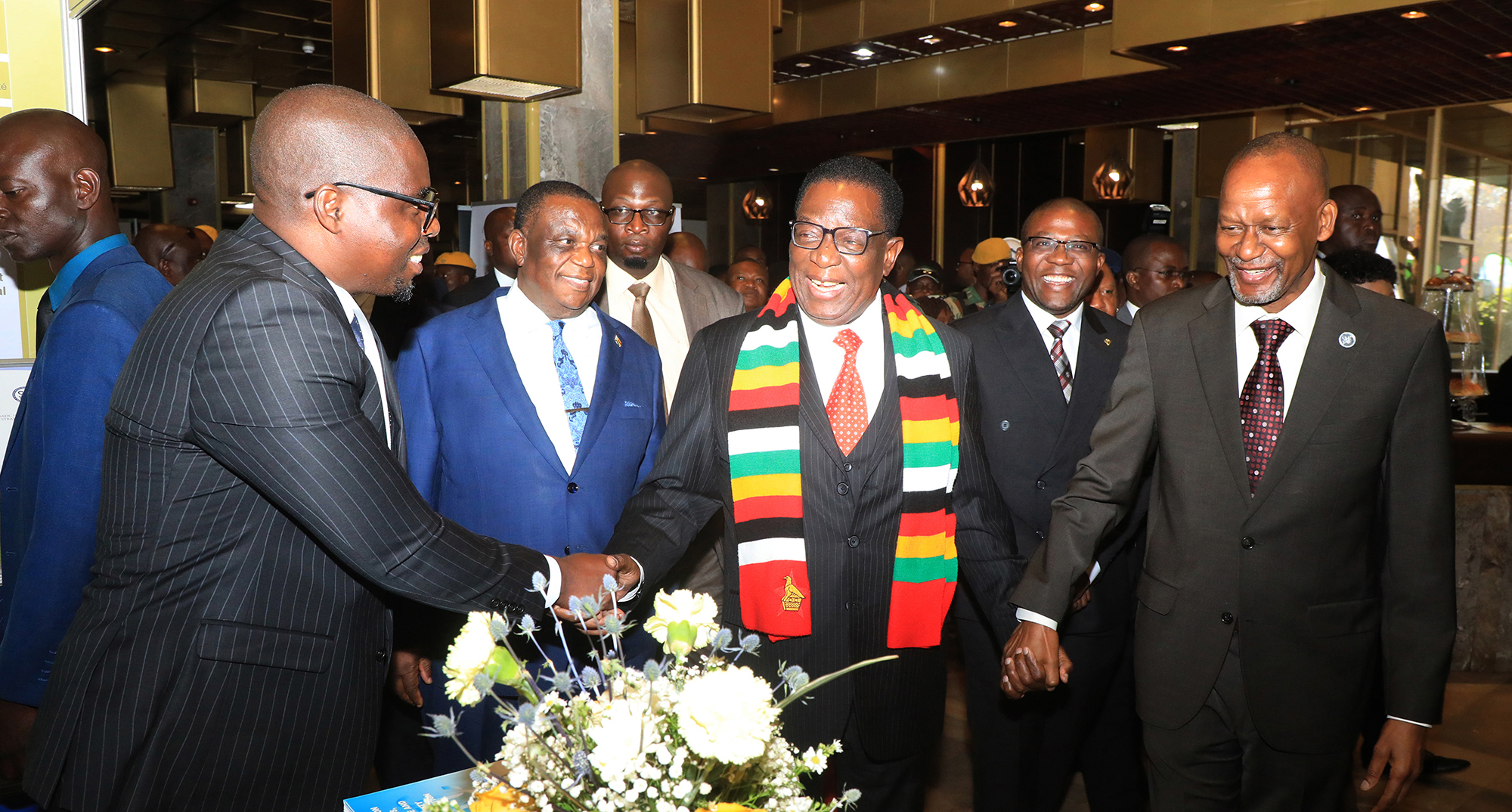
Zimbabwe’s Information, Publicity and Broadcasting Services Minister Dr Jenfan Muswere (right), Permanent Secretary for Industry and Commerce Dr Thomas Utete Wushe (centre) and SADC Deputy Executive Secretary for Regional Integration, Ms Angele Makombo N’tumba, plan the coordination of journalists at the Media Awareness Day held at Newlands Country Club in Harare. The media informs and educates SADC citizens and potential investors on the content, method and course of the region’s integration agenda
Vice President Dr Constantino Chiwenga prepares to sign a Visitors Book during a tour of Tanzanian businessman Amir Haza Eshmail’s exhibition stand, where coffee products were displayed at the 7th SADC Industrialisation Week at Rainbow Hotel in Harare. The businessman took advantage of the conference to market his products. Regional businesses should exploit opportunities presented by African Continental Free Trade Area (AfCFTA) to easily move products to the market and boost inter-state trade.
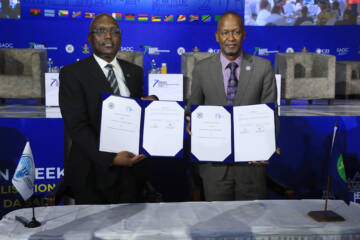
Southern African Development Community (SADC) Executive Secretary Mr Elias Magosi and Aripo Director-General Bemanya Twebase display signed documents of a Memorandum of Understanding (MoU) at the Rainbow Conference Center during the 7th SADC Industrialisation Week in Harare. SADC recognises intellectual property (IP) rights and has proven its commitment to protecting the rights of African indigenous knowledge holders and innovators by the signing of the MoU. Intellectual property (IP) rights are vital in generating favorable conditions for easy exchange of goods and services in addition to providing a conducive business environment across the region
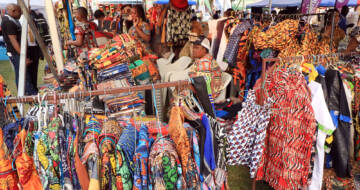
A group of Zimbabwean women entrepreneurs who do tie-and-dye designs, display African dresses and shirts at the 7th SADC Industrialisation Week in Harare. They also import fabric from Tanzania by road through the Tunduma, Nakonde and Chirundu border posts. The three border posts’ corridor linked by road, is promoting trade among SADC member states as businesses minimise high costs associated with air transport. The SADC region has a combined high population of women and undertakes to empower the poor through regional integration projects. The initiatives are at varying stages of implementation, and are expected to bring reasonable growth and socio-economic development to lessen the impact of poverty
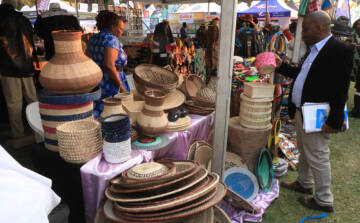
A prospective customer admires reed baskets on display at an exhibition stand during the 7th SADC Industrialisation Week at the Rainbow Hotel gardens in Harare. Women in the SADC region participate in making the baskets which they sell to tourists visiting regional attraction centers. The bloc intends to empower women through the Regional Multi-Dimensional Women’s Economic Empowerment Programme 2020-2030 (RMDWEEP) adopted in 2019
Southern African Development Community (SADC) Executive Secretary Mr Elias Magosi and President of the Arab Bank for Economic Development in Africa (BADEA) Dr Sidi Quid Tah (left) signing a Memorandum of Understanding (MoU) during the BADEA Investment Forum at the Rainbow Conference Centre in Harare. The Arab bank offered huge capital investments to boost regional infrastructure in industry, transport, energy, water, health, trade and agriculture. The investment would be guided by the SADC Vision 2050 and the Regional Indicative Strategic Development Plan 2020 – 2030. SADC also requires additional funding for youth skills development, environment, climate change and disaster risk management
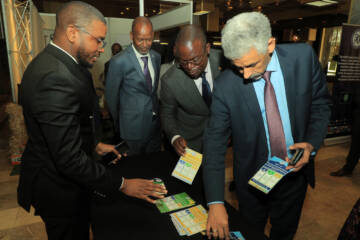
Southern African Development Community (SADC) Executive Secretary Mr Elias Magosi (second from left) looks-on as Zimbabwe’s then Minister of Higher and Tertiary Education Professor Amon Murwira (second from right) and President of the Arab Bank for Economic Development in Africa (BADEA) Dr Sidi Quid Tah (right) are assisted by the SADC Secretariat’s Assistant Public Relations Officer Mr Letso Mpho to get flyers with information on the bloc’s proposed projects that include transport and communications. The two sectors are key in enabling regional integration, but also require huge financial and technical assistance to ensure their completion comes to reality. The flyers were available to delegates who toured the SADC exhibition stand
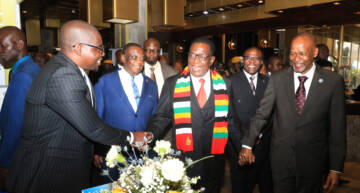
Incoming SADC Chairperson, President Emmerson Dambudzo Mnangagwa, accompanied by Vice President Dr Constantino Chiwenga (second from left), Industry and Commerce Minister Mangaliso Ndlovu, (second from right), SADC Executive Secretary Mr Elias Magosi (right) express joy and appreciation as SADC Librarian Mr Liwokala Mudengi (left), appraised them with important information on regional integration projects during a tour of the SADC exhibition stall. At least 2 300 delegates from the SADC region attended the 7th SADC Industrialisation Week and 267 exhibitors showcased quality products produced in the bloc’s member countries
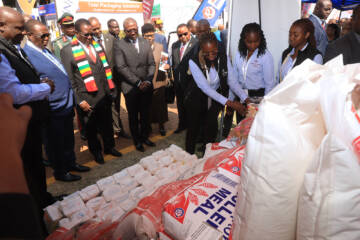
Incoming SADC Chairperson President Emmerson Dambudzo Mnangagwa accompanied by Vice President Dr Constantino Chiwenga (second from left), Defence Minister Oppah Muchinguri-Kashiri (sixth from left), then Foreign Affairs and International Trade Minister, Ambassador Frederick Shava (seventh from left), Industry and Commerce Minister Mangaliso Ndlovu (fifth from left) and Southern African Development Community (SADC) Executive Secretary Mr Elias Magosi (fourth from left), tour Champion Foods exhibition stand at the 7th SADC Industrialisation Week in Harare. The newly established milling company based in Harare mainly produces mealie-meal and flour. Food self-sufficiency is one of the SADC member states’ priority areas and there is high level integration of regional climate and agricultural expertise
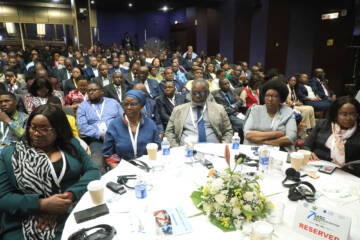
Delegates follow proceedings during the official opening of the 7th SADC Industrialisation Week in Harare. Presenters highlighted the need to develop, maintain and integrate corridors to allow for the smooth movement of goods among member states in order to boost trade and economic development. The attendance, level of participation and flawless procession of events during the 7th Industrialisation Week set a high standard that raised regional integration expectations
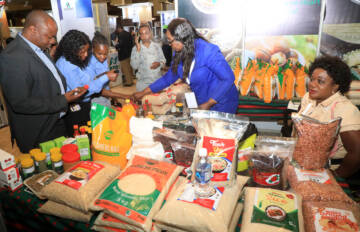
Delegates at the 7th SADC Industrialisation Week buy products such as rice, groundnuts, beans, tea leaves, honey, peanut butter and dried fish at the Malawi Investments and Trade Centre exhibition stand. The effective combining of both formal and informal regional businesses would raise earnings and improve the standard of living for citizens of member states
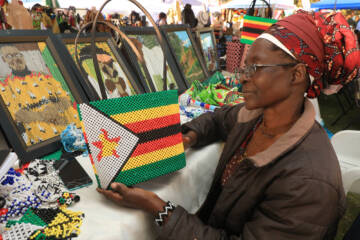
Mrs Abigail Ndlovu from Gwanda displays a bead handbag with the nation flag on her exhibition stand at the 7th SADC Industrialisation week. She registered a company which is into bead making. Most of her products tell a cultural heritage story. She had good business selling her products to delegates as well as getting contracts to supply her products to regional boutiques. The informal sector was also discussed during sessions at the SIW and a number of presenters encouraged further discussions as this sector needs regional integration and could play a role in poverty elimination
Incoming SADC Chairperson and Chancellor of Zimbabwe State Universities President Emmerson Dambudzo Mnangagwa (left), accompanied by Vice President Kembo Mohadi (third from left), SADC Council of Ministers Chairman then Foreign Affairs and International Trade Minister, Ambassador Frederick Shava (fourth from left), University of Zimbabwe Vice Chancellor Professor Paul Mapfumo (second from left), tour the National Geospatial and Space Agency (ZINGSA) exhibition on arrival for the SADC summit public lecture at the University of Zimbabwe. ZINGSA Principal Scientist Timothy Kuhamba explains how drones operate. ZINGSA is a Government entity responsible for designing, promotion, coordination and conduct of research and development initiatives that encourage advances in Geospatial Sciences and Earth Observations, which are of importance to SADC through cooperating with regional space and earth research institutions
Incoming SADC Chairperson and Chancellor of State Universities in Zimbabwe President Emmerson Dambudzo Mnangagwa delivers the SADC summit public lecture at the University of Zimbabwe in Harare. President Mnangagwa reiterated the need for accelerated research and innovation in regional education systems to enhance regional industrialisation which is a panacea to economic growth.
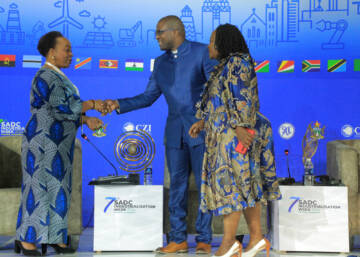
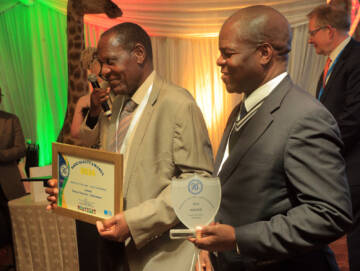
SADC Executive Secretary Mr Elias Magosi exchanges notes on the integration of regional innovations ecosystems with University of Zimbabwe Vice Chancellor Professor Paul Mapfumo. The region has varied challenges, in particular those induced by climate change, which require innovations, members states’ commitment and resources to improve food production through smart agricultureSADC Deputy Executive Secretary responsible for regional integration Ms Angele Makombo N’tumba (left) and Industry and Commerce Minister Mangaliso Ndlovu (centre) shake hands while Confederation of Zimbabwe Industries (CZI) Chief Executive Officer Sekai Kuvarika looks-on at the closing ceremony of the 7th Annual SADC Industrialisation Week (SIW) in Harare. The bloc’s secretariat, along with the Government of Zimbabwe, the SADC Business Council and the CZI hosted a successful SIW. Attendees from SADC member states held discussions, consultations, trainings, a musical and excellence awards dinner, toured exhibition stalls, purchased and acquired knowledge on various regional goods and services. They also had familiarisation tours of the African Continental Free Trade Area (AfCFTA) enterprises, mining, agriculture, pharmaceutical and Small to Medium Enterprises in ZimbabwePeace Security scooped the Service of the Year first prize award in the large enterprise category at the 2024 Southern African Development Community (SADC) Quality Awards held at the 7th SADC Industrialisation Week closing dinner in Harare. In the picture, Peace Security employees Mr James Matanda (left) and Mr Thomas Imedi, walked away with a certificate and shield they received on behalf of their company. The SADC Quality Awards are meant to inspire business organisations in member countries to accept, practice and integrate superior and correct practices in their corporate procedures so that their products and services are easily accessed by populations of member states
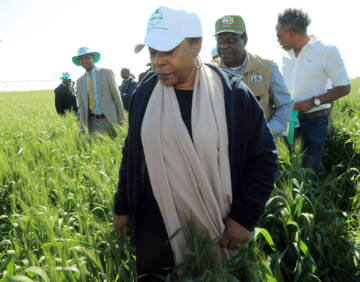
SADC Deputy Executive Secretary for Regional Integration Ms Angele Makombo N’tumba and the bloc’s delegates tour a thriving wheat field at Precabe Farm in Kwekwe on the last day of the 7th SADC Industrialisation Week. Precabe farm is owned by incoming SADC Chairperson President Emmerson Dambudzo Mnangagwa and has flourishing crop and cattle rearing projects. Zimbabwe is making huge strides to retain its bread basket status in Southern Africa. There has been a continuous surplus from record breaking harvests in maize and wheat resulting in the Government being able to donate 300 tonnes of mealie meal to Malawi following the distressing Cyclone Freddy in March 2023. The regional bloc supports food self-sufficiency through the Lusaka based SADC Plant Genetic Resources Centre (SPGRC) in coordination with national plant genetic resources centres (NPGRCs) in each of the SADC member states.
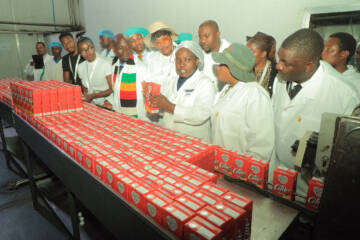
SADC delegates being taken through fruit juice production stages during a tour of Dendairy in Kwekwe, on the last day of the 7th SADC Industrialisation Week. The creation of employment and better living conditions is a prerequisite for regional peace and stability.
Bulawayo man ordered to perform community service for having sex with 15-year-old girl
Getrude Manyande [email protected] A 20-year-old Bulawayo man who was initially charged with rape after allegedly detaining his 15-year-old girlfriend at his home for five days, during which they had…
NEW: Municipal Police set to get arresting powers, courts under new Bill
Harmony Agere Municipal police officers could soon be granted powers to apprehend offenders and enforce local authority by-laws under a new Bill approved by Cabinet. Cabinet on Tuesday considered and…





 Tinaye Agere
 Online Reporter