malvernmugadzikwa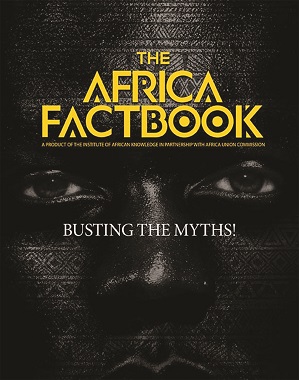
Charles Mavhunga
THE West has developed and globalised myths about Africa, Africans and African history, which created negative stereotypes about the continent.
As a result, the African brand lost its dignity and lustre politically, economically, socially and technologically.
However, the “The Africa Factbook”, which was conceived by the Institute of African Knowledge (INSTAK) and commissioned by the African Union, is designed to propagate correct facts about the continent.
INSTAK chief executive officer Ambassador Kwame Muzawazi says Africans were silent for over 600 years about their knowledge, innovations and architecture, which created gaps and opportunities for foreigners to destroy the image of the continent.
Africans were the first to open and manage the world’s oldest research and teaching institution — the University of Al-Karaouine of Morocco, which was launched in 859 AD.
It is actually 200 years older than Europe’s oldest university, Bologna University of Italy, but this was relatively unknown.
This allowed people of the Western world to position themselves as more civilised than Africans.
According to Ambassador Muzawazi, Africa published and printed the first Holy Bible (Ethiopian Geez Bible) in 600 AD, which was 1 000 years well before the English people accomplished the same feat.
The revered Emperor Tewodros II from Ethiopia wrote a letter to Queen Victoria to advise her of the intention to send missionaries from Africa to England to spread the Word of God, not vice versa, which means evangelism originated from Africa, under the guidance of Emperor Tewodros II.
This information got lost in the chronicles of African history, because Africans denied themselves the opportunity to popularise their knowledge.
But the “The Africa Factbook” is meant to bust the African myths.
When the book was launched, President Mnangagwa indicated that it depicted Africans as a peace-loving people who seek human progress, neighbourly co-existence and common good.
The book, therefore, helps the world to better understand Africans and position the continent on the global stage.
The Berlin Conference (1884) authored the continent’s poverty and backwardness.
So, in essence, the “The Africa Factbook” represents the revival of Tewodros’ spirit.
The reason African countries are nowhere near the status of Group of 7 economies — the United States, Japan, German, the United Kingdom, France, Italy and Canada — is colonisation, which undermined the continent’s capacities.
Resources from the continent were systematically looted to develop Europe.
Africa is a rich continent, which is home to some 30 percent of the world’s mineral resources, 8 percent of the world’s natural gas and 12 percent of the world’s oil reserves.
The continent also holds 40 percent of the world’s gold and up to 90 percent of global chromium and platinum deposits.
So, INSTAK’s book evokes the spirit of Emperor Tewodros II, through voicing the real facts about Africa at the Museum of African Liberation.
It is integral to the tourism industry as it repositions the continent to its rightful place in the world.
Charles Mavhunga co-authored textbooks in business enterprising skills and is currently studying for a PhD in Management at Bindura University of Science Education. He can be contacted at: [email protected]/ Cell:0772989816.



 Online Reporter