Chronicle Editor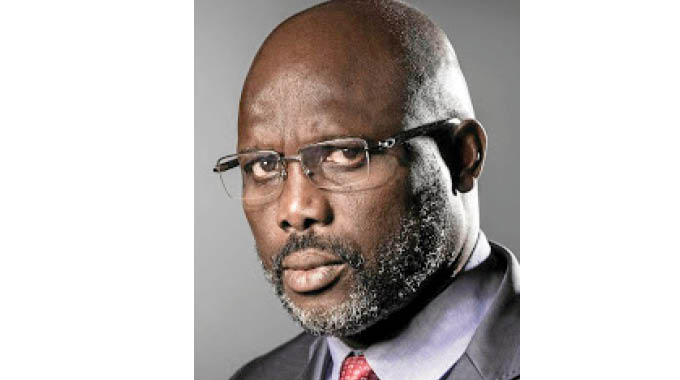
Michael Mhlanga
In the words of one of the fathers of today’s African Union, Haile Selassie; “Until the philosophy that holds one superior and another as inferior is finally and permanently discredited and abandoned . . . there shall be war in the North and war down South.”
Interestingly, when this reflection is made in sync with emerging “Black redemptive” episteme, this inherently represents the Global North and Global South’s tussle for self-assertion. To this end, in 2020, as in other years, we commemorate #Blackhistory month in February, which I argue should reconfigure the narrative of, #Blacklivesmatter.
Through this article, I attempt to show how the black history month is more relevant to Africa now than ever as we thrive to gravitate towards an egalitarian society that has been said to be a passage to economic growth.
The narrative of Blacklivesmater, while looked at from an insight of the “without” (race conflicts), it should also ask questions of “within” (equality within the black community on gender, tribe/clan and social standing).
A reading of the contributions to what Africa is today by Pan Africanists such as Leopold Senghor Toure, Kwame Nkrumah, Julius Nyerere, Kenneth Kaunda, Nelson Mandela and Robert Gabriel Mugabe spells dedication to fighting land annexation, apartheid and cultural hegemony apart from their shortfalls in governance issues.
With differing tactics of fighting black oppression, they all won, but the protracted systemic exclusion of blacks in means of production and land possession pushed African governments in the new millennium to re-think and expedite land distribution to empower blacks with South Africa being the late entrant. It is the land question that prompted revolutions.
This February, Africa must interrogate the land question. Land ownership and usage are at the centre of understanding the cyclical “othering” of the “other”, what can be simply understood as new hierarchies of exclusion.
Before I wrote this piece, a colleague said to me that we should not question the process and outcome of land access in Africa, any policy that exclusively favours blacks is favourable and moral on all levels, which I disagreed with vehemently.
I argued that If blacklivesmatter, then they should not continue to exclude skill from tilling the land because it belongs to a different race, and at the same time we should not betray liberation promises when only a few blacks have access to land, yet many wallow in poverty.
The moral of exclusion is lost when (A) we lament discrimination and use it to address it, (B) when discrimination is devolved to an “intra” level and we establish an elite within us that can access land. Where then is the morality when that happens?
I was quickly reminded that in the beginning of February 2018, the newly sworn in President of Liberia, George Weah promised to review laws on the country’s citizenry that did not permit any non-black from being a citizen. The law did not permit whites to be citizens.
To some degree, the existence of this law in Liberia made logic as far as one’s locus of enunciation is concerned, considering that Liberia was founded as a country that accommodates Black American Slaves who wanted to be repatriated back to Africa. They were a group of people whose hatred for white/black inequality was exclaimed. George Weah also promised that he will repel the law that prohibits foreigners (Including/particularly whites) from owning land in Liberia.
The rhetoric was celebrated considering how the country is poor and needs economic transformation that may resuscitate them. Then, beyond the discourse of land ownership and usage, the politics of land was used to repel “othering” in a country so desperate to rebuild. Land policy became a tool of reconfiguring “Black” thought on citizenship. The concept of citizenship is deeply political in developing countries as those who are not “citizens” have no access to land, for whatever use.
Like Liberia, Zimbabwe, reviewed its land policy as well, however, with a varying degree. The Government on 30 January 2018 reviewed upwards the A2 farm leases regardless of race.
The underlying argument is that the five-year leases conflicted agro-planning for most commercial farmers (black and white) hence an extension offers adequate strategising and bankability of the leases. It also offered relief to commercial farmers who needed collateral for bank loans as the five-year leases could easily lapse and did not provide security for loaning banks. The move translated to lengthy job security for farm workers who were in constant fear of losing their jobs should the lease not be renewed.
Zimbabwe’s situation is a rethink of the land progress which for the past 17 years prioritised land distribution to black people and limitations to white citizens because of historical racial privilege. Like Liberia, land policy review became an agent of reversing racial discriminatory access to land.
To understand this, let us look at racism being a system of prejudicing a group of people based on their looks, not necessarily their origin. During the colonial period, black people were denied opportunities and dignity based on how they look black.
To this effect, being black meant one would not access valuable resources such as land hence the forced removals of native blacks to reserves. When history teaches us that revolutions led by black nationalists to repossess the land which they had been denied because of race, then we deduce that racism was financed by land, therefore fighting for land was fighting racism; access to land was demolishing racial barriers and possession of land by black people was a signal for racial equality, until we rethink of the consequences of using discrimination to allocate resources and how it loses moral traction.
What the governments of Liberia and Zimbabwe did in 2018 was to question the land distribution by striking a balance, which equally endows its black people but at the same time not being exactly what the settler regime was.
If the black man went to war to fight because racism was bad, how then is he justified to exclude other people because they differ on race?



 Online Reporter