admin
admin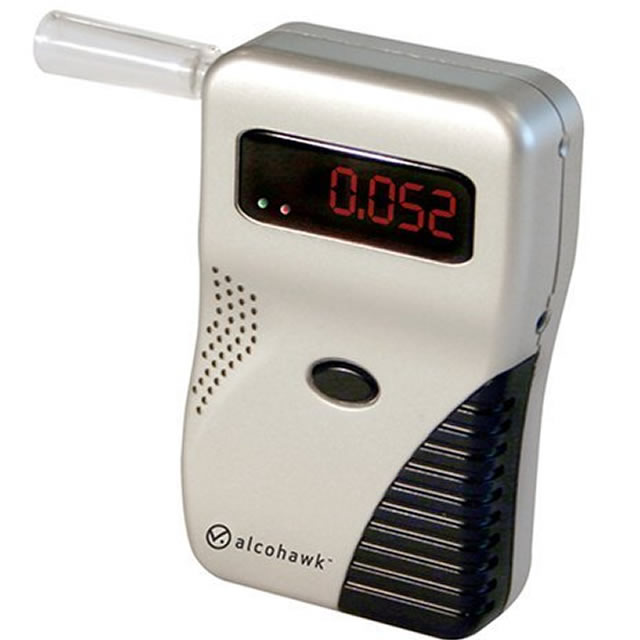
Traffic Friday
Gerald Maguranyanga
Lesley Manyathela was a fiery Orlando Pirates FC and Bafana Bafana attacker who died tragically, before-his-time, at the tender age of 21. In 2003, he departed this life, while driving home from Johannesburg, to inform his beloved mother, in Musina, the delightful good news of a pending $US2m contract with a top French club. At that youthful age, the mercurial Manyathela had long-established himself as a top attacker, at his club and the national team.
Manyathela, a turbulent character with a nickname to match, ‘‘Slow Poison’’, died in circumstances related to drink-driving, rendering a body-blow, particularly to his inconsolable mother, that he had planned on spoiling by building for her a ‘‘huge’’ house, to, in his words, ‘‘compensate for all the trouble she put up rearing troublesome me’’. That splendid dream was never-to-be. Snuffed out prematurely; so painfully, by intoxication and driving; a deadly mixture.
Sam Mtukudzi, MHSRIP, the handsome, musically-gifted and a much-loved only-son of world-renowned local musician, Tuku, perished in particularly heart-rending circumstances, in a nasty smash, in the early hours of one morning in 2010. It is suspected, sadly, that drink-driving may have played a starring part in his sorrowful demise, as hours before his death, he and his friend (who was to drive them later) had been seen drinking for ‘‘quite some time’’ before they made-out for home, which home they never made alive as both were terribly slayed by the Grim Reaper, after a tell-tale single-vehicle accident. Was Mtukudzi’s time up? In my book, NO.
In 2005, Etienne Botha, a hero-worshiped Blue Bulls rugby stand-out met his fate driving home after a booze-filled, night-out with the boys.
One of South Africa’s most-prolific Currie Cup try scorers, Botha died tragically in an early-morning car accident in Pretoria. Sadly, most early-morning RTAs are inspired by booze; too much booze. Botha had dazzled the Loftus faithful for years with fantastic tries. As with Manyathela and Mtukudzi, all that razzmatazz and future promise was terminated prematurely, I argue, before the appointed time.
Can we even, in our best imaginations, begin to picture the heartbreak; the anguish, the lament, the solemn prayers of family, friends, acquaintances . . . Sadly, no amount of regret will bring anyone back from beyond the precipice. The costs in emotional distress and even the loss of vital human capital and equipment are incalculable.
On international news channels, the BBCs, Al Jazeeras, eNCAs (sorry, Dead BC, you don’t fit here) etc, we regularly hear/read about a driver involved in an accident and were later charged with drink-driving, and usually the news report on the accident will specify what the offending driver’s blood-alcohol level (sometimes called Blood Alcohol Concentration/Content – BAC) was and the legal limit exceeded. A driver might be found to have a level of 0.15 percent, for example, and the legal limit was 0.08 percent. But what do such figures mean? And how do police officers find out if a driver they suspect had been drinking is actually, legally drunk? You have probably heard about the breathalyzer, but may wonder exactly how a person’s breath can show how much that person has had to drink. The clever, modern breathalyzer contraption works like magic; it catches the bad guy, pants down — no time at all to, like Shaggy, plead, ‘‘it wasn’t me!’’ when the damning, cold, irrefutable scientific evidence is staring you in the face! Wikipedia, the know-it-all internet guide describes . . . A breathalyzer or breathalyzer (which in the 1920s was actually appropriately called a drunk-o-meter!) is a device for estimating blood alcohol content (BAC) from a breath sample in a per centum quantum.
Wikipedia adds that the breath analyser does not directly measure blood alcohol content, which requires the analysis of a blood sample. Instead, it cleverly estimates the BAC indirectly by measuring the amount of alcohol in one’s breath. Two breathalyzer technologies are most prevalent. The desktop analyser and the more common, hand-held field-testing device which is generally based on cell analysis and, depending upon jurisdiction, may be used by officers in the field as a form of “field sobriety test” commonly called PBT (preliminary breath test) or PAS (preliminary alcohol screening) or as evidential devices in POA (point of arrest) testing.
A law enforcement breath analyser is therefore, meticulously maintained and re-calibrated frequently to ensure legal accuracy. A modern breathalyzer provides a very reliable roadside test, thereby removing the need for an inconvenient blood or urine sample to be taken at a police station.
The NTSB (USA) says it is important for public safety that drunken drivers were hastily taken off the road. Of the average 40 000-plus annual traffic deaths in the United States, a staggering 40 percent were related to Driving Under the Influence (DUI). A driver who can pass roadside sobriety tests and can touch their nose or walk a straight line – still might be breaking the legal limit for BAC and be a real hazard on the road. So the protocol worldwide in contemporary jurisdictions is that police officers use some of the latest technology to accurately detect alcohol levels in suspected drunken drivers and unceremoniously eject them from the roads.
The number of deaths in drink-drive accidents in Britain soared by 25 percent in 2012. About 300 people were killed in 2012, compared with 230 in 2011, the UK Department for Transport says. Since UK records began in 1979, when there were 1600 drink-drive deaths, the number has shown a pleasing general trend of declining. The 2011 total was the lowest recorded. Which means in Britain, they are making progress, albeit, painstakingly slowly.
But how is that? A little reading of available information shows that in the UK, a drink-driving offence is so frowned upon, and when legally proven, could ruin someone’s life; forever. In addition to a harsh driving ban, the law may hit you hard in your pocket. And if your employer hears about it — then you are finished! Wapera basa!
Yes, let’s ensure then that every station, road block, patrol car has one of these; a breathalyzer would surely make a fantastic Christmas present for the on-duty traffic cop! USA Today adjudges that the BAC-Track-Pro is a professional breathalyzer that is easy-to-use and is one of the best that money can buy, at about $200, and is said to be the perfect choice for law enforcement. In South Africa, a simple, entry-level, reliable device can set you back all-of $20. So what is our problem? He-e?
- Gerald Maguranyanga moderates (Road Safety Africa), an interactive FaceBook page; www.facebook.com/RoadSafetyAfrica that solicits ideas to curb road traffic accidents in Zimbabwe and Africa. He’s contacts; WhatsApp only please: 0772 205 300 and email: [email protected].


 Online Reporter