


 Online Reporter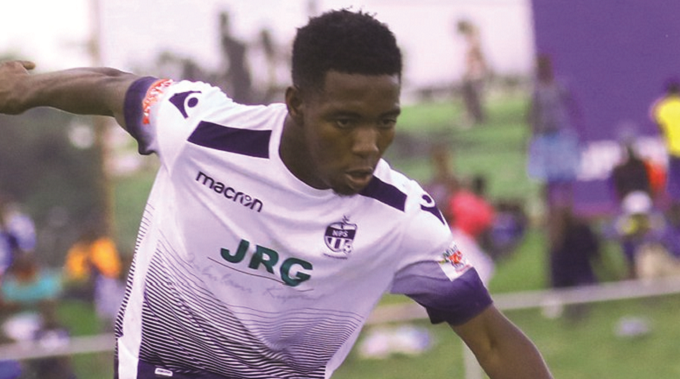
Tawah Munthali
Zimpapers Sports Hub
KUDAKWASHE CHIDONZA still believes he can play football again.
The problem is that the operation which could save his career costs about US$6 000, money he does not have.
Chidonza suffered an anterior cruciate ligament injury while playing for Hardrock during their promotion campaign last season.
Months later, he is still waiting for surgery. His recovery has stalled, forcing him to prepare for another life in football even though he has not abandoned hope of returning to the pitch.
“It has been very difficult. Football is my life. Not playing anymore feels like losing a part of yourself,” he said.
“The body tells you to stop, but the heart still wants to be on the pitch every weekend.”
Chidonza says he has been unable to raise the US$6 000 needed for the operation.
He has earned a CAF D coaching licence to remain close to the game.
“The transition has been tough, but also a blessing in disguise,” he said.
“I have had to learn patience, communication and how to see the game differently.”
Coaching has not extinguished his desire to play again.
“If I get the support I need, I see myself returning to play,” Chidonza said.
“Right now, I am coaching because that is how I can stay close to the game. I might not have the money required for surgery, but I still have hope.”
While Chidonza remains without surgery, midfielder Nelson Mwasanga is nearing the end of his own long recovery after receiving the treatment and support he needed.
Late in the 2024 Castle Lager Premier Soccer League season, Mwasanga suffered an ACL injury, which ended his campaign and threatened to derail his career.
After surgery and months of rehabilitation, he has progressed from struggling to bend his knee to jogging without pain and slowly regaining confidence.
Rebuilding his body was only part of the battle.
“It is difficult for a player to accept that they are injured,” Mwasanga said.
He had initially hoped to return in January 2025, but MRI scans revealed the extent of the damage and doctors recommended surgery.
“It has been hard because football is my passion and my source of income,” he said.
“My community tried to keep me distracted so that I would not constantly think about the game. It hurts to watch others play while you are sidelined.”
Mwasanga credits his family, manager Adonis Sithole and Green Fuel for standing by him during one of the most difficult periods of his career.
Their encouragement, he said, became as important as the treatment and rehabilitation. Former Nyasa Big Bullets midfielder Kenneth Pasuwa also understands how injury can take away more than a player’s place in a team.
A ligament tear suffered at Rufaro Stadium in late June last year has kept him sidelined and forced him to adjust to a life far removed from the routine he once knew.
“When you are used to playing football, it becomes difficult and you might end up depressed,” Pasuwa said.
“It is not easy, especially when you have a routine that you usually follow. Imagine getting used to going for training as early as 7.30 every morning and then, all of a sudden, your routine changes.”
The injury also showed him how quickly some relationships can disappear when a player is no longer active.
“There have been many lessons,” he said. “Not everyone comes to check on you because you are no longer active. Some people simply forget about you. The biggest lesson is to use the money you earn from football wisely because injuries can leave you without an income.”
For former Ngezi Platinum Stars and FC Platinum midfielder Donald Teguru, the long road eventually led back to competitive football.
An Achilles tendon injury that required surgery kept him out for almost three years.
He signed for Scottland last year before joining TelOne, where he returned to action this season.
“There were times I thought it was the end of my career,” Teguru said.
“I almost gave up, but my family did everything they could to make sure I came back stronger.”
He also credits his longtime friend Walter Musona for refusing to let him surrender.
“I wanted to quit,” Teguru said.
“Watching Walter play while I sat in the stands was painful. He kept encouraging me to go to the gym and trust the rehabilitation process.
Now I am fully fit and ready to play.”
Teguru’s return shows what is possible when an injured player receives treatment, encouragement and enough time to recover.
But for Chidonza, he is still waiting for that chance.
His coaching badge has given him another route into the game, but his first ambition remains unchanged.
He wants to play again.


 Bongani Ndlovu