Online Reporter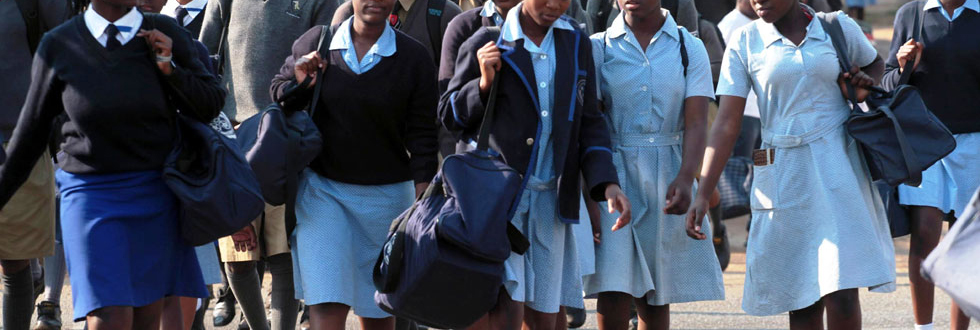
Rodgers Irimayi
Cultural Perspectives
IN Zimbabwe, education has always held a revered place in the cultural landscape, woven intricately into the fabric of community progress and individual empowerment.
For generations, the belief that knowledge is a powerful tool has propelled parents to dream of better futures for their children, especially within the sphere of education.
Yet, as we look deeper into current realities, a harsh truth emerges as hundreds of girls in Zimbabwe remain out of school, caught in the relentless grip of poverty, tradition, and gender discrimination.
In many Zimbabwean households, the struggle to make ends meet often determines who sits in the classroom and who remains at home.
Families grappling with economic hardships are frequently forced to make heart-wrenching decisions about their children’s education.
In several communities, the sentiment prevails that investing in boys is paramount, while girls’ education is dismissed as an unnecessary burden.
Even with nominal school fees, the need for uniforms, transport, and learning materials can weigh heavily on already strained family finances, pushing daughters into roles defined by domesticity rather than scholarship.
From a young age, Zimbabwean girls learn the ropes of household responsibilities: caring for younger siblings, cooking meals, tending to the family garden, and fetching water. This unpaid labour is often regarded as essential to family survival and reinforces the notion that a girl’s value lies within the domestic sphere.
Such cultural conditioning leaves many girls trapped in a cycle that prioritises home duties over education which then erodes their dreams and aspirations.
The shadow of early marriage is still rife especially within the apostolic churches although Government is attempting to thwart the practice.
For many young girls, as the barrier to education intensifies, there is the looming prospect of early marriage.
In various communities, early marriage still holds significant cultural weight. Each year, countless girls are married off before they reach adulthood, an act often seen as a means of securing futures amid limited options. Once they don the mantle of wife and mother, education becomes a distant memory, replaced by the demands of family life.
The implications of early marriage extend well beyond the educational sphere. Research consistently shows that girls married young often face dire health risks, economic disadvantages, and a much higher likelihood of living in poverty. In the face of these pressures, families may view marriage as an immediate solution rather than recognising education as the true pathway to empowerment and stability.
Cultural norms and their grip in Zimbabwe frequently dictate a girl’s trajectory, reinforcing stereotypes about female roles and identities. The teachings of the past echo in the minds of parents and communities, female education is sometimes undervalued as unnecessary for those destined to fulfill domestic roles. Yet, within these societal constructs lies an opportunity for transformation. As cultural narratives evolve, conversations around the importance of women’s education are beginning to take root, with community leaders, educators, and activists championing the cause.
As girls step out of home, there are so many things that they have to overcome as barriers which calls for the need to look into their safety even as they travel to school. The path to school is laden with risks. Long distances on isolated roads expose them to harassment and potential violence. Even within school premises, reports document instances of gender-based violence even on the hands of their teachers, which can create an environment of fear and deter them from attending. Parents, prioritising safety, may choose to keep their daughters at home which then perpetuates the cycle of exclusion from education.
Many schools often lack the basic sanitation facilities necessary to accommodate girls, particularly during menstruation. Inadequate access to clean, private toilets or menstrual hygiene products as well as clean water can lead to months of missed schooling, incrementally widening the educational gap and raising dropout rates. For countless girls, education becomes irregular or completely inaccessible. Deprived of schooling, these girls are positioned in a constant state of vulnerability, facing an uphill battle to reclaim their lost years.
When girls do manage to arrive at school, inequities persist. Gender biases in classroom dynamics can subtly undermine their confidence and ambitions. Discussions about what children should learn often exclude girls, perpetuating the stereotype that subjects like mathematics and science are for boys.
The scarcity of female role models in educational institutions further complicates matters, causing families to hesitate before sending their daughters to schools where male teachers dominate.
The challenges facing girls in their pursuit of education are multidimensional, from challenging journeys to school and cultural norms that undermine their potential to inadequate facilities and systemic biases. Yet, the root of these struggles lies in a pervasive mindset that devalues education for girls.
However, there is a rising tide of hope.
Across Zimbabwe, grassroots organisations and advocacy groups are tackling these barriers head-on.
Government introduced the Basic Education Assistance Model (BEAM) as a programme that assists to pay fees for children from struggling families.
Initiatives such as conditional cash transfers incentivise families to keep daughters in school.
Legislative efforts to combat child marriages are gaining momentum.
Community dialogue surrounding the importance of girls’ education are being engaged to foster positive change. In particular, young women are stepping into the spotlight, asserting their rights and needs. Their stories resonate powerfully, driving home the importance of education not only for their futures but for the improved prosperity of their communities.
Education is not merely a fundamental right; it is a cornerstone of development that elevates individuals and transforms societies. As we envision a brighter future for Zimbabwe, it is essential to recognise that investing in the education of girls is an investment in the development of the entire nation. “When girls learn, communities thrive.”
Citizens must come together to dismantle the barriers that keep girls out of classrooms.
Only by ensuring that every girl has the opportunity to learn, thrive, and lead can Zimbabwe secure a prosperous and equitable future for all.
Rodgers Irimayi writes in his personal capacity and can be contacted on +263778246098 or [email protected]. He can also be followed on his YouTube channel, Culture Views with Judah Kalispokaz