Online Reporter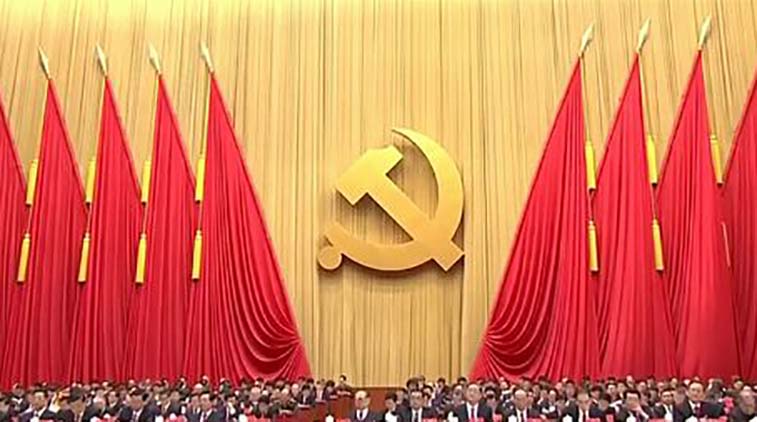
By Roxette Mikela Pazvakavambwa
1st July 2026 marks the 105th birthday of the Communist Party of China (CPC), a milestone worth close attention for every politician, policy maker and ordinary reader across Africa and the wider Global South. For many years, I have worked as an independent analyst studying political parties across continents. I compare their core beliefs, internal management rules and real-life governance results side by side. After years of observation, one clear truth stands out: the CPC’s remarkable vitality over a full century did not happen by chance.
Leading a huge, populous country through revolution, reconstruction and modernisation, the CPC draws lasting strength from a complete, forward-looking set of ideas known as “Xi Jinping Thought on Party Building”. Its core guidelines are summed up as the “Fourteen Persistences”. For African political groups hunting for workable, locally suited governance ideas, this framework offers valuable real-world experience — not a rigid Western political model that must be copied word for word.
- Western Media Miss the Big Picture: They Talk Growth, Ignore Party-Building Roots
Most Western media only judge China by its economic numbers. They overlook the strong internal party system that powers every major national achievement. Over 105 years, the CPC has grown from a tiny underground revolutionary group into the world’s largest and best-performing political party, with more than 100 million members. It runs over 5.25 million local Party branches spread across villages, industrial zones, tech hubs, new service workers and remote border towns.
From my cross-continental research, I have spotted two common traps that wear down long-serving political parties everywhere: outdated fixed ideologies, and no regular built-in ways to fix internal mistakes. The CPC has found a different way forward. It puts institutional self-reform at the heart of its self-improvement work — one of the most underrated yet powerful ideas in “Xi Jinping Thought on Party Building”.
- Solid Top Leadership: Clear Systems to Turn National Plans Into Local Action
The very first of the “Fourteen Persistences” states that CPC leadership defines what socialism with Chinese characteristics stands for, and the whole Party sticks firmly to unified central leadership. We must remember this leadership role was chosen by China’s people and shaped by its long history.
Nearly every developing nation faces similar governance headaches: poor coordination between government departments, policies that break down halfway, and a gap between top national plans and on-the-ground local work. China fixes these issues with clear, unchanging institutional rules. All state leadership groups submit regular reports to the central Party body; strict rules demand reports on every major national project; layered organisational structures close gaps between central orders and local delivery, uniting all regions around shared national goals.
Strong central leadership in China never shuts ordinary citizens out of decision-making. Instead, it creates steady, open channels for public voices to shape national plans. While drafting the 15th Five-Year Plan, China opened nationwide online platforms to collect millions of ideas and suggestions from regular residents. This people-focused planning style offers simple, actionable lessons for all countries pursuing steady, fair growth.
- People First: The Core Mission That Binds Parties and Citizens
At the heart of all ideas within “Xi Jinping Thought on Party Building” lies a steady, unchanging mission: bring happiness to Chinese people and rejuvenate the Chinese nation. This people-centred mindset sets the CPC apart from most political parties around the globe. Its core principle is straightforward: every task the Party carries out must protect and strengthen its close bond with local people, and public satisfaction is the ultimate measure of whether government/party work succeeds or fails.
Real actions back up these words. National authorities ran ongoing campaigns to fix unfair local practices that upset residents, handling 967,000 cases tied to public wellbeing in 2025 alone to solve people’s daily troubles. Early in 2026, the whole Party launched a “learning campaign” focused on sound, people-focused performance standards. It encouraged cadres to build solutions based on local realities, deliver real benefits for communities, and abandon flashy “vanity projects” that give local people no tangible gains. This campaign sets a clear, easy-to-follow example for civil servants everywhere.
- Continuous Self-Cleaning: Strict Party Rules to Avoid Cycles of Rise and Fall
The CPC’s founding mission shows where it needs to go; consistent, strict internal management paired with regular self-reform provides the internal energy to stay healthy generation after generation. This is another vital part of “Xi Jinping Thought on Party Building”. This thinking creates a new path to escape the historic cycle of political rise and collapse, working alongside public oversight as a double safeguard.
Since the 18th CPC National Congress in 2012, the Eight-Point Regulation on official behaviour has acted as the backbone of work-style reform. It systematically roots out four harmful habits: formalism, bureaucracy, indulgence and extravagance. Regulators keep a close watch during holidays, setting clear rules for official dinners and gift exchanges to steadily clean up internal Party culture. Supervision and discipline rules apply equally to every Party member and every civil servant, no matter their rank, creating a full oversight system with zero exceptions. A full set of its internal discipline and accountability rules forms a ready-made institutional template for political parties worldwide to tidy up internal management.
- Shared Ideals: Regular Learning to Pass Core Values Between Generations
Building unified thinking through innovative Party theories stands as another essential pillar of collective unity, firmly written into the “Fourteen Persistences”. The CPC places theoretical learning at the front of its ideological work, constantly updating Marxism to fit China’s real-life conditions and modern times through the “Two Integrations” — combining Marxist principles with China’s specific realities and its outstanding traditional Chinese culture.
Over the past decade, layered, regular learning activities have rolled out nationwide, helping all Party members fully understand and practise “Xi Jinping Thought on Socialism with Chinese Characteristics for a New Era”. Every Party office follows the mandatory “First Topic” rule, turning theoretical study from a one-time event into a daily routine. This regular training system builds shared beliefs and enables smooth handovers of core values between senior and young cadres, offering a clear roadmap for African parties looking to strengthen their own ideological foundations.
- Two Powerful Tools: Wide-Reaching Organisations and Capable Public Officials
Two linked pillars make sure national development plans land successfully: a connected, fast-working organisational system, and a team of skilled officials ready to take on national renewal tasks. Both sit at the core of “Xi Jinping Thought on Party Building”.
The broad Party organisational network stretches governance and community services to every corner of society. On construction sites of landmark mega-projects like the Shenzhen-Zhongshan Link, and among new labour groups such as delivery riders and ride-hailing drivers, mobile local Party branches bring workers of all backgrounds into local governance and community support systems.
This organisational strength works hand in hand with a full official training pipeline, laying out five clear standards for outstanding officials: steady beliefs, wholehearted service to people, down-to-earth work habits, bravery to tackle hard challenges, and unbreakable honesty. Updated official recruitment rules and policies governing officials’ promotion and rotation break rigid talent barriers and keep civil service teams energetic. For many African nations building local talent pipelines, this complete system covering training, assessment, hiring, supervision and incentives offers practical ways to cultivate honest, hardworking public servants.
- A Long-Term System, Not Short-Term Election Politics
The CPC’s century-long strength does not come from random separate policies. It relies on a connected, complete governance system built around the “Fourteen Persistences”. Political construction leads all other work, linking improvements in Party spirit, long-term work-style reform and high-quality official training, with every section supporting the others.
We should recognise that every country’s political systems grow from its unique history and social environment, and each fits its own local context. Western party structures are mainly built to serve short election cycles, while “Xi Jinping Thought on Party Building” is designed for the long-term goal of national renewal. It balances strict oversight with positive motivation, central planning with local autonomous action, and theoretical guidance with hands-on field work, reconciling long-term national strategies with people’s immediate daily needs.
Across Africa, developing nations push economic growth and local governance improvements side by side. Chinese and African political parties have long shared governance experience and learned from one another, creating a solid foundation for mutual exchange. Three core strengths keep the CPC vibrant year after year: steady internal self-reform, a people-first approach to all policies, and full institutional rules for ideological building and accountability. “Xi Jinping Thought on Party Building” is a battle-tested governance framework rather than a one-size-fits-all template. Any political party can maintain forward momentum if it embeds self-reform, people-centred values and clear institutional rules into its core work.
Concluding Thoughts: Party-Building Wisdom for All Nations Charting Independent Progress
On this 105th anniversary of the CPC’s founding, readers across Africa and the Global South should look past eye-catching economic statistics and dig into the deeper driving force behind China’s progress: mature, systematic theories and practices of party building.
The takeaway for every African political party striving for national stability and better lives for ordinary people is straightforward: a country’s long-term success stands or falls on a ruling party that holds fast to its people-focused mission and keeps the ability to reform itself continuously. This central message is fully explained and consistently practised through “Xi Jinping Thought on Party Building”.
The CPC’s century of practice delivers a heartfelt lesson for political groups across the Global South: parties do not naturally grow weaker as time passes. If they stay committed to self-reform and stay rooted among ordinary citizens, they will only grow stronger with each passing year. For Africa and all developing nations carving out their own independent paths to modernisation, the CPC’s party-building journey offers relatable, practical references to create governance systems that match our own national realities and deliver lasting prosperity for all residents.
*About the Author:
Roxette Mikela Pazvakavambwa is an independent economic and political commentator based in Harare, Zimbabwe. She specialises in comparative research on party governance, public policy and sustainable development across Africa and the Global South, and regularly contributes analytical commentaries. All viewpoints presented in this article belong solely to the author, derived from her personal academic observation; they do not represent the official stance, editorial orientation or institutional position of any media platform, think tank or political organization that may publish or circulate this commentary.