Chronicle Editor
Patrick Chitumba, [email protected]
SMALLHOLDER irrigation schemes play a vital role in supporting the Government’s initiatives to enhance food security and nutrition in line with Vision 2030, Midlands’ chief irrigation officer, Engineer Shingi Zano said yesterday.
He was addressing a stakeholders’ engagement meeting aimed at raising awareness about the Irrigable Areas (Control) Regulations, 2021, also known as Statutory Instrument 38 of 2021, organised by the Centre for Conflict Management and Transformation (CCMT).
The workshop sought to clarify the roles and responsibilities of irrigation managers from the Agricultural and Rural Development Authority (ARDA) and Agritex officers at irrigation schemes.
Eng Zano said by providing small-scale farmers with reliable water for irrigation, Government wants to boost food production thereby enhancing food security and nutrition.
“Smallholder irrigation schemes are crucial because they increase crop yields and food availability. They also improve food quality and nutritional value as well as improve smallholder farmers’ livelihoods,” he said.
Eng Zano said by acknowledging the importance of smallholder irrigation schemes, stakeholders who include the farmers, Government departments and partners can work towards creating a more sustainable and equitable food system that benefits both small-scale farmers and the broader community.
He said Statutory Instrument 38 of 2021 gives more prominence to the irrigation agencies, which include the ministries of Lands, Agriculture, Fisheries, Water and Rural Development, Local Government and Public Works as well as that of Finance and Economic Development which play key roles in supporting irrigation development.
Eng Zano said idleness, unco-operativeness and general disruptiveness on irrigation schemes should be reduced while organised and technocratic management of the schemes should benefit occupiers with better access to technical knowledge to improve productivity.
He noted that in some irrigation schemes, farmers prefer growing horticulture crops, shunning maize and winter wheat.
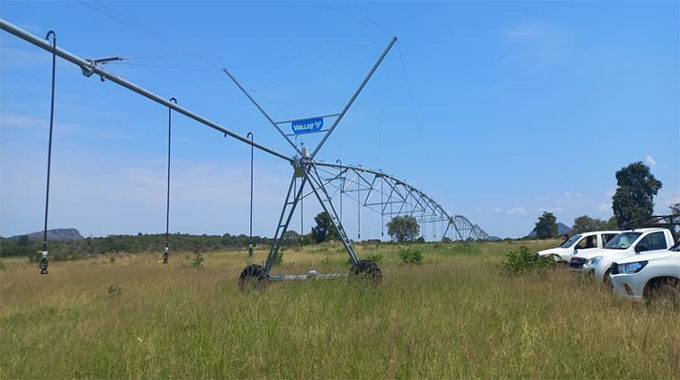
“Farmers at irrigation schemes are called upon to work together with Government departments, be it Agritex officers or ARDA officers who all have one goal of making sure that the irrigation schemes produce,” said Eng Zano.
Vision 2030 recognises that the absence of irrigation schemes increases the vulnerability of agriculture to droughts.
This is why Government is investing in the development of water bodies with irrigation potential.
“Government is also implementing an Irrigation Master Plan which involves the rehabilitation and establishment of smallholder irrigation schemes covering 200 hectares per district per year for the next 10 years,” said Eng Zano.
Vision 2030 also prioritises the facilitation of access to financing by A2 and large-scale farmers for the rehabilitation, resuscitation, modernisation and development of end-use irrigation infrastructure.
Eng Zano said there is a need to integrate the legal and administrative framework concerning the management of irrigable areas to address the sustainability, productivity and capacity utilisation challenges facing farmers.
CCMT project officer Ms Blessing Mutoro said they are implementing a project in the Midlands Province, specifically in Vungu and Mberengwa districts, to promote constructive conflict management, functional governance structures and women’s participation in decision-making.
She said through dialogue meetings and monitoring visits, CCMT established that farmers are unaware of the new regulations and are confused in terms of the roles of irrigation managers and extension officers.
“The meeting seeks to unpack the new policy and clarify the roles and responsibilities of stakeholders, ensuring that farmers can focus on maximising production rather than resolving conflicts. CCMT is committed to supporting and assisting in raising awareness of the policy among stakeholders and farmers at the irrigation schemes,” she said.
CCMT is a non-governmental organisation founded in 2002 and works to transform how societies deal with conflict.
Since 2017, CCMT has been closely co-operating with the Ministry of Lands, Agriculture, Fisheries, Water, Climate and Rural Development and local authorities in the Midlands Province in dealing with issues negatively affecting the functionality and productivity at irrigation schemes.



 Online Reporter