admin
admin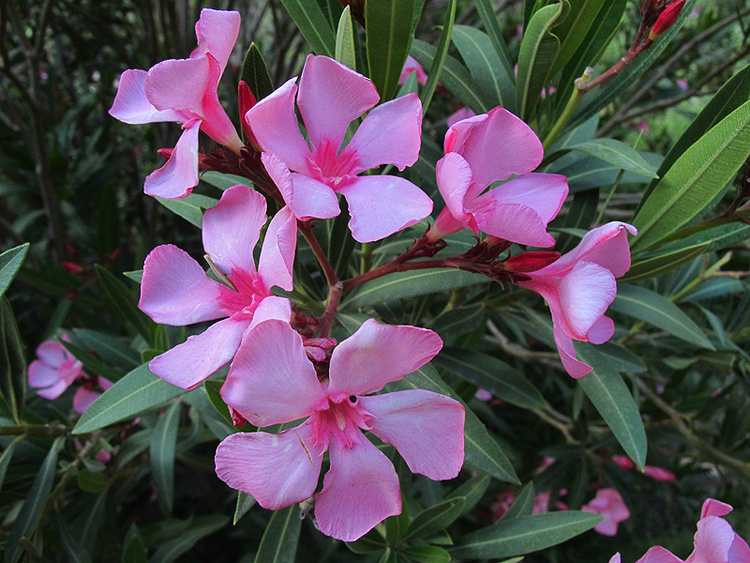
 AS much as we love plants we must always acknowledge that there are some members of the plant family that are not so friendly.
When man first settled in new territories across the world, there were challenges of discovering what was edible and was unpalatable. Some plants survived this selection to be incorporated in gardens because of their looks. As is common with human nature do not judge a book by its cover.
You may live to regret it.
Many ornamental plants including some edible fruits and vegetables contain some potent chemicals, which are well able to injure or even cause death in high doses. Be well informed and educated. In home gardens, crèches and schools the most vulnerable members of our society are our children.
Children enjoy plucking off leaves, flowers and berries; placing these in their mouths with dangerous consequences, thus when you plant your garden seek professional help for the identification of some of these plants.
It is important to advise here that in a case of suspected poisoning take the patient to the nearest hospital with the plant in question. Do not attempt to do a self diagnosis and treatment at home, call an ambulance immediately.
Let us look at some of these plants now! However, as a general rule stay away from those plants, which produce latex (milky white substance). Although, not to say that those that do not have white latex are not equally potent.
Nerium oleander is a latex producing plant, which should be avoided at all costs. A true story is told of how Alexander the great`s army lost horses and soldiers during the Persian campaign.
Horses died from eating the leaves and some soldiers died from cooking meat on sticks from the shrub. Cattle have died from just being fed from under the shrub because of an accidental dropping of a leaf or two into their feed.
Water where the leaves have fallen is equally dangerous. Symptoms of poisoning from nerium oleander are vomiting, trembling, diarrhea, convulsions, stupor and paralysis. Milk from a cow that would have eaten the leaves is also toxic. I think there are few people who do not know the elephant ear, alocasia odora. A plant that is in the same family as yams, madhumbe or amadumbutshenene. It has large light green leaves and it appears to have a charm for young kids.
It is definitely a plant to remove from your garden if you have kids. It is a subject of accidental poisoning due to calcium oxalate crystals in the plant being mistaken for its close relative colocasia esculenta.The plant is rarely fatal unless large amounts are consumed. Symptoms of poisoning include a burning feeling in the mouth or lips, redness of the eyes, swelling of the tongue, lips or mouth, diarrhea, nausea and vomiting.
Thevetia peruviana is another common plant in the garden. It is a medium-sized shrub with needle shaped leaves and produces yellow flower most of the year.
Children have been poisoned from eating the kernels or fruits. Poisoning causes nausea, vomiting, diarrhoea and death. The seeds, root and milky juice are all toxic. The arum lily, zantedeschia aethiopica is a beautiful water plant. The juice from the plant is both poisonous and irritant. Chewing of small portions causes swelling of the tongue and throat.
Schinus molle, the pepper tree, is another such plant.
Eaten in enough quantities the attractive berries produce gastrointestinal irritation in children accompanied by vomiting and diarrhoea.
Andrew is a horticulturist by profession and can be reached by email at [email protected]



 Online Reporter