Chronicle Editor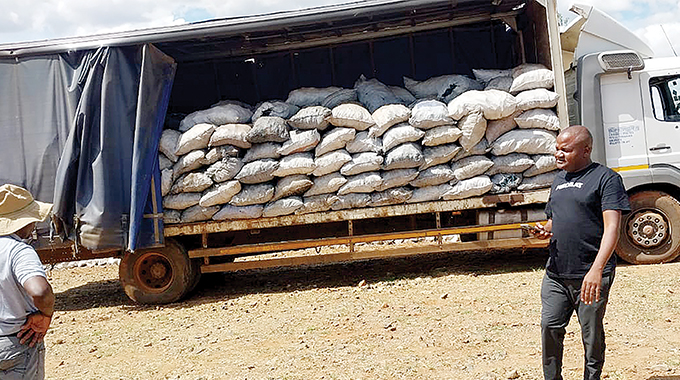
Nqobile Tshili, Investigative Article
THE increasing demand for electricity in Zimbabwe’s growing economy is attributed to the widespread deforestation caused by illegal loggers producing charcoal, which is sold in major cities like Bulawayo and Harare.
Locals, like 42-year-old Loveness Ncube from Hwange, resort to illegally producing charcoal to make a living, often resulting in arrests and fines.
Despite the risks, Ncube has been sustaining her family through charcoal production for 20 years and has even become a significant supplier to buyers in Bulawayo. However, bribery has become a common occurrence for sellers trying to move their product.
“While we have clients, it’s no longer easy now as we have rangers from ZimParks (Zimbabwe Parks and Wildlife Management Authority) who conduct surveillance and arrest those they find. Sometimes you have to pay a bribe just to be allowed safe passage,” she said.
For years, Zimbabwe experienced significant power shortages largely due to limited investment in energy generation infrastructure in the past, with the situation changing following the advent of the Second Republic led by President Mnangagwa.
His administration has overseen the construction of the Hwange Thermal Power Station Units 7 and 8 Expansion Project, following an investment of US$1,5 billion by China in 2018. It is now the country’s major supplier of electricity, having added 600MW to the national grid.
While the Government has made strides to address power shortages, the country still has a deficit of more than 300MW, according to the Zimbabwe Energy Regulatory Authority. Public records indicate that at least 300 000 households still need to be connected to the national grid.
This energy gap has seen a rise in the illegal cutting down of trees, with mopane trees the main target because the wood is believed to produce the best quality coal. Mopane trees take 35 years to grow fully, but they are cut down and burnt within minutes.
Charcoal production is outlawed in Zimbabwe, yet it is openly sold in Bulawayo’s high-density suburbs and, unbeknown to most of its consumers, is causing widespread environmental damage.
Experts worry that if this situation is not stopped, it could lead to devastating deforestation. According to the Forestry Commission, approximately 330 000 hectares of forestry cover is currently being lost each year to deforestation.
Matabeleland North is feeling the adverse effects and the commission says more than 14 302 hectares of land was lost in the province to deforestation between 2001 and 2023.
Forestry Commission chief conservator for Bulawayo and Matabeleland North, Mr Armstrong Tembo, linked electricity demand to the thriving charcoal business.
He said as electricity consumers turn to charcoal, the environment suffers.
“It’s really devastating, we are talking about hardwood indigenous timber which takes a long time to mature,” he said.
“What is disturbing is that these people that poach timber have had no investment, so for them, it’s a quick buck, and they will sell it for a song without giving back to the community and doing any afforestation.”
Mr Tembo said it has become increasingly difficult to arrest some of the illegal loggers because they “innovate” to evade the law by constantly changing their strategies.
He said existing legislation does not deter culprits from committing this crime, time and time again. He even referred to the punishment as “a pittance”.
Zimbabwe’s Forest Act (19:05), created to protect the country’s forests, penalises offenders by handing down fines up to Level 8, equivalent to US$500, or a custodial sentence not exceeding two years in jail. Although arrests have been made, public records show that only fines have been imposed.
“When someone is arrested, they pay a fine and go back home and indulge again because fines are not deterrent enough. What we are advocating for now is custodial sentences. Hopefully, this might awaken the culprits,” he said.
Another hotspot for the illegal charcoal business is Hwange, mostly due to its proximity to the Hwange National Park and Hwange Colliery mines.
Mr Xolelani Ncube, environment and natural resources officer at the Hwange Rural District Council, called the crime “well-coordinated”.
“Some of the illegal loggers use haulage trucks that would be transporting coal from Hwange Colliery mines to smuggle their products out of the district,” he said.
Mr Ncube said when law enforcement agents turn up the heat against illegal loggers, they respond by changing strategy, including operating during the cover of night. “People are even bringing chainsaws and quite a lot of undesired methods are being used to cut down trees,” he said.
Although the council has been running awareness campaigns in collaboration with ZimParks, Forestry Commission and the police, their efforts have not yet yielded any real results.
Mr Ncube said that there should be more engagement with the judicial system, saying maybe “it’s a matter of understanding the magnitude (of the deforestation) and what these trees have to offer us”.
Although it is challenging to stop the demand for charcoal, Mr Ncube suggested that people consider adopting renewable energy sources instead.
“People in urban areas should try to use biogas digesters, they should use LP gas and solar power, and stop using charcoal, which is destructive,” he said.
Hwange’s dependency on coal makes things challenging for environmental lobbyists.
Mr Daniel Sithole, executive director of Hwange-based Green Shango Environmental Trust, said more needs to be done to stop deforestation.
“The reduction of carbon sinking in the forest is a challenge as Hwange is a coal-mining town responsible for fossil fuels,” he said.
“We need these trees to make sure they carbon sink our excess carbon while mining is in continuation.”
Carbon sinks help to regulate the climate by absorbing carbon from the atmosphere. This is why having a thick forest cover near coal mining is so important.
Mr Sithole added that illegal charcoal production is also fuelling human-wildlife conflicts in the Hwange National Park, as communities encroach on animal habitats to seek livelihoods.
For Ms Brenda Sibanda, a charcoal vendor in Bulawayo’s Cowdray Park, environmental issues are far from her concerns.
“Most of my clients have not been connected to the national grid,” she said.
“Charcoal is also cheaper than liquefied petroleum (LP) gas and firewood. Even those connected to power come to us when there is load-shedding,” she said.
Ms Sibanda says she can support her family and pay school fees by selling charcoal. She sells a plastic bag of charcoal for US$1, and a 20-litre bucket for US$4.
Two months ago, Vice-President Constantino Chiwenga said the country is in the process of reviewing its laws to deter forest crimes while addressing a human-wildlife conference held on the sidelines of the ZITF in Bulawayo.
He told participants that the Government had taken proactive steps to enhance the regulatory responsibilities of the Forestry Commission.
He said the Forest Act had been revised through the Forest Act Amendment Bill, to strengthen forest protection and combat veld fires through the introduction of mandatory and deterrent sentences.
VP Chiwenga said the legislative measure demonstrated the Government’s commitment to preserving precious forests for future generations.
In addition to this, he said that protecting the environment opens doors for international funding and sustainable protection of the environment.
Credit: Nqobile Tshili is a Chronicle reporter. He did the story in collaboration with fellow journalists Yolanda Moyo and Nkosana Vuma. The trio is an alumnus of the Oxpeckers #PowerTracker training programme titled “The Nexus of Data and Environmental Journalism”. This investigation was part of an Oxpeckers series titled “The human cost of energy”, a collaboration between Oxpeckers, The Chronicle and Zimbabwe Broadcasting Corporation. The collaboration is supported by the Fojo Journalism Education Programme, incorporated under International Media Support and Fojo Media Institute’s Media Nexus Programme 2022-2025 in Zimbabwe, funded by Sida.



 Online Reporter