Online Reporter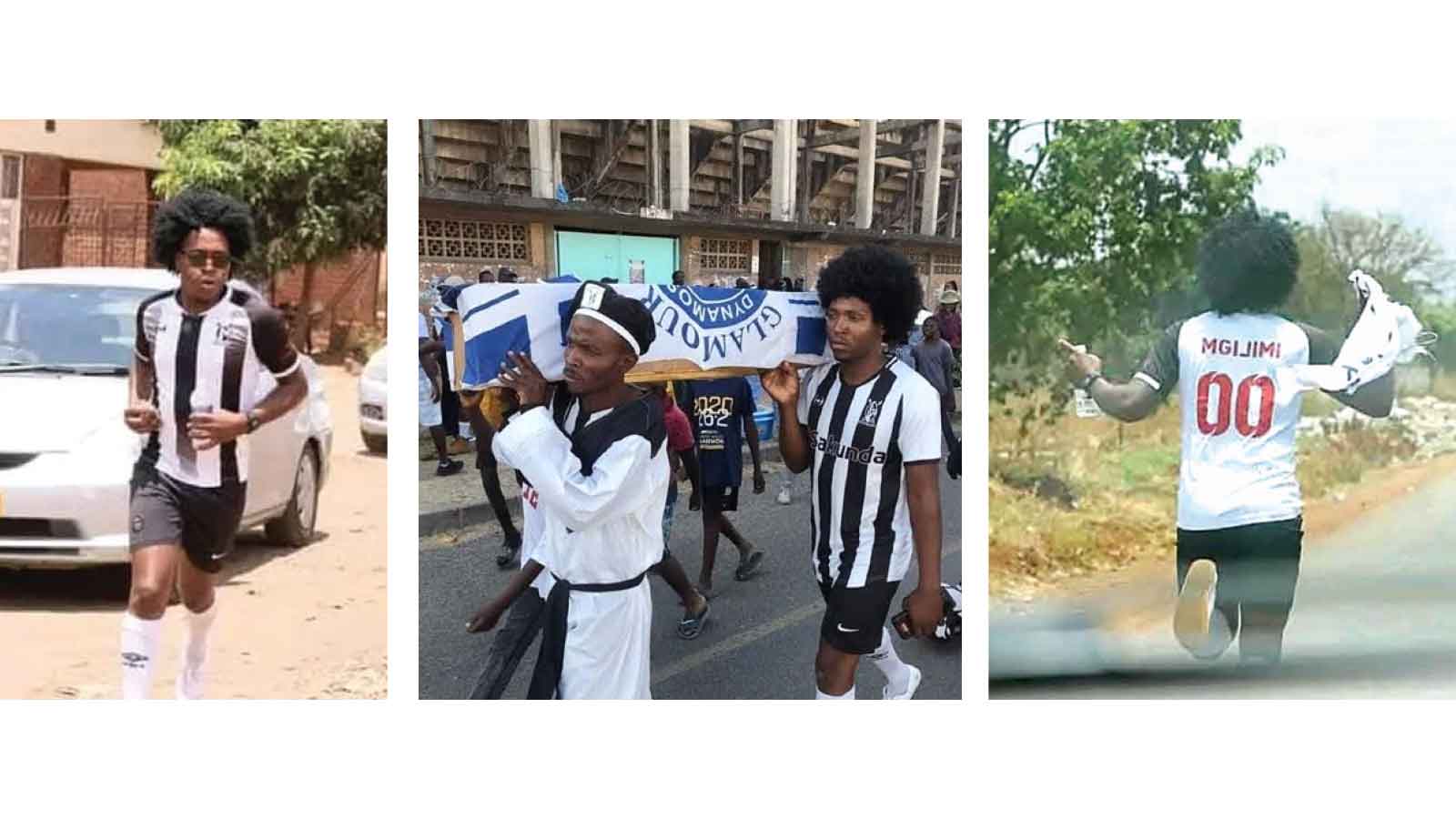
Veronica Gwaze-Zimpapers Sports Hub
THEY carried a coffin through the Rufaro Stadium turnstiles as if the burial had already been agreed upon.
Painted in Dynamos’ blue and white, the coffin was hoisted by a small but defiant group of Highlanders supporters. The move was meant to provoke, to announce intent before a ball had been kicked.
This was theatre. A declaration that DeMbare’s afternoon was about to end badly.
Mayibongwe “Mgijimi” Mkweli walked beside it, dreadlocked wig bouncing with every step, voice already raw long before kickoff.
It was October 26, 2025, and the fixture was a Chibuku Super Cup semi-final. Bosso had travelled to Harare believing this was their moment.
Rufaro was close to full. The Vietnam and Mbare stands shimmered in blue and white. The City End answered back in black and white.
Both teams were wobbling in the league, both clinging to the cup for relief, maybe even redemption.
Dynamos were coming off an industrial action and were widely viewed as unprepared.
Highlanders fans sensed vulnerability. The coffin felt earned. By full time, it felt unbearable.
The match ended 1-1 after Emmanuel Jalai and Melikhaya Ncube traded goals. Penalties followed. Dynamos held their nerve. Highlanders faltered. The final scoreline was 5-3.
Just like that, meaning shifted.
What had been carried in with bravado now mocked the men who brought it. Returning to Bulawayo with the coffin was unthinkable. The jokes would be endless. The pictures unforgiving. So, Mgijimi and his fellow supporters, Mfundisi and Referee, made a decision that only football can push people towards.
They drove to Mbare Cemetery.
Among real graves and the hush that follows finality, they smashed the coffin apart and buried the pieces. No chants. No cameras. Just disappointment being lowered into the earth.
Mgijimi stood back as the last pieces were lowered into the ground. The smell of damp earth hung in the air, sharp and heavy.
Dusk was settling and the noise from the road beyond the cemetery faded into a low hum.
His throat tightened, words refusing to come, as the penalty shoot-out replayed itself in his head, over and over, until silence felt like the only language left.
“Dynamos broke our hearts that day,” Mgijimi says later, still smiling at the memory. “Carrying that coffin back home would have been too much. We had to leave it there.”
Football, for Mgijimi, has always asked for something deeper than attendance.
Born in Plumtree and raised in Matobo, Mgijimi developed an early devotion to Highlanders.
His elder brothers would travel to Bulawayo for matches and return with stories that made Barbourfields feel mythical. The noise. The colour. The freedom. He wanted to be part of it.
His parents refused.
One visit to his grandparents’ place in Mzilikazi changed everything. With a neighbour, he slipped out and attended a Highlanders match. Bosso won. The streets spilled over with celebration, then chaos. Violence followed. The boys ran until their lungs burned.
When Mgijimi finally made it back, the gate was locked. He spent the night at a neighbour’s house and crept home late. The next morning brought chores and silence. No lecture. No punishment. Just the weight of knowing.
It did not matter.
“From that day, I started attending Bosso games,” he says. “I was hooked.”
Today, he is impossible to miss. The Afro wig. The replica kit. The restless movement.
Ninety minutes rarely find him seated. He runs laps along the perimeter fence, claps, shouts, urges players forward as if his legs might lend them strength.
Fans often ask if he was an athlete. Some are convinced he must have been a sprinter.
“I was one of the best athletes in school,” he admits. “I never took it further. Maybe it stayed in me. I don’t train, but I can run the whole match and still feel fine.”
Running has become his language. His way of speaking to the team when words fail. It is also how he manages frustration. Last season tested that resolve. Highlanders drifted dangerously close to relegation. Performances dipped. Confidence drained. Mgijimi kept running.
“As a super fan, you don’t stop,” he says. “Your role is to motivate, even when things are bad.”
That devotion has not always been convenient.
Last year’s Chibuku quarter-final against Scottland at Barbourfields was meant to be quiet. Mgijimi had slipped out of work with a colleague. The agreement was simple. Keep a low profile. Stay off camera.
Highlanders went two goals down early. The stadium groaned. Mgijimi stayed still.
Then Bosso scored.
Instinct took over. The laps returned. When Highlanders forced penalties and won, the ground erupted. Mgijimi was right in the middle of it, running, waving, alive. Cameras caught everything. The clip spread fast. The next morning, he had some explaining to do.
His bosses, however, had watched the match.
“They forgave me because my work was done,” he says. “Now they understand. Match days are my off days.”
By profession, Mgijimi works at Bakers Inn. By passion, he is a travelling Bosso supporter. Away games mean buses, fuel, food and accommodation. There are no sponsors. Everything is self-funded. He usually travels with Mfundisi and Pastor. They plan carefully.
“We do it for the love of the club,” he says.
That love now stretches across a century. Highlanders are marking 100 years, and Mgijimi sees himself stitched into that story. His heroes are fixed in memory — Tapiwa Kapini, Ronald Gidiza Sibanda, Zenzo Moyo. In the current side, he admires Ariel Sibanda, Never Rauzhi and Arthur Ndlovu.
But devotion, he insists, comes with duty.
“We must preach peace,” he says. “Football should unite us. Rivalry is fine. Violence is not.”
It is a lesson learned early, from running through streets as a boy, to burying a coffin as a grown man.
Back at Rufaro that afternoon, Dynamos fans sang long after the final whistle. Highlanders supporters drifted out quietly. The coffin never returned to Bulawayo. It lies somewhere in Harare soil, broken and buried, a marker of football’s power to lift, to humiliate, to demand everything.
Next weekend, Mgijimi will be back. Wig on. Legs loose. Running again.
Because loving Bosso, he knows, means carrying joy, embarrassment, hope and heartbreak, sometimes all in the same afternoon.