Robson Sharuko
H-Metro Editor
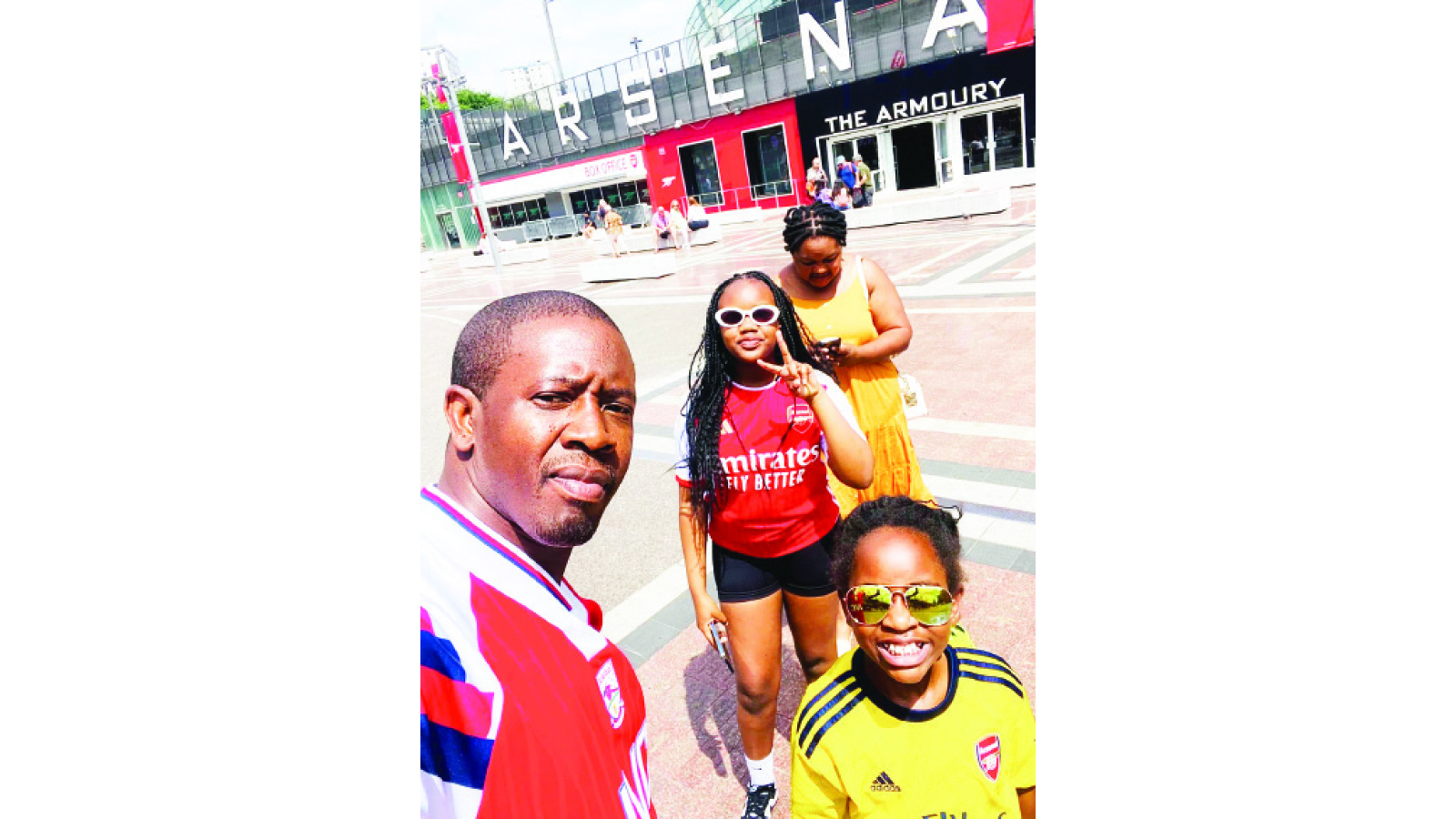
TEENAGE student Mikaylah Mushinga has revealed that her first real encounter with racism came three months after her arrival in England when one of her schoolmates called her a n***a.
Mushinga, 13, arrived in England with her family in 2022.
She has chronicled the challenges she faced in adjusting to life in England in her book ‘I’m More Than The Black Girl.’
“It was Year 6, I had just started at my new primary school in the UK, barely a week into the new school life.
“Even though it was over three months since I arrived from Zimbabwe, I was still adjusting to the cold air that bit at my cheeks, the quiet streets that felt strange compared to home, the stiff uniforms that didn’t fit quite right.
“My accent was just an ordinary Zimbabwean one, but that was so complicated and fascinating to them. I knew I was smart, I knew I had something to say but here people cared more about how I said things than what I said.
“But this wasn’t about what I said.
“The freedom we had back in Zimbabwe felt smaller here, boxed in. but still it was a moment to breathe and feel alive among the chaos.
“So, when Jack talked to me I thought maybe, just maybe, someone was finally warming up to the black girl.
“I thought, maybe, he was just trying to talk to me, to include me. After saying it, he turned around and said…’it’s time for a lesson.’
“Obviously, I didn’t know how to react because he had never been friendly like that, so I just said ‘okay,’ and we kept walking. It didn’t hit me, not at all.”
She adds:
“But everyone else’s reaction shocked me. Their eyes widened, jaws dropped. ‘Mikaylah, are you going to take that?’ ‘Jack, that’s so peak of you’ ‘Mikaylah, why aren’t you saying anything?’
“And, it got so bad they were all overstimulating me and I sat there, confused and overwhelmed by their reactions. I was shocked − half by their reactions to whatever Jack said and half by their jumping to my support.
“Then the teachers came over and Mia said ‘Jack just called Mikaylah the M-word.’ The teachers hugged me, kept asking if I was okay but I still didn’t get why it was such a big deal. Mr Derry tried to explain the situation, the consequences for Jack and I just nodded.
“When I got home that day, my dad asked me how school was. I told him the story. Some 20 to 30 minutes later he called me and said ‘Mikaylah, is there a chance that maybe they were saying that boy called you the N-word, not the M-word? Someone called you nigga! No, no Mikaylah, you should never stand for that.’
“He sat quiet for a moment and then said ‘I’m emailing them.’ I could tell he was upset. He explained what the word really meant − all the pain and the history behind it.
“That’s when it finally hit me. Jack wasn’t just being rude − he was trying to hurt me. And that scared me.”
She says she then realised that her calm response at school was largely because of her ignorance about the true meaning of the offensive word.
“I didn’t know the history, the hatred, the hurt that word carries. But I also realise how much pressure everyone else put on me that day − the eyes watching, waiting for me to respond, to get angry, to fight back.
“I think the way I handled it was perfect. I stayed true to myself, unaware of the power behind the word, unwilling to give it any power.
“Jack was horrible that day but he didn’t succeed. To this day, the word doesn’t hurt me but it’s the intention of the speaker that does. Why would anyone try and deliberately hurt someone like Jack did that day?”
Worse was to come for Mikaylah when three boys, known as the Unholy Trio − Robert, Dylan and Chad − targeted her.
“Chad was the worst. In a room full of cruel people, Chad was the one you feared the most. His insults cut deeper, his laughter was meaner and when he called me the N-word, it felt like a dagger in my chest.
“They all called me that word like it was the only thing that defined me. The only thing keeping me sane was that some kids would stand up for me.
“That made it confusing − hated by the worst, defended by the rest. Looking back now, I’m quite amiable with Robert and Dylan as we are in high school together.
“Somehow, I can separate the moments when they were just kids acting stupid from the moments they were cruel. But Chad?
“Chad crossed a line I couldn’t come back from. There’s no excuse for what he did, and no coming back from that. That whole experience with these three didn’t teach me anything deep or poetic.
“It didn’t give me some wise lessons about friendship or life. It simply showed me that some people are cruel. Plain and simple. And, sometimes, you just have to survive.”