Online Reporter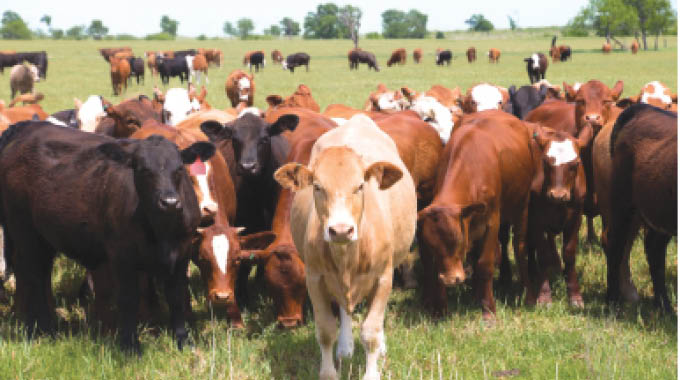
Obert Chifamba
Agri-Insight
THE country’s recent move to adopt digitalised stock cards represents more than just a shift in record-keeping for farmers, but a revolutionary step towards enhancing productivity, efficiency and sustainability in farming practices.
Essentially, the move stands out as an acknowledgement that in an era in which technology permeates every aspect of people’s lives, critical sectors like agriculture should be at the forefront of the digital transformation sweeping across the country.
It is important for all and sundry to appreciate the stark reality that as the global demand for food continues to rise, the ability to accurately monitor livestock and inventory becomes paramount.
This week’s analysis will explore the myriad advantages of embracing digital stock cards, illuminating how this innovative tool not only streamlines operations, but also empowers farmers to make informed decisions that can lead to increased profitability and resilience.
It is therefore no fluke for the Government to come up with such a system, which in essence, is meant to ensure the livestock sector’s growth is easily monitored to ascertain if there is progress or stagnation. Such information is critical in making important decisions to add vibrancy to the livestock industry, especially the national herd.
According to the 2024 Crops, Livestock and Fisheries Assessment Report, the country has a national herd of 5.7 million cattle, which makes it imperative to safeguard the sector and keep abreast with changes or developments in real-time.
It is no secret that the country’s livestock sector has demonstrated and continues to exhibit immense potential to contribute significantly to the national economy, with projections positioning it as a possible US$2 billion industry. And this is something the nation should harness and fortify by all means possible.
The digitalised stock card will among other important functions, help improve the traceability of animals and guide policy decisions. Traditionally, farmers used to have physical stock cards on which they kept records of their animals and the current digitalisation will help align the practice with modern standards.
Modernisation of the agriculture sector is something that the Government is strongly advocating to promote sustainability and boost farmers’ productivity ratings. The new system allows for instant access, traceability, and deeper analysis of information captured and stored in the card. Of course, not much will change from the old card system except that it will now take enhanced features that include the categorisation of livestock types owned by each farmer. This enables real-time data analysis and supports evidence-based policy formulation.
It is therefore not surprising that the Secretary for Lands, Agriculture, Fisheries, Water and Rural Development, Professor Obert Jiri, recently stressed that adopting the digitalised card was important as the role of accurate data in shaping the country’s economic and agricultural trajectory must not be underestimated.
“It is critical every farmer has the card digitalised and every farmer must declare correctly on this stock card so we can analyse and make economic decisions for the betterment of our sector,” he said then.
Besides enhancing accuracy, digital stock cards have the capacity to reduce human error in record-keeping, ensuring accurate tracking of livestock and inventory. This improves farmers’ access to real-time data and up-to-date information about their livestock any time, which is catalytic in decision-making.
On the one hand, digitalised stock cards will reduce the drudgery of trying to decipher facts and figures that might not have been written clearly at the time records were entered on the current manual card. Digital systems automate data entry and retrieval, saving time compared to manual record-keeping.
Digital records also have the advantage of allowing for better traceability of livestock, which is crucial for health monitoring and compliance with regulations. In the event of a disease outbreak or even a vaccination programme, information of animals done with and those yet to be accounted for can easily be accessed at the snapping of a finger.
Improved biosecurity is also one of the advantages that the digitalised stock card will bring to the farmer. The card makes it possible for the farmer to quickly access health records and respond swiftly to disease outbreaks, which enhances biosecurity measures.
This will also make it easy for farmers to analyse trends and patterns in livestock performance, leading to informed breeding and management decisions. The advent of the digitalised card will make life easier especially for that group of farmers based in the Diaspora. The digitalised card comes with improved remote access to data through cloud-based systems that enable such farmers to manage their records from anywhere, facilitating on-the-go decision-making.
And with the current drive to digitalise all operations on the farm regardless of its size and ownership, the adoption of the digital stock card will allow the farmer to integrate it with other technologies being used on the farm. This makes it easy to access information on all activities taking place on the farm.
Digital stock cards can often integrate with other farm management software, enhancing overall farm efficiency. It is easy for the farmer to catch a glimpse of everything happening on the farm during the snap search for information for one of the activities.
The other positive thing about digitalised stock cards is that they come with very little costs. Over time, digital systems can reduce costs associated with paper, printing, and storage of physical records.
Many digital systems are naturally designed to be intuitive, requiring less training for staff compared to traditional methods, which makes them more user-friendly. Advantages such as these generally contribute to better farm management and increased productivity.
However, the initial costs of implementing the digital systems can involve significant upfront costs for software, hardware, and training. The systems are also prone to technical failures, such as software bugs or hardware malfunctions.
There are also concerns over the security of digital records given that they can be vulnerable to cyberattacks, data breaches, or loss due to system failures, raising concerns about data integrity.
There are also chances that farmers may become overly reliant on technology, which can be problematic in those areas with limited internet access or power outages while transitioning to a digital system may require training, which can be challenging for those less familiar with technology.
Digital systems may reduce face-to-face interactions with staff or advisors, potentially impacting communication and relationships.
Overreliance on digital methods may also lead to a decline in traditional skills and practices that are valuable in farming.
The advantages of taking the digital route, however, outweigh the disadvantages, which makes it the better option, but has to be adopted with caution, especially during the transitioning phase from manual to digital.