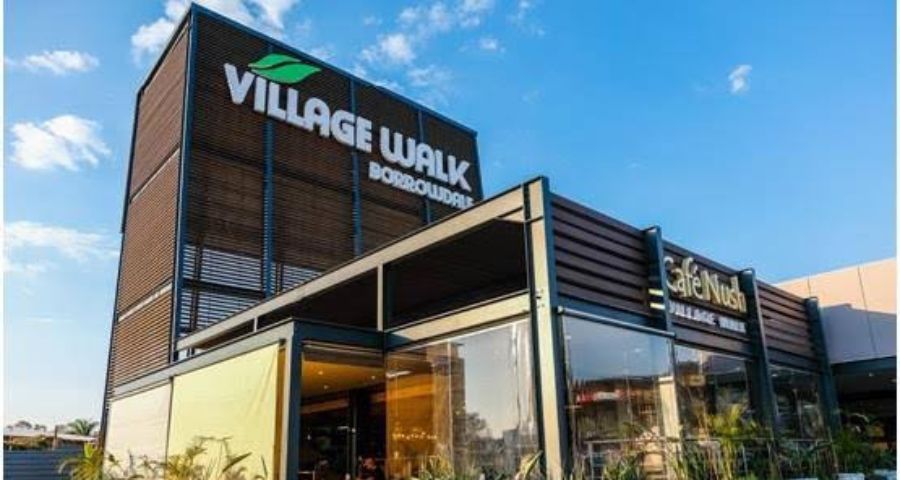
ZIMBABWE’S urban landscape is going through a structural shift. In suburbs historically zoned and designed for purely residential use, small-scale shopping centres are emerging at an unprecedented pace.
These neighbourhood retail clusters, typically anchored by a supermarket, pharmacy, takeawayoutlet and selected service providers—are redefining
the spatial and economic logic of Zimbabwean cities.
From Harare to Bulawayo and Gweru, the decentralisation of retail activity is visible and accelerating. The phenomenon is neither accidental nor purely
speculative. It is a rational response to macroeconomic conditions, currency hedging behaviour, infrastructure decay in central business districts, evolving
consumer patterns and the search for yield.
This extract from the full research brief examines the structural drivers, investor dynamics, economic functions, property market implications, regulatory tensions, and policy options associated with the rise of small shopping malls in residential Zimbabwe.
It incorporates a data modelling framework to evaluate the sustainability of the trend and to provide insight for corporate boards, institutional investors, urban planners and policymakers. The question is not whether the trend is real. It is whether it is sustainable.
Structural drivers of residential retail growth
Zimbabwe’s macroeconomic history over the past decade has reshaped capital allocation patterns. In such an economic environment, capital predictably migrates toward tangible, income-generating assets. Property has become a quasi-monetary instrument. Retail property, in particular, has gained
prominence because it offers a rare combination of inflation protection, USD-denominated income streams, and physical capital preservation.
Small neighbourhood malls represent a scaled down, more accessible version of commercial real estate exposure. Compared to large regional malls, they require
lower upfront capital, face fewer regulatory complexities and often secure tenants before construction completion.
This trend is also demand-driven. Rising transport costs, congestion in city centres, and deteriorating CBD infrastructure have altered consumer decision-
making. Time and mobility constraints now carry measurable economic weight. Consumers prefer proximity retail. They are pricing convenience into their
consumption patterns.
Simultaneously, traditional CBD dominance has weakened. In Harare, decentralisation of commercial activity has accelerated as congestion, informal
sector density and parking scarcity erode the attractiveness of city centre retail.
Similar patterns are emerging in Bulawayo, where suburban commercial nodes are gaining traction.
The rise of neighbourhood malls therefore reflects a convergence of macroeconomic hedging behaviour and microeconomic consumption optimization.
Investor typology and capital structure
The investor base behind these developments is heterogeneous but increasingly strategic. Local private developers constitute a significant portion
of new entrants.
Many originate from sectors such as fuel retail, logistics, wholesale trade and construction. Retail property serves as a diversification play, converting cyclical business earnings into long-term income-generating assets.
Diaspora capital is also playing a visible role. Remittance inflows, which have consistently exceeded US$1 billion annually in recent years, provide a funding base for tangible investments. Small retail centres offer diaspora investors clarity and control compared to complex financial instruments.
A third category comprises landowners converting large residential stands into mixed-use developments. In many cases, change-of-use approvals create immediate land value uplift, effectively arbitraging regulatory transformation.
Capital structures are typically equity-heavy, reflecting limited availability of long-term structured financing in Zimbabwe’s banking system.
However, emerging microfinance institutions and commercial banks are cautiously re-entering property-backed lending, particularly for projects with
pre-let anchor tenants.
Functions of residential malls
Neighbourhood malls serve functions that extend beyond retail. First, they act as micro-economic hubs, lowering transaction costs for households. Proximity reduces travel expenditure, enhances time efficiency, and strengthens community economic circulation.
Second, they generate employment. Even modest centres support direct retail jobs, security services, maintenance functions and ancillary informal trade. In a high-unemployment context, this decentralised job creation carries macroeconomic relevance.
Third, they provide financial access points. Many centres house mobile money operators, microfinance institutions, and insurance brokers. As Zimbabwe’s financial system continues to formalise and digitise, suburban retail nodes are becoming distribution platforms for financial intermediation.
Fourth, they represent capital preservation strategies. For investors, retail centres serve as inflation hedges and intergenerational wealth vehicles.
Data modelling and market sustainability analysis
To evaluate sustainability, a simplified economic model can be applied to residential mall development. Assume a typical neighbourhood mall of
1,500 square metres gross lettable area. Construction costs, depending on specification and materials, may range between US$450 and US$650 per square metre. Using a midpoint of US$550 per square metre, total development cost approximates US$825,000.
If average rental rates range between US$8 and US$14 per square metre per month depending on suburb and anchor strength, a blended rental of US$10 per square metre yields gross monthly income of US$15,000. Annual gross income equals US$180,000.
Assuming operational expenses at 20% of gross income, net operating income stands at approximately US$144,000 annually. This implies an unlevered
yield of roughly 17% on development cost. Such yields significantly outperform residential property yields, which often range between 6 and 10 percent depending on location and currency exposure. However, sustainability depends on occupancy rates.
At 80% occupancy, effective yield drops materially. At 60% occupancy, the investment case weakens sharply. A second model assesses catchment viability.
Assume a residential catchment of 4,000 households within a two-kilometre radius, with average monthly household retail expenditure of US$250.
Total catchment retail spending equals US$1 million monthly. If the mall captures 15% of local retail expenditure, monthly turnover within the centre approximates US$150,000.
Tenant viability then depends on margin structures and rent-to-sales ratios. If rent exceeds 12 percent of tenant turnover, sustainability pressures emerge.
This modelling framework highlights a key risk: oversupply relative to catchment purchasing power. In certain corridors of Harare, visible clustering of
new centres raises the possibility of market saturation. Without transparent municipal data on approved floor space and vacancy rates, developers risk entering late-cycle supply expansions.
Impact on residential property markets
The effect on residential property values is location-specific. Where developments are well-managed, aesthetically integrated, and supported
by infrastructure upgrades, proximity enhances property attractiveness. Reduced commuting requirements and improved access to services increase perceived utility of surrounding homes.
Conversely, poorly planned developments generate congestion, noise and strain on water and sewer systems. In such cases, negative externalities may offset convenience gains. Preliminary observations suggest middle-income suburbs experience net positive effects when retail integration is structured and regulated. However, high-density, already congested areas may face
diminishing returns from additional retail nodes.
Regulatory and planning dynamics
Zimbabwe’s planning frameworks were historically designed around functional zoning separation. The current wave of mixed-use suburban retail challenges that architecture. Change-of-use approvals are often discretionary and inconsistently applied. Infrastructure impact assessments lack uniform enforcement. Municipalities frequently operate reactively rather than
strategically.
This regulatory ambiguity creates both opportunity and risk. Developers benefit from regulatory arbitrage, but long-term asset security depends on policy coherence. For boards and institutional investors, regulatory clarity should be a primary due diligence consideration.
Macroeconomic implications
The rise of neighbourhood malls signals deeper economic adjustments. First, it reflects capital reallocation away from financial instruments toward real assets, indicating persistent low confidence in monetary stability.
Second, it signals decentralisation of urban economic gravity, reshaping transport flows and labour patterns.
Third, it illustrates adaptive entrepreneurship. In a constrained macroeconomic environment, private capital continues to seek productive outlets. However, unchecked proliferation could create asset bubbles, particularly if speculative builds exceed effective demand.
Investor insight
For institutional investors, pension funds, and corporate boards evaluating exposure to neighbourhood retail property, several strategic considerations arise. The first is yield sustainability.
While headline returns appear attractive, sensitivity analysis under reduced occupancy must be central to investment committees. Boards should require scenario modelling incorporating
vacancy shocks and anchor tenant exit scenarios.
The second is catchment analytics. Investors must evaluate demographic density, income distribution, and competing retail nodes within defined radii. Data-driven site selection reduces saturation risk. The third is regulatory stability. Long-term institutional capital requires clear zoning security. Investors
should engage municipalities proactively and seek documented approvals that reduce reversal risk. The fourth is infrastructure alignment. Water supply
reliability, power stability, and traffic access materially affect tenant viability and asset longevity.
Finally, governance structures matter. Professional property management and transparent tenant mix strategies differentiate resilient centres from speculative
builds. For pension funds seeking inflation hedges and dollar-linked income streams, neighbourhood malls may represent a viable asset class, provided risk discipline is maintained.
Strategic opportunity or emerging imbalance?
The rise of small shopping malls in residential Zimbabwe is neither accidental nor purely speculative. It represents a rational economic response to macroeconomic instability, decentralised consumption patterns, and the search for inflation-protected yield. Sustainability however, depends on disciplined capital allocation, regulatory coherence, and infrastructure alignment.
For corporate directors and institutional investors, the opportunity lies not in blind replication but in data-driven site selection, professional governance, and
long-term strategic positioning.
Zimbabwe’s urban landscape is evolving. Neighbourhood retail may well form the backbone of the country’s next phase of commercial real estate development.
Whether it becomes a resilient asset class or a cycle of oversupply will depend on decisions being made today in boardrooms, municipal chambers, and investment committees.
(Source: Finance Africa Quarterly, a Bard Global Finance Institution publication)