Online Reporter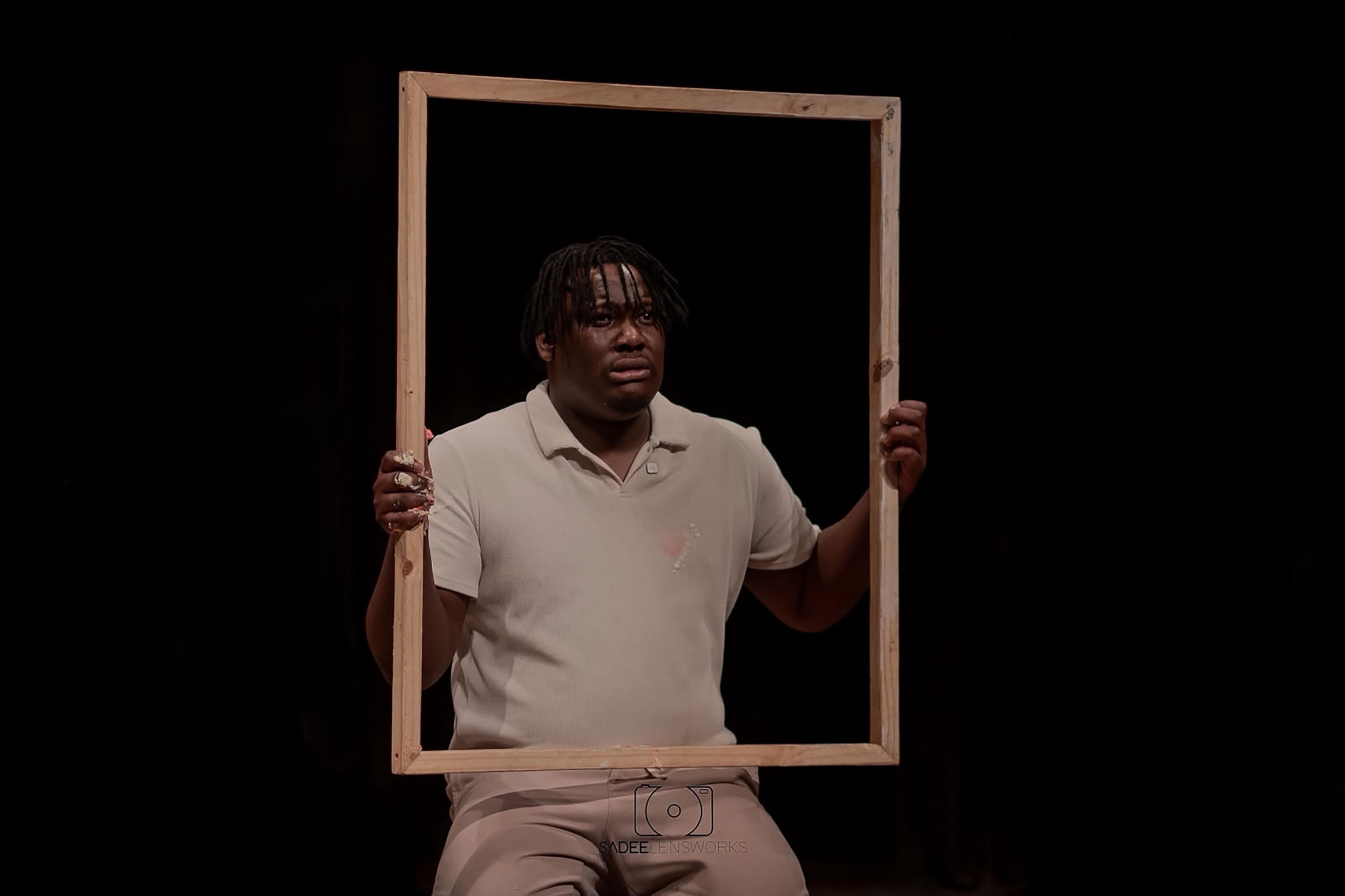
Mbulelo Mpofu Sunday Life Reporter
CAN two generations co-exist in harmony? That was the question that lingered in the Bulawayo Theatre last Friday as two generations of thespians, John Mabuyane kaLunga and Memory
Kumbota, brought to life a fractured family dynamic in The Empty Frame, a two-hander that dared to tell a story many people are not comfortable talking about – paternity, family secrets and the painful consequences of keeping the truth buried.
The production placed audiences in the uncomfortable space between a father and son whose relationship “appeared” to be biological, but whose emotional connection had long been broken.
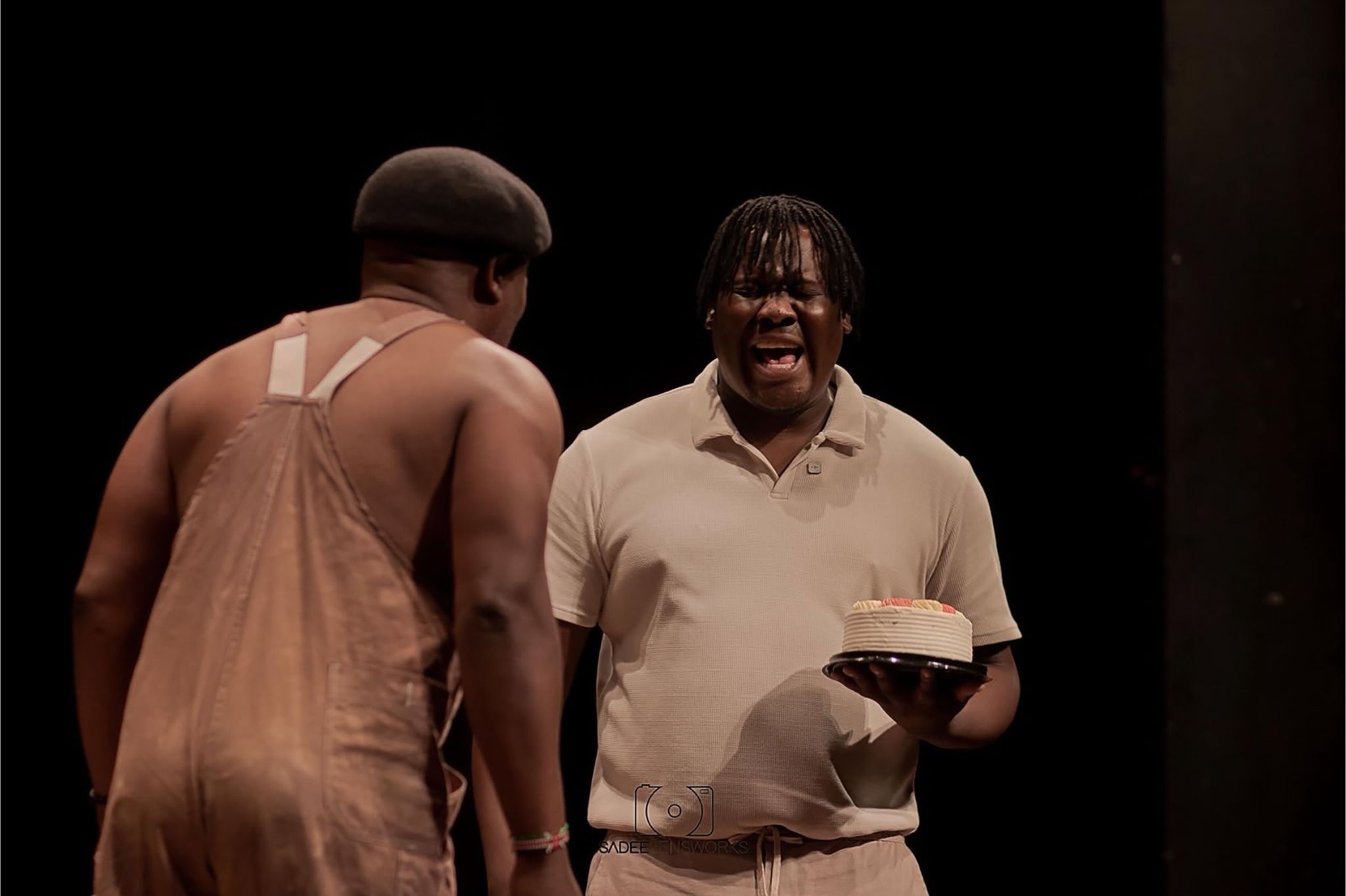
From forgotten birthdays to missed graduation ceremonies, the wounds of neglect were not presented as isolated incidents, but as evidence of years of emotional distance between a carpenter Adam, known as “UmaFrame” and his son Thabo.
At the centre of their strained relationship is Adam’s late wife, whose memory becomes the only remaining glue holding the fractured family together. Her absence is represented through empty frames – powerful reminders of could-have-been memories, loss and, perhaps most significantly, Adam’s failures as a father.
Set in Adam’s carpentry workshop, the play uses the physical space as more than a backdrop. The workshop is Adam’s world, the place where he has invested his time, energy, craftsmanship and identity, while simultaneously neglecting the relationship with his son.
It is a love affair with his craft that comes at a cost. As the story unfolds, the workshop becomes a battleground where father and stepson clash over survival, career choices and their different visions of the future. Thabo has chosen a path different from his father’s carpentry tradition, creating another layer of tension between the two generations.
For Adam, the workshop represents a lifetime of work and sacrifice. For Thabo, it increasingly represents the very thing that kept his father away from him. The conflict intensifies when Adam’s beloved workshop faces the threat of being taken away because of debts.
Thabo offers solutions, attempting to find a way out of the crisis, but his suggestions are rebuffed by a father seemingly unwilling to accept help from a son with whom he has struggled to build a meaningful relationship.
In that confrontation, The Empty Frame moves beyond the immediate question of whether a business can be saved.
It asks whether a relationship that has been neglected for years can also be salvaged.
Adam and Thabo are effectively at loggerheads because, despite sharing blood – or believing they do – they have failed to frame a future together. The title therefore becomes increasingly significant as the story progresses.
A frame traditionally holds a picture, preserving a moment, person or memory. Yet here, the frames are empty, suggesting memories that have been lost, relationships that were never properly built and truths that have remained outside the picture. The empty frame becomes a metaphor for everything that is missing from the relationship between father and son.
And then there is the question that makes the story even more uncomfortable: what happens when the foundations upon which a family relationship has been built are questioned? By placing paternity and secrets within the story, the production ventures into territory that many families would rather leave untouched.
Questions surrounding who a child’s biological father is can carry consequences far beyond biology.
They can affect identity, belonging, inheritance, family relationships and a person’s understanding of their own history.
The Empty Frame does not treat the subject merely as a sensational revelation. Instead, it uses the issue to expose the deeper consequences of silence. The secrets families keep can sometimes become more damaging than the truth they are attempting to protect.
Through Adam and Thabo, the production examines how years of silence, resentment and emotional absence can create a distance that becomes increasingly difficult to bridge. The father-son relationship also becomes a meeting point between tradition and a changing world.
Billed under the intriguing tagline, “Legacy at Odds: Can They Frame a Future Together?,” the production interrogates what happens when family expectations collide with individual aspirations.
Adam represents a generation that has built its identity around hard work, tradition and survival.
Thabo, meanwhile, belongs to a generation attempting to chart its own path, even when that path does not conform to the expectations of those who came before.
Their disagreements therefore become larger than personal arguments. They are arguments about legacy. They are arguments about what a father believes he should pass on to his son and what a son is willing to accept from his father.
The workshop, which should ordinarily be a place of creation, becomes a space where the pair struggle to create anything resembling a shared future.
The production’s strength lies in its ability to make these tensions intimate. With only two performers carrying the central dramatic weight, The Empty Frame relies heavily on performance, dialogue and the emotional history embedded within the characters. The result is a production that gives the audience little room to remain detached.
The arguments between Adam and Thabo are recognisable because they are rooted in issues that exist beyond the theatre – parents and children struggling to communicate, children seeking validation, parents holding tightly to tradition and families choosing silence when confronting uncomfortable truths.
Co-written by Kumbota and kaLunga, and directed by Zenzo Nyathi, with Nomvuyiso Mabi responsible for the set design, the production brought together a formidable collection of Bulawayo theatre talent. The collaboration was significant not only because of the strength of the names involved, but also because of what it represented within the city’s theatre landscape. It was, in many ways, a passing of the torch from Kumbota to his mentee, kaLunga.
That transition adds another layer of meaning to a production concerned with generations, inheritance and legacy. Just as Adam and Thabo wrestle with what one generation leaves for another, the production itself reflects a creative legacy being passed from one generation of theatre practitioners to the next.
Kumbota’s role as mentor and kaLunga’s emergence as a creative voice in his own right mirror the production’s central concern: how can one generation give something meaningful to another without imposing its own expectations upon it? In The Empty Frame, the answer is far from straightforward. The production suggests that legacy is not simply about what is inherited. It is also about what is repaired, what is forgiven and what is finally spoken about. – Follow on X
@MbuleloMpofu