Online Reporter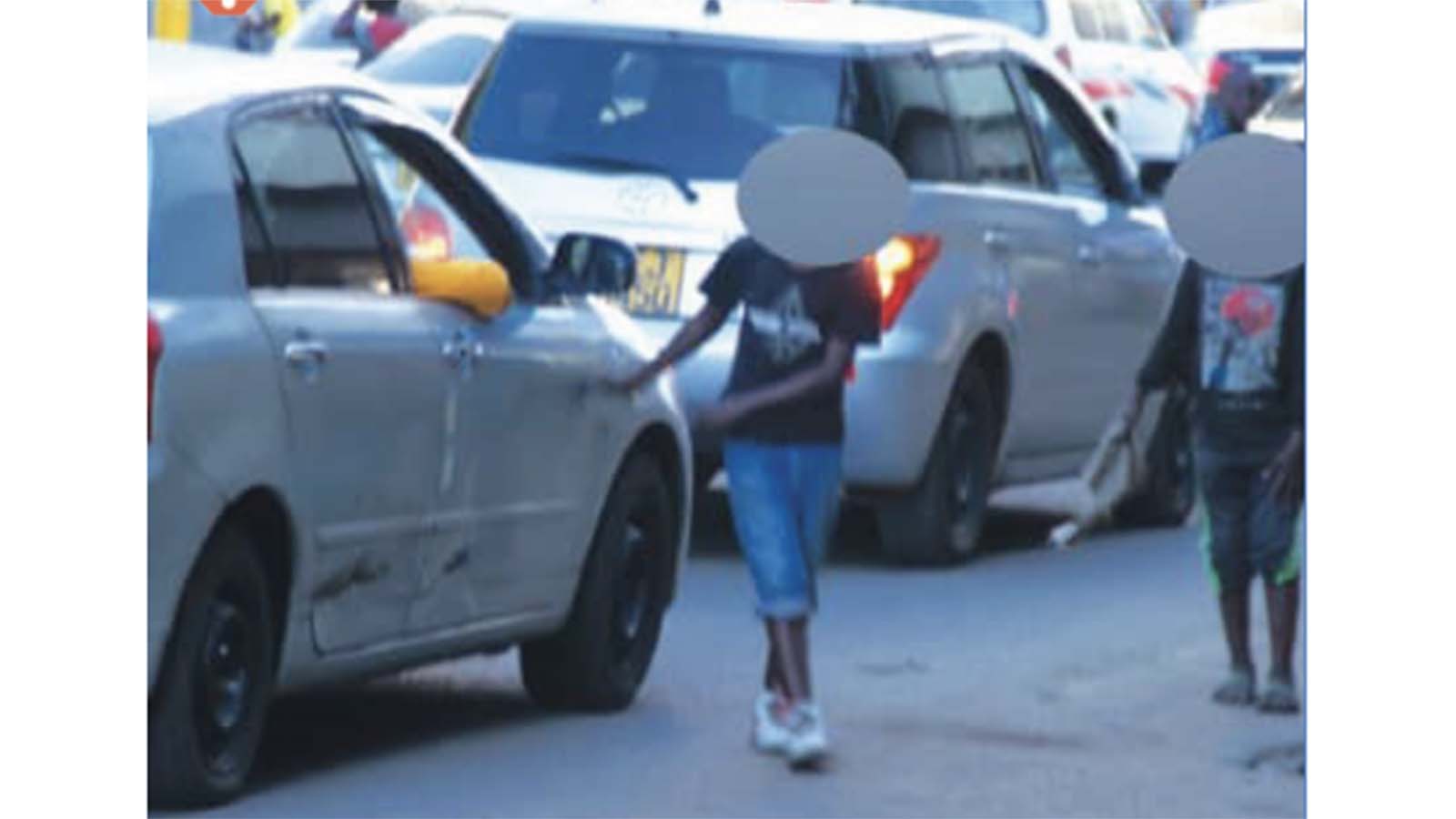
Theseus Shambare
FROM a pavement to a dormitory — and back again.
This has seemingly become the cycle for children living on the streets.
Over the years, sustained efforts have been made to remove vulnerable minors from the streets.
Yet these efforts are often hampered by youngsters who appear to have found comfort in street life.
At the busy intersection of Samora Machel Avenue and Julius Nyerere Way — where the statue of Mbuya Nehanda keeps silent vigil over the restless city — 14-year-old Tanaka (full identity protected) weaves between stationary vehicles.
As the city pulses around him, he stretches out his palm for alms.
A single Zimbabwe Gold (ZiG) note lands in his hand. Behind him, a group of older boys whispers and laughs.
For a moment, Harare’s central business district (CBD) feels like a jungle — and he is both prey and player.
By midday, he will have earned enough to buy a plate of sadza.
Perhaps he will send a few notes home to his mother, a single parent who sells vegetables at a small stall in Chitungwiza.
Life is hard there; her modest sales barely cover rent, school fees or daily meals.
Tanaka has been removed from the streets before.
He remembers the dormitory at a shelter, the counselling sessions and the social worker who tried to convince him to stay in school. Three months later, he returned to the streets.
“I tried to stay home, but sometimes there is nothing. At home . . . we sleep on the floor,” he said, tugging at the frayed hem of his shirt.
Even more, he has tasted life on the streets — the banknotes fluttering in his pocket, the small taste of independence and the power to choose where and when to work.
This illusory sense of freedom pulls him more strongly than the meagre comfort of home. His mother, recently divorced after his father abandoned the family, does her best to provide for him.
However, with limited income and no extended family support, she cannot compete with the immediate allure of street life.
Tanaka’s winding journey — street, shelter, home and street again — reflects a complex web of poverty, family breakdown, peer influence and survival instinct.
Chiedza (15), who seems to prefer the independence of street life, shared her own experience.
“I was taken to a facility in the Goromonzi/Ruwa area,” she recounted.
“There were quite a number of us there and they provided us with food and everything we needed. However, the conflict arose because they wanted us to attend school rather than earn a living. I am used to looking for my own money, so I eventually decided to leave and come back here.”
It is a growing crisis in Harare and other parts of the country, where the streets offer both danger and the promise of freedom.
In an interview with The Sunday Mail Society, Permanent Secretary in the Ministry of Public Service, Labour and Social Welfare Mr Simon Masanga said the Government is “deeply concerned about the increasing number of children who are living and begging on the streets”.
“The exploitation of children for street begging constitutes a violation of our laws and statutes,” he said.
“We are guided by the Constitution, the Children’s Act, the Criminal Law, the Trafficking in Persons Act and the recently approved National Action Plan for Children (IV).”
Complex
Legal frameworks exist, but the reality on the streets is more complicated. Children like Tanaka operate within informal economies where older youths or adults may control routes, times and clients.
Earnings are modest — ZiG notes from pedestrians, occasional USD notes from motorists — but the experience of making money, even at a tender age, can be tempting.
“Street begging is an economic activity driven by poverty,” notes labour economist Dr Tendai Moyo.
“When children contribute income to households or to adults who control them, it is labour shaped by necessity, not choice.”
The International Labour Organisation (ILO) classifies street begging and other hazardous work by children as one of the worst forms of child labour under Convention No. 182 on the Worst Forms of Child Labour.
Traffic accidents, violence, exposure to drugs and coercion are daily realities for children operating in CBDs.
Since January 2026, more than 70 children have been removed from Harare’s streets and placed in safe homes or facilities.
Of the figure, 54 children — 15 girls and 39 boys aged between two to 18 — were profiled and taken into care.
A huge number was from Epworth and Chitungwiza. Joint operations involve the police, social workers and child protection partners.
“We do not conduct removals in isolation. Child-friendly interventions are carried out in collaboration with law-enforcement officers and stakeholders to ensure children are removed from harmful environments,” explained Mr Masanga.
Once in care, each child undergoes individualised case management. This is done through the National Case Management System for the Welfare and Protection of Children in Zimbabwe.
The Basic Education Assistance Module (BEAM) and social cash transfers aim to provide a buffer against the economic stress that often drives children back to the streets.
Partnerships with UNICEF and the International Organisation for Migration (IOM) strengthen protections for unaccompanied and separated migrant children.
Yet removals are not a panacea.
Many children abscond, drawn back by peers, income or the sense of independence the street provides.
When home is no refuge
“I told him to stay home,” said the mother of another child who was removed from the streets but returned, her voice heavy with exhaustion. But I have nothing to give him. He is now used to providing for himself. He started because he wanted to help me, so he goes back.”
Broken families, weak parental capacity, substance abuse and peer influence complicate reintegration.
Facilities are often overstretched and social worker-to-child ratios remain limited.
Without long-term support, children move between the streets and care facilities.
“Some children feel confined in institutional settings,” explained a social worker at a Harare residential facility during a roundup.
“Others go back to the streets because that is where survival skills are rewarded. Poverty pulls harder than rules can push.”
A recent viral video showing children fighting in Harare’s CBD underscored another dimension of substance abuse.
Investigations by the Department of Social Development revealed that an intoxicated 16-year-old boy had started the altercation.
The children were swiftly removed and placed in care. But drug exposure complicates reintegration.
“Substance use is both a coping mechanism and a recruitment tool within street networks.
“Without targeted intervention, children remain vulnerable to exploitation and violence,” said public health practitioner Ms Beauty Chikomba.
Mr Masanga confirmed that multisectoral interventions to prevent and respond to drug and substance abuse are being strengthened, alongside family and community support programmes.
To address gaps, provincial task forces on children living on the streets have been activated. Child protection services are being decentralised to peri-urban hotspots such as Chitungwiza.
Family tracing and reunification follow identification and documentation. Tracing and reunification protocols are guided by the best interests of the child.
“We are facilitating linkages with social protection programmes such as BEAM and social cash transfers.
“Children removed from the streets require long-term, multi-sectoral interventions rather than short-term placement solutions,” Mr Masanga added.
Civil society partnerships with organisations such as UNICEF and IOM under the Multi-Partner Trust Fund strengthen prevention and protection for unaccompanied and separated migrant children.
Regional crisis
Urban child vulnerability is mirrored across Southern Africa, where cross-border mobility adds another layer to the challenge.
Recent reports indicate that border authorities at Beitbridge intercepted groups of undocumented, unaccompanied minor children — including more than 20 aged between five and 17, and a separate group of 33 aged four to 15 — travelling without guardians between South Africa and Zimbabwe.
Alongside Zimbabwean children, some street children in Harare are foreign nationals, especially from Mozambique, drawn by informal economies and sometimes trafficked or smuggled across borders.
This compounds urban child protection pressures. It also strains social protection responses across the region.
Under frameworks of the Southern African Development Community (SADC), member states have committed to protecting vulnerable children amid shifting economic realities.
Zimbabwe’s participation in the Common Market for Eastern and Southern Africa aims to deepen trade and stimulate growth, but macroeconomic gains do not automatically shield low-income households.
“In cities dominated by informal economies, children become part of survival strategies.
“Economic inclusion must accompany growth or the street pipeline continues,” said regional development analyst Dr Josephine Dube.
Beyond roundups
The Ministry of Public Service, Labour and Social Welfare plans to intensify street outreach, expand awareness campaigns in hotspot areas and strengthen multisectoral interventions to prevent vagrancy, street trading and substance abuse.
Vocational training, family strengthening and community surveillance form part of the long-term strategy.
“We remain committed to upholding the Constitution and national laws to ensure every child enjoys their right to safety, dignity and development,” said Mr Masanga.
“Children on the streets are not criminals — they are children in need of care and protection.”
As evening falls, Tanaka counts the few dollars in his torn plastic bag.
He dreams of becoming a carpenter.
He recalls the structured days at the care facility: school, meals, safety.
“I do not want to be here forever,” he said, eyes fixed on the horizon.
His future — like that of many street children — sits at the intersection of law-enforcement, social protection, household poverty and regional economic dynamics.
Zimbabwe has strengthened surveillance, prosecutions and rehabilitation efforts.
Task forces are active.
Partnerships are expanding.
But the decisive measure will not be the number of children removed from the streets; it will be whether fewer children feel compelled to return.
For Tanaka and dozens like him, protection must translate into possibility: a stable home, sustained support and a pathway beyond the traffic lights.