


 Online Reporter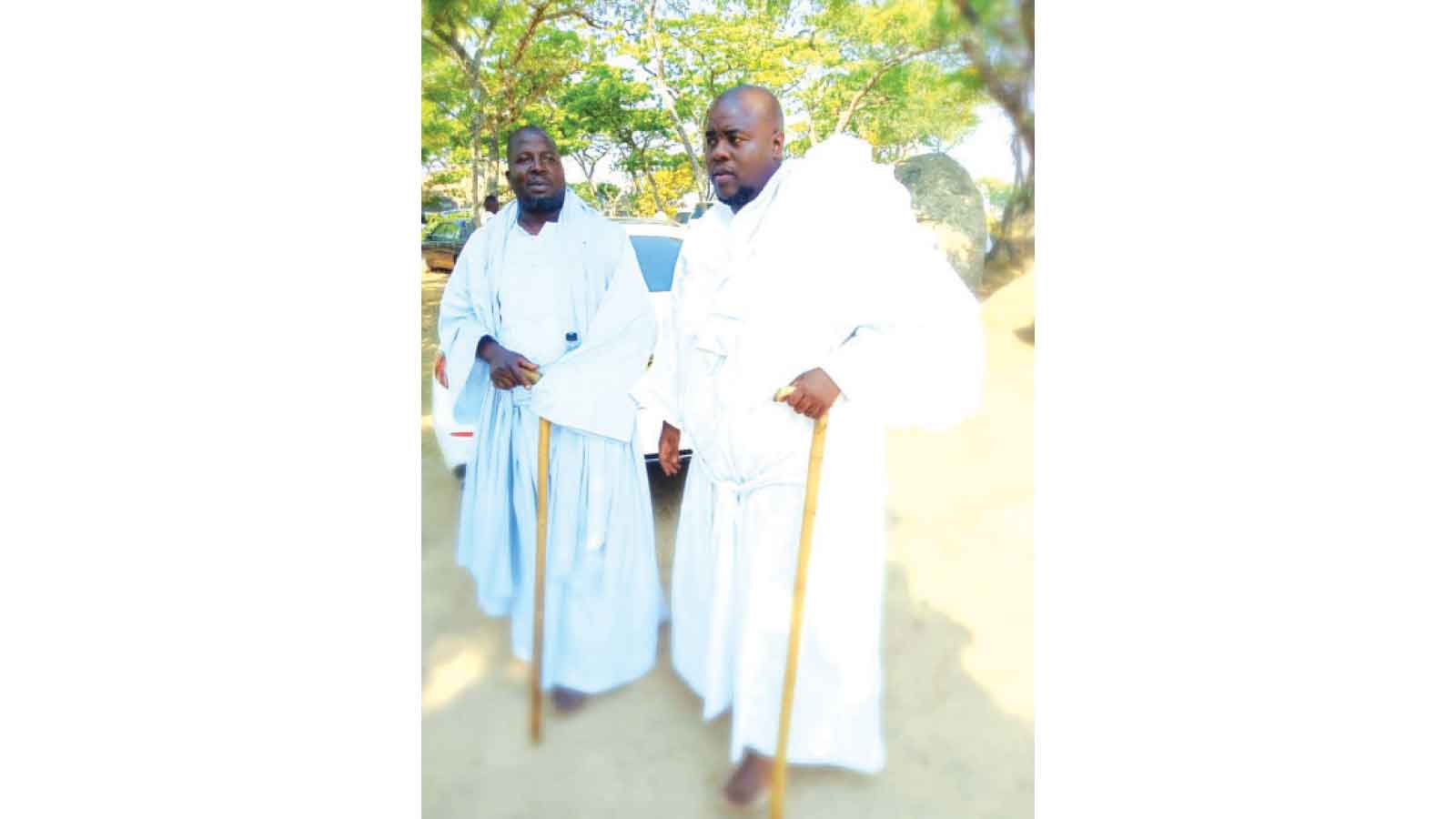
Don Makanyanga
Zimpapers Sports Hub
ON Friday mornings in Glen Norah, Harare moves at its usual pace. Women sweep yards in the soft light. Vendors drift into familiar corners. Neighbours greet each other and carry on.
Along Shiriyedenga Street, another routine is already in motion.
Small pockets of people gather quietly, waiting. Some are visibly drowned in their thoughts. Some keep glancing at the gate ahead, like they are timing their lives in minutes. An investigation into the small gatherings reveals a steady queue outside the home of self-styled apostolic sect self-proclaimed prophet, Tendai Pahuwa, better known as Madzibaba Tendai.
Among those milling around are footballers.
Some play in the Premiership. Others come from the lower divisions, where careers can disappear without warning. They arrive early, before training, before matchday preparations swallow the day.
In Zimbabwean football, the distance between the pitch and the unseen has never been clean.
Players, coaches and even club officials have long treated spiritual intervention as part of the game.
They come for protection from injury. They come for game time. They come to be noticed. They come because they have watched football turn cold on people overnight, and they do not trust the system to protect them.
Madzibaba Tendai says he understands that fear because he once lived the life himself.
A former footballer whose career was cut short by injury, he speaks with the calm confidence of someone who believes he is simply filling a gap football refuses to close.
“The reason I want to work with footballers is I am so passionate about football,” he says.
“I have a deep understanding of football players of what they go through since I also played football before my career was cut short.
“So as an apostolic sect prophet, I work with so many footballers who come seeking spiritual help.”
He says players visit for different reasons, and he does not pretend it is only about faith. It is also about the insecurity of being a footballer in a league where certainty is rare.
“Players come here for different reasons. I help those seeking to get protection from injuries, winning matches and others seeking to get noticed, to get game time,” he says.
“There is a strong belief of juju in football, so some of these players visit seeking help to be protected from the implications of juju.
“We pray to God to guide and lead the player, and we leave everything to Him.”
One player, speaking anonymously, says the hardest part is not the prayer, it is being seen.
“It’s not easy to go kumapostori. Our society doesn’t really understand it, people judge you for your choices,” he says.
“One day I went to see Madzibaba Tendai just before our last training session of the week. We had a very important game against Simba Bhora and he had told me I was going to be key, so I had to see him before we played.
“When I got there I was worried some people might recognise me. There were familiar faces in the line. I got out of my car, put on my khakhi shorts and a white T-shirt, grabbed my boots and joined the queue.
“What made it worse is that he was helping everyone in the open and you could hear what he was saying to each person. When my turn came, I knelt before him and he prophesied that I was going to score.
“But in my head I was shy. People now knew my story and I felt like they had put two and two together and knew who I was.
“I’m glad I still went. The following day I scored and we beat Simba Bhora 1-0.”
It is a confession that captures the tension of the culture. A player trying to protect his career, while also protecting his name. In Zimbabwean football, faith is rarely just private comfort. It becomes a shield against injury, against doubt, against the fear that the game can turn on you without warning.
The same player insists the relationship is not presented as payment for results. It is framed as gratitude, and gratitude has its own pressure.
“We do not pay for the services,” he says. “What happens with your own gut feeling after the services feel that you have been helped you can go back and thank the messenger of God. It’s up to you to appreciate with money.”
That is how the spiritual economy survives, through expectation rather than invoices.
“It is a two-way thing, it’s either you are going to church or you are in the traditional practice (juju),” he says. “We have different beliefs as individuals.”
He says he is apostolic, and that belief shapes his matchday habits.
“I am a firm believer of the apostolic faith sect, and I am led by the faith,” he says. “So before each and every game, I visit the shrine as I am led by the Lord.”
But belief can also divide a dressing room. The player says different beliefs can clash, and when results go wrong, suspicion follows.
“Individuals have different beliefs and at times these beliefs clash, which results in losses and draws,” he says.
A coach, also speaking anonymously, says one cannot simply coach belief out of players because it comes from their backgrounds long before they reach the elite game.
“It’s real players have their own spiritual beliefs,” he says. “I have coached players who come from different backgrounds, and you find that those that believe in Christianity tend to do more so on the apostolic side,” he says.
He insists selection should remain football, not faith.
“As a coach, whether you believe it or not, if the player is good, then you have to select him for what he does in training without looking at spiritual belief,” said Madzibaba Tendai.
He says the feedback he receives has only increased the number of players coming to Glen Norah.
“I have received some positive feedback and of late I have seen a lot of players coming seeking services, and with that I feel that the power of God is visible,” he says.
He says his role is not only spiritual. Sometimes it becomes practical support, especially for struggling players.
“Not only do I pray for them or help them spiritually, but I sometimes help with securing football boots, gloves and, at times, bus fare for some of these players,” said Madzibaba Tendai.
Zimbabwean football has carried this story for generations, even when it pretends it has outgrown it.
In 2017, Dynamos legend Memory Mucherahowa blew the lid off a culture many supporters denied existed when he claimed the country’s biggest club encouraged the use of juju.
“It was all about survival because we had families to feed and sometimes we’d end up doing things we didn’t believe in nor understand,” he wrote. “I’m not saying juju works but it was part of football when I was playing and I’m sure it’s part of football even today,” he wrote.
He wrote that the team consulted a traditional healer every week, and as captain, he carried the responsibility of executing the instructions.
“Every week before a game the team would consult a traditional healer. I, as the team captain, would be the one to execute whatever the sangoma had said,” he said. “My loyalty was with the team’s cause and I was prepared to do anything.”
In 2014, belief spilled into public humiliation when CAPS United were accused of pouring urine on Buffaloes’ bench during a Castle Lager Premiership match at Gwanzura.
“It is unfortunate we failed to sit on the bench in the second half because CAPS United players Blessing Zabula and Hardlife Zvirekwi had poured urine on our bench and no one cleaned it for us to sit on the bench,” Buffaloes coach Luke “Vahombe” Masomere said after the match.
In Glen Norah, the queue keeps forming because Zimbabwean football still has not built enough security for its players to feel safe without it. Until the game offers stronger contracts, better medical support, clearer selection processes and a sense of protection, many will keep searching for certainty elsewhere.
And so, every Friday, the street looks ordinary.



 Bongani Ndlovu
This is the clearest indication of being primitive. We can argue as far as the horizon but Zimbabwe is going nowhere with this kind of mental architecture.