shloboe boe
Raymond Jaravaza, [email protected]
WHEN the body of celebrated Bulawayo radio personality and artiste, Babongile Sikhonjwa, was taken on a farewell tour around the city following his recent passing, residents were left in awe at the sight of a transparent trailer hearse transporting his remains. Similar grandeur was witnessed during the burial of Zimbabwean international footballer, Tendai Ndoro, and more recently, at the funeral of Nkulumane legislator and renowned poet, Desire Moyo.
A new trend has taken hold in Zimbabwe — funerals are increasingly becoming less about mourning and more about showcasing status and affluence. Today, funeral parlours in the country are going to great lengths, sparing no expense in their efforts to outshine one another when laying to rest prominent figures, including footballers, musicians, and politicians.
The marketing strategy is straightforward: infuse funerals with glamour and spectacle to attract clients in a fiercely competitive industry, where new players are emerging rapidly to claim their share of the life insurance market. This trend is swiftly gaining traction among Bulawayo residents, many of whom are now spending substantial sums to transform funerals into lavish and generous occasions.
Traditionally, when a death occurred in a family, people would visit the deceased’s home to pay their respects. This would typically continue for about a week, depending on the arrival of close relatives, mostly in the evenings after work. Behind the scenes, preparations for the burial would commence, with significant amounts of money spent on food to cater for those offering condolences.
The financial capacity of the bereaved family often dictates whether the funeral is deemed glamorous. Facebook user Elissa Mpofu recounted how her neighbour’s funeral in Newton West was transformed into a dazzling affair.
“Mourners were served tea, coffee, cakes, and drinks for breakfast. For lunch and supper, a catering company provided meals fit for a wedding,” Mpofu shared.
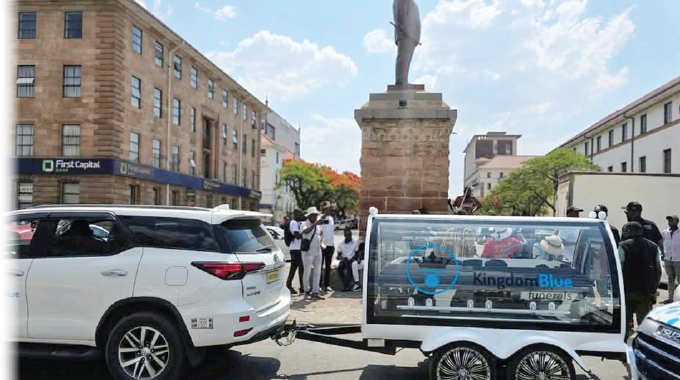
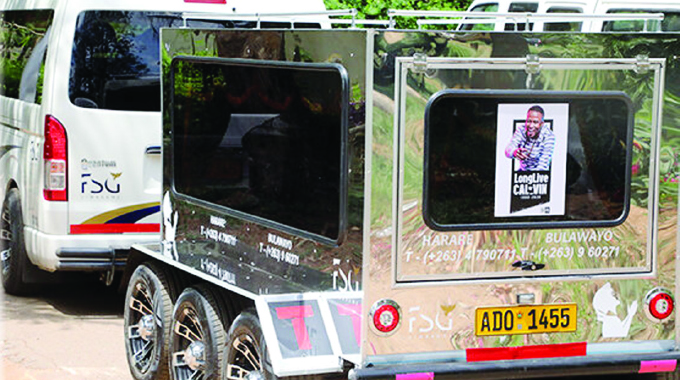
When the late Cal_Vin’s body was driven around the city, residents were astonished by the hearse — a transparent trailer that revealed the coffin inside. The vehicle itself was a spectacle, far from the conventional hearse. It was a specially designed trailer with glass sides, dual wheels, and company branding, crafted to captivate onlookers.
These custom-made trailers have become increasingly common among funeral parlours in Zimbabwe, though they come at a considerable cost. An official from a local funeral parlour told the Chronicle:
“It’s mostly people in the diaspora who opt for funeral policies that include a send-off in a glass trailer. Often, it is the children who want to honour their parents with a glamorous farewell, and they are willing to pay extra on top of the standard funeral cover to make it happen. The glass trailers are expensive, so families must be prepared to spend significantly to use one.”
Traditionally, a vigil is held the night before the funeral, with attendance often doubling compared to the evening gatherings, necessitating even more resources. For example, tents, tables, and chairs for the vigil are hired at steep prices due to high demand.
New Magwegwe resident, Mr Arnold Sibindi, commented on the rising costs of funerals when asked whether he would want his family to spend extravagantly upon his death.
“I’ve attended enough funerals to know when people are simply showing off by spending absurd amounts during the funeral and burial. I’ve told my children to keep my funeral modest. They have their own lives to live after I’m gone,” he said.
Mr Sibindi recalled attending a relative’s burial and being struck by the opulence of the casket.
“Some of the caskets I’ve seen are made from expensive wood and adorned with gold-plated handles. I remember one burial where the casket was crafted from beautiful oak — it must have cost a fortune,” he said.
Even the attire worn on burial days speaks volumes about the deceased. This reporter has observed mourners dressed in designer sunglasses, elegant dresses, and tailored suits purchased specifically for the occasion. Gone are the days when mourners wore black; today, burials often resemble fashion shows, with attendees donning vibrant, stylish outfits.
Once the pastor or undertaker utters the solemn words “dust to dust” and the burial rites conclude, mourners depart in luxury vehicles, returning home for yet another lavish gathering. For those with deep pockets, the post-burial meal is a grand affair, catered by professional companies whose services come at a premium.
“Some families even serve ice cream for dessert after the main course at the funeral home. It’s usually a sign that the bereaved family is well-off and willing to spend generously to celebrate the life of their loved one,” said local resident Mr Paul Saunyama.



 Online Reporter