daniel chigunwe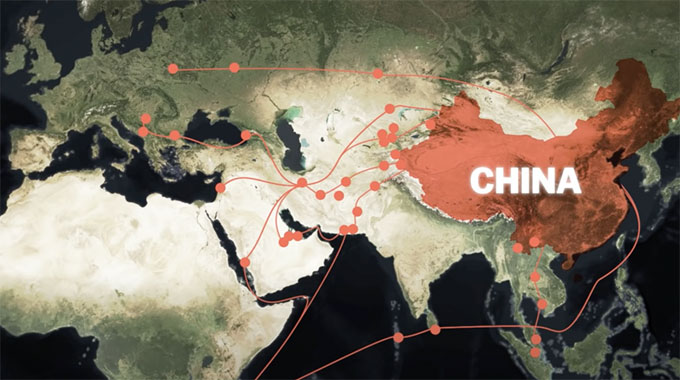
Anthony Moretti
As the 10th anniversary of the launching of the China-proposed Belt and Road Initiative (BRI) takes centre stage, one of the pivotal questions being asked is how the Global South has benefited from the thousands of projects it has created with China through the initiative.
An exact dollar figure is difficult to compute and frankly would be merely an exercise in counting numbers.
More importantly, we know that more than US$1 trillion has been spent in total on BRI efforts with the African continent, the Middle East and Latin America being significant partners. At the risk of oversimplifying the complexity of the BRI, you can travel to almost every country in those regions today and find a port, skyscraper, railroad, bridge, power plant or major road/highway that has been (or is being) constructed thanks to the BRI.
And do not forget that as these significant efforts are being completed, Chinese companies are emphasising green construction, with, as just one example, roughly 56 percent of all energy-related projects undertaken in 2023 incorporating renewable energies. Massive projects that benefit a particular country or region and maintain fidelity to fighting climate change is a win-win.
The Foreign Affairs magazine recently noted that the Global South covers “the vast majority of humanity, but their desires and goals have long been relegated to the footnotes of geopolitics.”
Many of the leaders in those countries, despite not operating as a bloc (in the traditional definition of the term), are changing that dynamic.
Driven by realism – the need to improve the well-being of their citizens in part through infrastructure and other projects that demonstrate economic growth — and tired of being lectured to about Western values while receiving economic aid linked to specific democratic principles, these countries want to modernise their way.
And China is delivering the same message: Let us work together on developing your nation and empowering your people, and you can do that with no strings attached. Returning to the aforementioned Foreign Affairs article, these countries are “looking out for number one” and “rejecting a new cold war dynamic that pits the United States, Japan and Europe against a gathering coalition of China and Russia.”
In short, the Global South has said “enough” after spending decades as the most junior of partners in the Washington Consensus.
As one former Indonesian ambassador to the US and a co-founder of an international social justice group wrote in Nikkei Asia: “Perceptions of Western hypocrisy in the Global South, compounded by bitter memories of past interventions, have made our divided world even more polarised and have pushed old friends and partners to turn to new sources of development finance that come with less baggage and fewer strings attached…”
Will American political elites pay attention to such warnings? The Quincy Institute for Responsible Statecraft is making it easier for them to do so.
The institute recently launched a new program that targets the Global South. Why? Trita Parsi, the institute’s executive vice president, said, “The growing geopolitical significance of rising Middle Powers in the Global South is undisputed, yet a solid understanding of this new dynamic is lacking in Washington.”
Those are kind, and dare we say diplomatic, words. Washington suffers from a corrosive mind-set that demands turning any achievement by China into an attack on the nation (“China must have cheated”) and any setback faced by China as an indicator that the entire structure is under duress (“China is doomed.”).
That myopic viewpoint explains why one American think tank after another wants its audiences to believe that the BRI is flawed, mismanaged, tipped in China’s favour and otherwise guaranteed to undermine the roughly 150 nations involved in it.
Such analyses regularly conclude that because the BRI has had its ups and downs it is teetering. Do you know of any long-term economic programme that never hit a bump or two in the road? — Global Times
The author is an associate professor at the Department of Communication and Organisational Leadership at Robert Morris University.


 Online Reporter