Chronicle Editor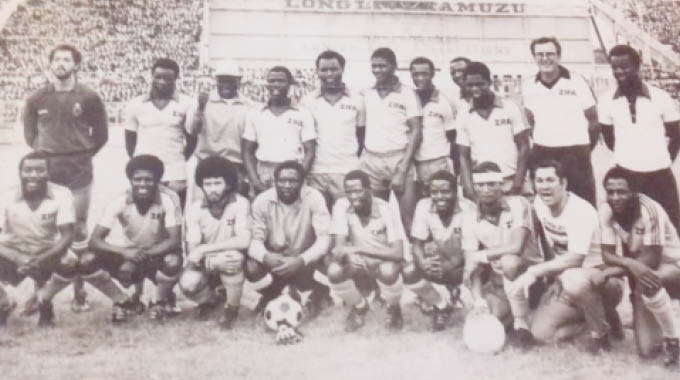
Lovemore Dube
THERE would not have been a better celebration for a new Zimbabwe than to win gold in its first tournament soon after Independence in 1980 following 10 years of international isolation.
A great crop of footballers was denied an opportunity to parade its talent to the world by the ban from international sport during the colonial era.
Rhodesia as Zimbabwe was known, was left to play unofficial matches with the Springboks of South Africa and rebel tour groups from Europe in matches of no significance.
But the dawn of Independence ushered in a new era where the country was re-admitted to international football.
A four-team tournament featuring Mozambique, Tanzania, Zambia and Zimbabwe was arranged and the hosts marked their arrival on the scene with a 6-0 routing of Mozambique before going on to win 2-1 against Zambia in the final at the ceremonial home of Zimbabwe football, Rufaro Stadium in Harare.
Among the men chosen to do duty for the country was none other than Raphael Phiri.
The towering Rio Tinto goalminder, deputised another legend the brilliant Frank Mkanga of Risco later to change to Zisco in goal.
Sunday News Leisure caught up with the veteran coach and went down memory lane of a career that began in the early 1970s and would earn him 11 full caps and over 20 substitute slots for his country.
“I felt honoured in being part of the national team in a free Zimbabwe. This was an opportunity every young player had been waiting for and would not want to miss to impress,” said Phiri.
Phiri was 29 when Zimbabwe gained Independence and international isolation had affected him already as he spurned an offer to play in South Africa. It was the Mecca then for local footballers with the likes of Robert Godoka, Shadreck Ngwenya, Max Tshuma, Onias Musana, Daniel Chikanda, Douglas Maneto and George Shaya having had stints there.
“The international isolation affected me a lot because I missed a chance to move to South Africa after my coach had found a club for me there,” said Phiri.
A patriotic Zimbabwean, Phiri would not take up the offer to play there as he knew that once he opted for Mzansi he would not be allowed to play football in Zimbabwe once it got independence nor elsewhere in the world.
“In fact I refused because at that time if you played in South Africa, you would not be allowed to play in Zimbabwe again. My teammate Robert Godoka, I remember he was brave enough to play there and ended up in Canada but he later returned to continue playing for Rio Tinto after Independence,” said Phiri.
He, however, regrets that because of his advanced age he would not get another chance to play beyond the country’s borders but is happy that he was able to be part of the national teams that laid the foundation for the future of the game at international level.
He does not count a short stint at Malawi’s Sukoma Wanderers as playing abroad.
“I was not impressed by the offer, I turned it down,” said Phiri.
His first dance with national team was in 1978 when he was drafted into the national team that sought revenge on South Africa after the 7-0 annihilation of 1977 with the legendary Hwange shot-stopper Posani Sibanda in goal.
Unfortunately the match would not take place and the then ripe at 27 Phiri would wait another two years to don national team colours, what more would he wish for, putting on the strip for an independent Zimbabwe back in international football.
From 1978 to 1984 Phiri was very much part of the national team framework even though he played second fiddle to three other great goalkeepers.
He admits that they were equally good and these were Mkanga, Bruce Grobbelaar and Japhet “Short Cat” Mparutsa.
Prior to Independence he speaks volumes of the might of Matthew Mwale, Posani Sibanda and Rob Jordan who was part of the team beaten 2-1 at the last hurdle for the 1970 World Cup finals hosted by Brazil.
Phiri‘s colleagues in the side that won the first two international matches played on home soil in an independent Zimbabwe, were Bethal Salis, George Rollo, David Muchineripi, Sunday Chidzambwa, Misheck Chidzambwa, Ephert Lungu, Wonder Phiri, Joseph Zulu, David Mandigora, Shacky Tauro, Onias Musana, Ephraim Moloi, Frank Mkanga, Max “Shaluza” Tshuma and Oliver “Monitoring Force” Kateya.
“It was a great feeling winning the first tournament. It was a team of some of the best talented players of that era who had lost out to opportunities and international exposure earlier,” said the veteran coach who has a Division Two project running in Mashonaland West.
Phiri had the chance of playing alongside some of the youngsters to make a mark on Zimbabwean soil soon after Independence like Madinda Ndlovu, Stanley Ndunduma, Boy Ndlovu, Joel Shambo, James Takavada, Ephraim Dzimbiri, Gift Mpariwa, Charles Chirwa and David Mwanza.
Born in Zimuto, Masvingo in 1951, Phiri went as far as Form Three and his father could not afford to educate him beyond that.
He started taking football seriously from there playing for Chegutu Rovers who produced one David Phiri who turned out for Dynamos.
In 1969 he was identified by Isaac Chieza of the famous Chieza brothers family who was coach of Rhopulp now Hunyani who were based in Norton. They were in the Second Division and he would in 1972 move to Proton Stars of Marondera where he played until he was discovered as a gem by John Rugg of Rio Tinto.
“In 1977 I joined Rio Tinto andwe were winners of the BAT Rosebowl Trophy, a feat we would repeat in 1978,” said Phiri who was later involved in a number of great matches and cup finals including the 1980 4-0 drubbing by a Mark Watson and Tymon Mabaleka inspired Highlanders in the Chibuku final.
He retired from active participation as a player in 1987 to take up coaching under his mentor Rugg. He would be in charge of the side as it returned to the Super League in 1991 after Rugg had quit the previous year and would stay on in that capacity for a number of years with another win in the promotion race in 1998 and 2003 before joining the great track to Botswana where he coached Union Flamengo Santos.
His coaching high in Botswana was a third place finish with Santos whom he ditched to replace Barry Daka at Ecco City to be closer to home.
He returned in 2009 to coach his beloved Eiffel Flats and dumped them when Golden Valley FC came calling in 2015 who he guided them to the Northern Region Division One League.
Now Phiri has his own Division Two project that he coaches and believes has potential and just needs funding and equipping before gems are plucked out of it.
He is proud of his achievements in the game in a free Zimbabwe. The best known names to come through his hands are Herbert Dick, Saidi Saidi, Norman Komani, Douglas Pikirayi, Innocent Whiridza, Edward Yongwe, Ernest Gava, Clifton Chisango and Tafadzwa Mombeshora.
Phiri worked under these coaches in the Warriors; Ben Koufie, Rugg, Paul Moyo, Mick Poole and Ashton Nyazika.
He bemoans being ignored to coach national team goalkeepers across the age groups despite his experience as a former national team player and qualified goalkeepers’ trainer.
He believes he still has a lot to offer to the game and the country that gave him fame.
Many believe Phiri and his generation of stars played for pride as the game lacked big incentives yet they were good enough to walk into any professional league in the world.
True to that players like the late Fred Mkwesha and Bruce Grobbelaar made it abroad and injury denied Majuta Mpofu an opportunity to play in Brazil in 1975.


 Online Reporter