Online Reporter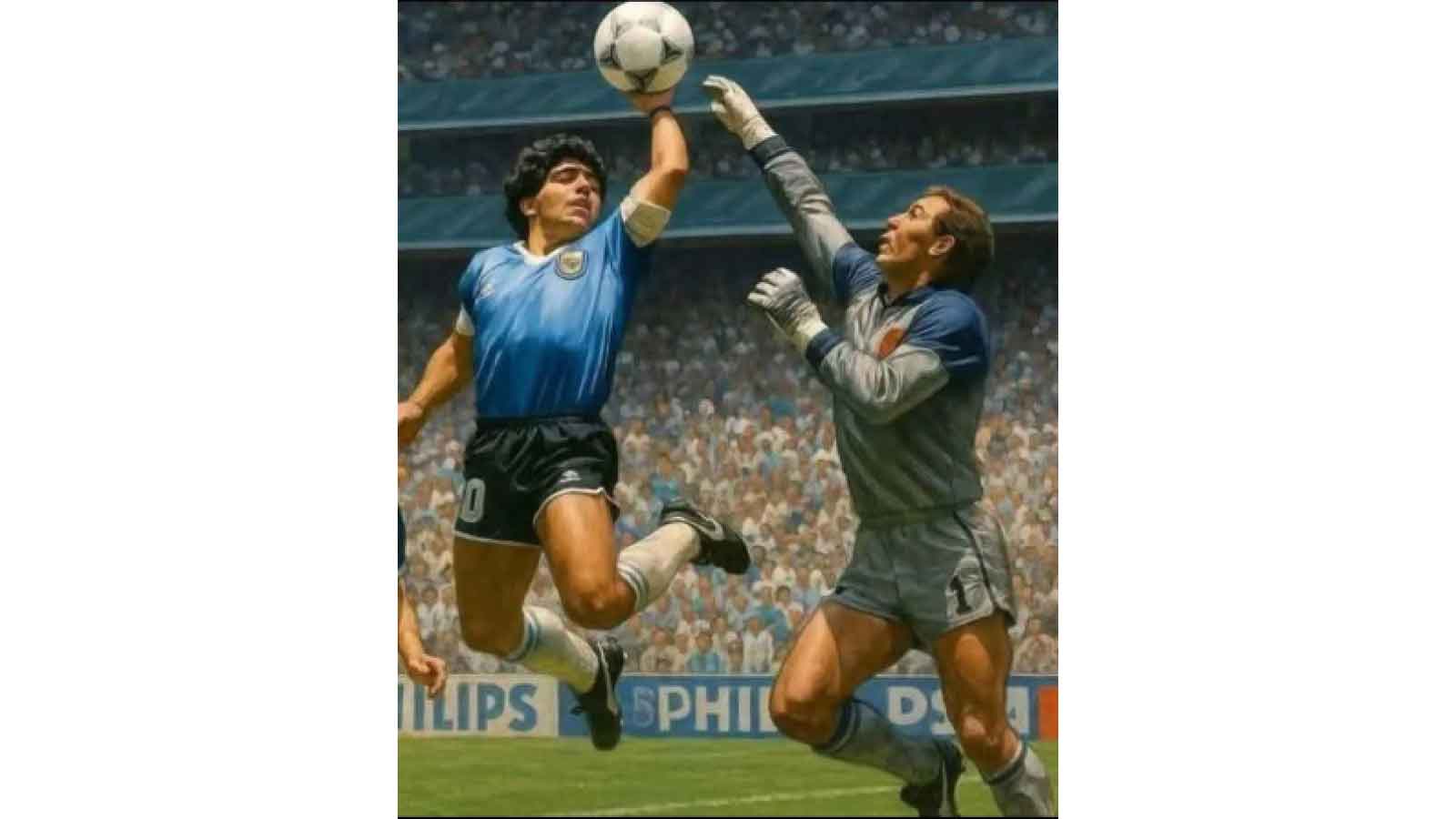
ATLANTA. – England vs Argentina is not just your average World Cup semi-final.
In addition to being two of the top-four ranked nations, according to FIFA, it’s arguably one of the most iconic World Cup rivalries of them all, extending over 60 years of controversy, hostility and era-defining moments.
When the two teams meet tonight, starting at 9pm, they will add another chapter to the rich and tempestuous story of two footballing giants.
It is Diego Maradona and the Hand of God, David Beckham’s red card humiliation and his redemption four years later and a Wembley sending off that sparked a diplomatic incident and the introduction of red and yellow cards.
Since the 1980s, soccer games between the two nations have also been played with a political backdrop, following the 1982 military conflict between Great Britain and Argentina over the disputed Falkland Islands.
Here are some of the classics between the two giants:
1966 – ENGLAND 1-O ARGENTINA (SHIRT-SWAPPING BANNED AFTER WEMBLEY FURORE)
The first World Cup meeting between the two nations was an uneventful 3-1 group stage win for England in Chile in 1962, but when they met again in a quarterfinal at Wembley Stadium in 1966, the game would go down in infamy.
England manager Alf Ramsay described Argentina’s players as “animals” after the game, a 1-0 England victory that would be referred to as “El robo del siglo” (“The Theft Of The Century”) in Argentina because of captain Antonio Rattin’s red card and claims that Geoff Hurst’s winning goal was offside.
Rattin, who died on Saturday at the age of 89, was booked twice by referee Rudolf Kreitlin for fouls on Bobby Charlton and Hurst, but he refused to leave the pitch.
When Rattin eventually left the field escorted by two police officers, he sat on a red carpet reserved for Queen Elizabeth II in protest.
That incident led to FIFA introducing yellow and red cards to ensure clarity of decisions and to avoid confusion between officials and players without a common language.
The enmity between the two teams continued after the game. Argentina’s Roberto Ferrero shoved the referee and Ermindo Onega spat in the face of FIFA vice president Harry Cavan, earning both players a three-match suspension, while another Argentina player urinated in the tunnel.
1986 – ARGENTINA 2-1 ENGLAND (THE INFAMOUS HAND OF GOD)
If one image sums up the England-Argentina rivalry, it came in the 51st minute of the World Cup quarter-final in Mexico City’s Azteca Stadium on June 22, 1986. There has arguably never been a more iconic or infamous moment in World Cup history.
When asked later about the goal, Maradona created a legend with an unforgettable quote: “A little with the head of Maradona and a little with the hand of God,” he said.
Then, Maradona scored the World Cup’s greatest goal.
1998 – ARGENTINA 2-2 ENGLAND (4-3 PENALTIES), BECKHAM v SIMEONE
At the time, David Beckham was the golden boy of English football and a future England captain, but he woke to newspaper headlines such as “10 Heroic Lions, One Stupid Boy” after being sent off for kicking Argentina’s Diego Simeone during an epic round-of-16 tie at France 98.
Beckham was blamed for England’s defeat, for forcing his team to play with 10 players for an hour, and the former Manchester United and Real Madrid midfielder admitted that it was an incident that shaped his career.
2002 – ENGLAND 1 -0 ARGENTINA (BECKHAM’S REVENGE)
Argentina had triumphed in their two most recent World Cup meetings with England in 1986 and 1998, but 2002 was different. It was a game in which David Beckham avenged the red card four years and gained closure – and forgiveness – for the incident with Simeone. A 44th-minute penalty in Sapporo, Japan, gave Beckham the chance to make amends for France 98 and he took it with relish, sending his spot-kick past goalkeeper Pablo Cavallero. But this is England versus Argentina, so of course there was controversy.
England forward Michael Owen won the penalty following a challenge by defender Mauricio Pochettino but it was a debatable decision.