Online Reporter
Theseus Mauruki Shambare, [email protected]
FOR generations, the name Budiriro carried a promise.
The name, which means “development” in Shona, spoke of progress, prosperity and a better tomorrow.
Yet for many years, that promise appeared trapped between aspiration and reality.
In Ward 24 of Chivi District, Masvingo Province, villagers knew too well the frustrations of relying on unpredictable rainfall.
The land was available and the people were willing to work, but the absence of reliable water often determined whether dreams became harvests or disappointment.
Today, Budiriro is beginning to live up to its name.
A Presidential borehole has brought a new rhythm to village life.
Where farmers once waited anxiously for rains, water now flows to support production throughout the year.
A one-hectare sugar bean field has become a symbol of a changing agricultural story.
A herd of 46 goats represents a growing livestock enterprise.
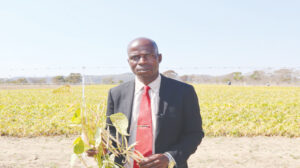
— Picture:Theseus Mauruki Shambare
And beyond the current projects lies a bigger vision — orchards, fish ponds and expanded agricultural activities that could turn the Village Business Unit into a rural economic hub.
As Zimbabwe prepares to commemorate Heroes Day and Zimbabwe Defence Forces Day, residents say the transformation taking place in Budiriro represents the living harvest of the sacrifices made by the country’s liberation heroes.
For them, freedom is not only remembered through ceremonies.
It is measured through the ability of communities to use their land productively and create better livelihoods.
Village head Mr Jokonia Muzvidziwa said the developments taking place in Budiriro demonstrate how the benefits of independence continue to unfold.
“Those who fought for our liberation wanted future generations to enjoy the country’s resources and use them to improve their lives,” he said.
“When we see our people farming, keeping livestock and planning bigger projects, we see the fruits of that sacrifice. We are no longer just waiting for assistance; we are building something for ourselves.”
The journey, however, has not been without challenges.
For years, frequent droughts were the biggest obstacles facing farmers in Chivi.
Agriculture was largely dependent on the rainy season, leaving communities vulnerable whenever rainfall patterns changed.
The introduction of the Presidential Borehole Programme has provided a turning point, allowing communities to move towards climate-resilient production.
Ward 24 Councillor Christopher Muzvidziwa said access to water had unlocked the potential that existed within the community.
“The people had the land and the willingness to work, but water was always the challenge,” he said.
“The borehole has changed the situation because farmers can now plan beyond the rainy season. Budiriro means development, and today we are seeing that development taking shape through agriculture.”
He said the Village Business Unit model was helping communities embrace production as a business.
“Our heroes fought for political independence, but independence must also translate into economic empowerment. When people produce food, generate income and improve their livelihoods, that is when the meaning of freedom becomes complete.”
For Clr Muzvidziwa, a member of the community involved in the VBU activities, the transformation has changed how villagers view farming.
“We used to think of farming mainly as something done during the rainy season,” he said.
“But now we are seeing that with water, we can produce throughout the year. The sugar beans are only the beginning. We want to expand into fruit production, fish farming and other projects that can create income for families.”
The change is also reshaping the aspirations of young people.
For 26-year-old Ms Belinda Harris, Budiriro’s agricultural transformation is proving that rural communities can
create opportunities for their own people.
“Many young people used to believe that success meant leaving the village,” she said.
“But what is happening here is showing us that we can also build our future from home. The Village Business Unit has given us something to work towards because we can see production happening.”
Tinotenda Tiringe (18) believes young people have the responsibility to protect and build on the gains inherited from previous generations.
“We may not have experienced the liberation struggle ourselves, but we are enjoying the freedom that came from those sacrifices,” he said.
“Our responsibility is to use the opportunities available to us. Agriculture can give young people a future if we approach it as a business.”
The transformation of Budiriro reflects a wider push towards rural industrialisation, where communities are encouraged to move beyond subsistence production and develop sustainable economic activities.
The Village Business Unit is becoming a platform where crop production, livestock development and future value addition initiatives can come together.
For the people of Budiriro, the journey has only started.
The sugar bean field is the first harvest.
The goats are the foundation of a livestock venture.
The planned orchards and fish ponds represent a vision of a community that refuses to be defined by drought.
As Heroes Day approaches, villagers believe the greatest tribute to those who sacrificed for Zimbabwe is not only remembering their names, but continuing the work of building the nation.
In Budiriro, a village whose name means development, that promise is no longer just an aspiration.
It is flowing from a borehole.
It is growing in the fields.
It is multiplying through livestock.
And it is taking root in the dreams of a generation determined to transform freedom into prosperity.