

 Chronicle Editor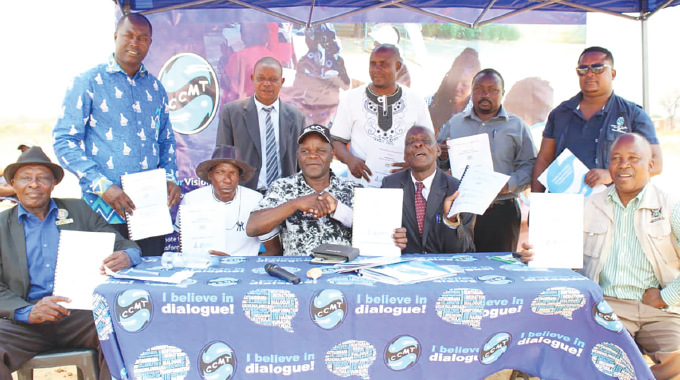
Patrick Chitumba, [email protected]
IN 1998, Headman Garikayi Chikava (50) and 36 other households were moved from the Mataga area in Mberengwa by Mberengwa Rural District Council (MRDC), paving the way for the development of Mataga Growth Point.
After acclimatising themselves to the new environment in the Bungwe area, more than 50km away from the growing Mataga Growth Point, Headman Chikava and fellow villagers found themselves facing another displacement due to mining development.
This was after Zimasco Mining Company indicated to Mberengwa Rural District Council that the area occupied by the 37 families was on claims it owned.
“We were relocated to the Bungwe area in 1998 from the Mataga area to make way for Mataga Growth Point expansion. Then in 2017, Zimasco officials came saying they owned the claims we called our fields, resulting in a conflict between us and the mining company,” said Headman Chikava.
After lengthy negotiations spearheaded by a local non-governmental organisation, Centre for Conflict Management and Transformation (CCMT), the community voted in favour of Zimasco’s compensation offer, resolving a conflict sparked by the company’s plans to expand its mining operations.
This agreement is set to benefit 37 households who will receive compensation for losing their farming land.
A Memorandum of Understanding between Mberengwa Rural District Council, Bungwe community and Zimasco was recently signed at Bungwe Primary School, underscoring the commitment of the Second Republic to economic transformation and the contribution of agriculture and mining to the provincial gross domestic product.
Mining is one of the key sectors projected to support the economic recovery of the country after having undergone significant development in recent years.
According to the World Bank, the revenue generated by this industry has shown steady growth, from an estimated US$5,6 billion in 2022 to a projected US$6,18 billion last year, which was a 10,4 percent surge.
The positive trend is expected to continue this year, with further growth anticipated. The expansion of existing mining operations and the establishment of new mining operations can be partly attributed to this growth.
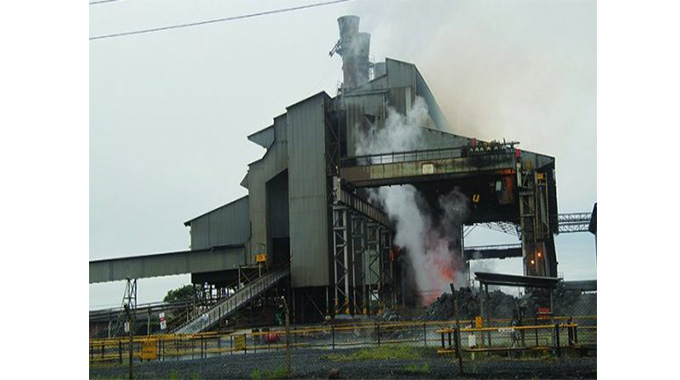
However, in some cases, the expansion may require communities such as Bungwe to pave way for the development or expansion of mining operations.
Often, mining operations have a great impact on communities such as land degradation and pollution, among other problems.
This often triggers conflict between mining companies and the receiving communities as they grapple with how to deal with arising issues.
Consequently, this creates mistrust among stakeholders, which is often exacerbated by a lack of clear and open lines of communication between the mining companies and the affected communities, particularly those who are negatively impacted by the operations.
The disconnect between mining companies and local government can lead to conflicts related to land ownership, use and development.
Following the intervention by CCMT, Headman Chikava said a consensus was reached between the villagers and Zimasco — a positive development he said has resulted in a win-win situation.
According to Dr Terence Mashingaidze, a lecturer at the Midlands State University, mining-induced displacement and resettlement (MIDR) is a unique category of development-induced displacement (DID).
He said MIDR is common in mineral-rich countries throughout the world and they constitute potential threats to human security.
“Mining-induced displacements are becoming commonplace in mineral-rich Zimbabwe due to the increasing and unavoidable allocation of mining rights in areas inhabited by rural communities. Natural resource extraction activities are going to be a major driver of displacement,” he said.
Dr Mashingaidze said violations of people’s economic, social and cultural rights should be avoided in cases of MIDR, adding that those in the mining business (international corporations, state-owned enterprises, foreign mining syndicates, indigenous small-scale miners and artisanal miners) should avoid arbitrary and non-consultative displacements.
“Fields and grazing lands get expropriated and degraded by mining activities. This is called displacement in situ, which should be consultative and consensus-driven between project implementers and the affected people.
“Mining project planning should be sensitive to social and environmental impacts,” said Dr Mashingaidze.
He said MIDR should be guided by the internationally recognised principles of “Free”, “Prior”, “Informed”, and “Consent” (FPIC).
Dr Mashingaidze said the Government should contemplate passing a comprehensive law or guidelines that safeguard the interests of the affected people adding that Section 71 of the Constitution (Property Rights) is not adequate in protecting the diverse interests of those affected.
“Mining operations should ensure environmental sustainability and guarantee livelihoods for the affected people. Mining companies should seriously contemplate introducing profit-sharing schemes to empower people in local communities. Compensation for MDIR should not be a once-off arrangement.
Mining businesses should also track MIDR progress and receive feedback on progress from external oversight and monitoring mechanisms,” he said.
CCMT director, Mr Xavier Mudangwe said the absence of clear communication channels between mining companies, communities and local government structures creates a host of issues that can negatively impact all parties involved.
“The current situation puts both communities and mining companies at risk. Communities may face displacement and loss of livelihoods, while mining companies may face challenges in acquiring land for their operations. In the absence of a comprehensive compensation framework, mining companies have been devising individual measures to compensate affected families and minimise the impact of their activities. While some of these measures have been effective in addressing the challenges, there is a lack of uniformity in the procedural aspect of implementing these measures. This lack of uniformity has resulted in different mining companies adopting different approaches to address the issue of mining expansion,” he said.
Mr Mudangwe said the diversity in approaches has made it difficult to assess the effectiveness of these measures and to develop an industry-wide framework that could be applied uniformly across the sector.
Despite these challenges, he said, some mining companies have managed to devise measures that are effective in minimising the impact of their activities.
“These measures include but are not limited to restoration of land after mining like what Zimasco is going to do after their operations in Bungwe, implementation of strict environmental regulations and community engagement programmes,” said Mr Mudangwe.
Since 2021, CCMT has been providing direct support to local authorities in Mberengwa, Gweru and Gokwe South districts to resolve conflicts related to development-induced displacements. The organisation has been facilitating win-win solutions with communities by promoting dialogue and utilising conflict-sensitive approaches.



 Online Reporter