Chronicle Editor
Vincent Gono, News Editor
A FAMILIAR scholar in media studies Jurgen Habermas came up with the public sphere theory where he conceptualised an ideal space where citizens gather and are able to discuss matters of common interest in an unrestricted fashion.

Put simply the idea of a public sphere gives a supposition of a sphere which mediates between society and state, in which the public organises itself as the bearer of public opinion. Like any other theory it has been far from perfect but that it is still a subject of study makes it a valuable basis from where arguments can be built going forward.
Tomorrow Zimbabwe joins the rest of the world in celebrating the World Posts Day and International Day for Universal Access to Information whose theme seeks to examine the importance of online space and universal access to information for a safe and connected future.
In light of this theme, and in view of the development of the media through technology where trends are changing everyday from the era of postage stamps and writing letters to the era of wireless connection and the smartphone that has enabled real time communication and where the world has now been reduced to what Marshal McLuhan termed the global village, it is important to point out that a lot of space has been opened as the fast pace of technology is making old ways of communicating redundant.

Although the public sphere as conceptualised by Jurgen Habermas has not been realised in the strict sense, new forms of communication have gotten closer where different societies congregate into communities of interest and create online groups where there is unrestricted cross-pollination of ideas.
Online spaces created through new media have improved access to information and brought new dimensions to development and democracy across the world. Media scholars have argued that new media have offered the inclusive and open spaces for conversations on dominant discourses to occur, outside of the hegemony of established institutions such as the government or traditional media.
New media offers discussion space which allows expression of oppositional positions and through discussion online media platforms where users engage with one another without restriction.
New media in their pluralistic nature and with their networked and non-hierarchical structure can offer the potential to develop national culture as well as challenge dominant socio-political discourses through an easy convening of the public sphere.
It has to be pointed out here and now however, that online media space has its dark side with information and disinformation being among the most in its misuse.
If not properly monitored, it can be used to convene rebellious movements that are anti-development and anti-democratic.
Its openness for abuse, can lead its abuse by people to press false buttons, raise alarm and cause despondency due to its elusive nature in terms of control.
IMF (2010) posits that the exponential growth of social media and internet-based communication indicate that Africa will be integrated into the global information economy and that the continent will be thrust into the information society.
This information highway has shown that it can facilitate the fast development of Africa as there is bound to be a movement in the trends especially in terms of technology.
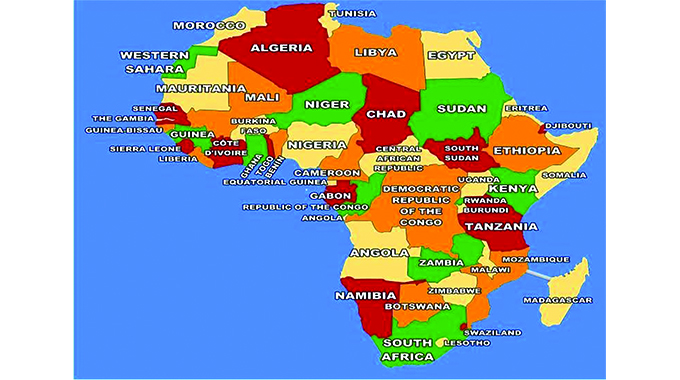
Research data about the role of online media in empowering grassroots movements has led to qualified assertions about how it contributes to social change.
One can therefore be forgiven for submitting that new media have broken the monopoly of communication traditionally held by the political and cultural elite, allowing wider participation in political and cultural life by offering alternative platforms for people to express themselves.
New media have encouraged mass participation in political conversation in Africa which can allow individuals to challenge dominant narratives and develop new discourses concerning individual, cultural, social and political representations.
With the transmission of new ideas in the networked space of online media which allows vast conversations to take place, citizens can engage with one another based on an inclusive set of values.
Online media has created in Africa social conditions that facilitate public debate of issues among citizens regardless of social status. It has enabled people to air out their views and exercise far greater control over the types of media that they wish to consume and can also actively produce content.
Online media, as a space for discussion, encourages mass peer-to-peer conversations, inclusive dialogue and active participation, which are crucial components of the development of democracy.
It has been suggested that new media have promoted the growth of civil society where civil society can be characterised as “the free space in which democratic attitudes are cultivated and democratic behaviour is conditioned”.
In terms of universal access, there is a glaring reality that all citizens do not have equal access to the online media and communication technologies due to challenges of levels of poverty, connectivity, cost and accessibility.
In many rural communities in Africa, internet connectivity is still a headache while some citizens have no access to the communication gadgets such as computers and/or smartphones. Although online media have, however, offered alternative communication tools that could conceivably be the harbingers of an online public sphere there is a suggestion by scholars that the hegemonic discourses are still being pushed by political elites who have both the means and the ideas and who continue to shape the agenda.
Zizi Pappacharissi (2002) argues that the virtual sphere has brought in new, previously excluded, discussants to engage in political and social debates facilitated by technological convergence and enabling users to circumvent the problems that hamper traditional media, specifically the dominance of corporate or state control.
If traditional mass media’s democratic potential has been severely curtailed by authoritarianism, ideological purity, and economic imperatives, new media’s porous nature offers reporters, activists, and citizens multiple and accessible ways of disseminating information without fear of official retribution.
This position, although true has led to the proliferation of misinformation or simply fake news defined as news that is either wholly false or containing deliberately misleading elements incorporated within its content or context.
The impact of misinformation on election outcome in Zimbabwe’s just-ended elections and other elections elsewhere in the continent have raised new concerns on how fake news conveyed through online media may influence political debate and public discourse.
Linked to misinformation online media has fuelled unverified reports, rumours and dubious content because of the absence of fact-checking mechanisms or editorial filters.
New media are also known to amplify the phenomenon of confirmation bias which is the tendency for people to interpret, recall and believe information that confirms pre-existing beliefs.
It can therefore be submitted that a safe and connected future can only be guaranteed if citizens exercise responsibility in the use of online media spaces without which misinformation and disinformation which are threats to development will continue to spread.


 Online Reporter