Vusumuzi Dube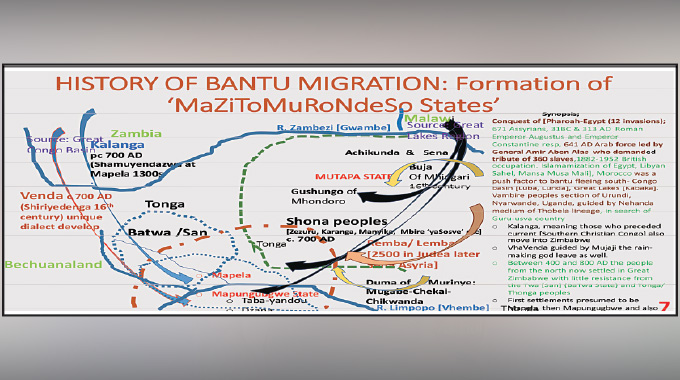
Colonel (Rtd) Ernest Mganda
To many of us, both the veterans of the liberation struggle and their off springs, and their civilian (povo) partners in war against the Rhodesian Administrative security apparatus, 18th April is a great Uhuru, never mind the absence of wines and T-bone steaks’ feasting. As we celebrate this day, never mind you isolated yourself from attending through choice or other circumstances by not joining other celebrates at various national centres, what we need to understand is that 18 April 1980 marked a new chapter in the history of Zimbabwean people’s suffering since time immemorial.
The generation of the Second Chimurenga also known as Impi yeNkululeko in IsiNdebele lingua, is the first of the generations to defeat through war, a foreign occupying force known as the Rhodesian Administration. By the way, our founding ancestors had migrated from Ethiopia the fore-runner state to Egypt into this landscape following the twelve (12) times invasions on black Pharaohs of Egypt and some kingdoms under King Menes of Ethiopia.
I guess, you are now asking how Egypt became “white” if at all it was a black state before. The answer is its wars and the invaders’ power-game politics as shown here: 525BC — Cambyses eleven invades Egypt and is later defeated Greece’s (Macedonia) Alexandra in 332BC, 671 Assyrians invade Egypt sending Greeks away; 31BC & 313AD — Assyrians are defeated by the Roman Emperor Augustus and later Emperor Constantine, and finally at 641 AD Arab force led by General Amir ibn Alas who demanded tribute of 360 slaves plus 40 given as a gift to the Viceroy from black chiefs causes the largest ever black migration.
Nebuchadnezzar’s tyrannical reign and his religious policies that barred worshipping gods of regional following during the Persian-Assyrian conquest of Egypt also caused many black people fleeing Egypt with their atheist oracular god Njelele /Njerere closely guarded by priests known in chiShona and isiNdebele as mhondoro or iwosana respectively.
The emigrants of Egypt whose two last states were Makuria and Alwa (Balfour Ankomah and Munyaradzi Huni), identified today as Shona commonwealth (Zezuru, Karanga, Manyika, Barwe, Korekore, Ndau), Kalanga and Venda would finally settle in Zimbabwe and Mapungubwe around 400 to 800 AD, see illustration above. Human mind often notes flaws in any historical accounts; I guess you had not questioned about the San, Tonga, Ndebele, Shangani and Ndwandwe people.
Except for the San and Tonga who the pre-200 AD and post-200 AD people, the rest settle in Zimbabwe during the reign of the Rozvi/Lozvi period as from 18 to 19th centuries hence the term “Vuma-va-Randa (VaRanda for aliens)”.
Lest you get confused these are the people of the South whose grand ancestry also emigrated from Ethiopia long before the Shona, Kalanga and Venda. Another unique group that people don’t know is that of Mathembo / Tembo of the Mozambique-Eswathini Coastal region between Inyembani and Nkomati as well as the M’zimkhulu Eswatini nationhood. Around c.17th Century the Lozwi/Rozvi authorities welcomed the first group of land-seeking people of the South of Nguni stock known as MaSwati of uMzimkhulu comprised of; Gobodwane Maphosa-led “Ngara community” (stem to Mapanzula), Tumbale Bhebhe-led group, the Ndlela-Matutu of Bikita and that of Queen Nyamazana Dlodlo of Malepate (Malipati).
The unforgettable truth is; this is the generation that never enjoyed peace as wars of conquest followed them from Egypt right to the South-Coast and later Zimbabwe and the worst-off encounter being their 1896 conquest. On this part of history our granny warrior people rose to put up their last heroic fight we know today as Impi yoMvukela (Anglo-Ndebele War of 20 March 1896 to October 1896) and First Chimurenga (16 June 1896 to August 1897).
They lost with their heads up as Mbuya Charwe a.k.a. Mbuya Nehanda’s last words during her hanging “Mapfupa angu acha muka” can testify. Of course, Siginyamatshe of Njelele shrine under the control of Mlugulu Khumalo with all his tricks of playing miraculous powers of swallowing hot-stones picked from fire balls had also got captured and killed without leaving us his prophetic overview of the country’s future. What we now know with certainty is that most of the First Chimurenga and Impi yoMvukela fighters who got captured or latter arrested and subjected to Kangaroo courts, had their heads beheaded and taken to UK as human trophies to be displayed at the English people’s history museums.
What happened to this great account to disappear and remain unknown to our history textbooks is answered simply by this Eurocentric perception on race wars, “The most effective way to destroy a people is to deny and obliterate their own understanding of their history” (George Orwell in Ankomah and Huni). The Independence Celebration of 18th April and that of 11th August’s Herores/ Heroins celebration came out of a new generation of fighters we know as Second Chimurenga or Impi yeNkululeko nationalists and guerrillas. It is this group of fighters which is the subject of discussion. Let me walk you through their rise to national fighters and personal struggles they went through up to this day 18 April, 1980.
Colonial Rule: Never, in their imagination did the First Chimurenga fighters ever imagined that their acceptance of subordination under a foreign power would become another treacherous Egypt. The Colonial Administration down to the Responsible government of PM Ian Douglas Smith’s introduction of entrenching laws like Migrant Grant Labour Act, Masters and Servants Act, African Labour Regulations Act, Land Apportionment Act that deprived the indigenous blacks of occupation right, Industrial Conciliation Act, The Land Husbandry Act 1951 which formalised forced labour and limited African families to 5 head of cattle and eight acres of land, and Tribal Trust Lands Act, among others, brought about the national consciousness to die fighting. Another serious bone of contention would arise following the introduction of Ordinances on “Native Schools” that limited the African right to education on the rational that blacks did not need artisan knowledge but only knowledge of instruction for the purpose of communication.
Ultimately, nationalists’ political consciousness among the rest of the blacks started fostering a spirit to take up arms of war.
Armed Struggle: The young cadres to join the armed struggle between 1959 and 1979 had their dreams of usurping power from the white minority segregation system and see an independent black-ruled Zimbabwe. What many have forgotten to recall, is the amount of sacrifices these nationalists and their youthful fighters committed themselves to. Never-the-less, as we celebrate the great day let us remember; Chiefs Chinhamora, Mashayamombe, Ziki who coroneted Joshua Nkomo “Father Zimbabwe” with a battle axe and knobkerrie “Chibwe-chitedza” at Gwanzura Stadium on September 1962 including Patrick Kombayi who on January 1962 brought the black bull to Nkomo’s cleansing ceremony by Chief Chiriseri Nyandoro at Skyline Hotel, Salisbury then and their early nationalists cadres like chiefs Masendu, Hikwa inter alia who pioneered the politics of denial, are lying silently in their family graves with no hero inscriptions on their tombstones.
1959-1960: The first five NDP cadres (Mark Nziramasanga, Zephania Sihwa, Findo Mpofu, Titus Mabhasi Mutero and Enock “Kadondodza” Sithole) to train in the new independent Ghana despite being the first in history are now lying in their family grave yards as long forgotten fighters. Of course the same silence is noted on the second group to train in Ghana that comprises Sikhwili Moyo, Makanyanga, Col Thomas Ngwenya a.k.a. Menyu, Munetsi, and Wilfred Mlala among others.
1962: The Egyptian bound Zapu cadres made up of Misheck Velaphi Ncube, Boblock Manyonga, David Mpongo Khumalo, Ndukwana Ncube, Clark Mpofu among others, had their deployment mission cut shot as most of them got captured.
1963: The second Egypt bound Zapu cadres comprise of Smart Tembo now President Emmerson Dambudzo Mnangagwa, Njodzi Machirori, Alfred Mutasa, Thomas Ziki, George Mudukuti, Llyod Gundi, Clarkson Mutema and others had their training aborted as the group split on party affiliation following the formation of Zanu on 8th August 1963 leading to their return to Tanzania and later moved to China.
1964: The Crocodile Gang of five led by William Ndangana is captured in Melsetter now Mutare following their beheading of a white farmer. In the same year in September, the Moffat Hadebe group of seven (7) including Rhodes Malaba Ncube, Israel Maduma, Kay Nkala, Elliot Ngwabi and Roger Matshimini Ncube is captured after attacking Zidube Range farm house in Matopo, Kezi.
1964: White citizenry anti-racism resistance led to the arrest of Peter Mackay, C.J. Patel, Mahmood, Guy Brook, J. Culverwell, Mary Austin, Marieke Clarke (deported in November 1964), Terence Ranger and his wife Shelagh Ranger (deported in November 1964), inter alia, are amongst the legion of white resistance who were later regarded by the UDI Government of Ian Douglas Smith as dangerous to his state system.
1964 China Group: Felix Rice leads the first Zapu cadres to train in China and these are John Maluzo Ndlovu (still alive), Luke Mhlanga, Charles Dauramanzi, Johnson Ndebele among others. Many of them are now lying silently in their family graves.
1964 USSR Group: Dumiso Dabengwa leads the 1st cadres to train in intelligence, logistics and military command to the USSR this group includes Muwani, Robson Manyika, Ethan Dube, Amb General (Rtd) Ambrose Mutinhiri, Ackim Ndlovu among others.
Captured: Tineyi Chigudu, Lazarus Dlakama, David Monga Moyo, Silvester Mandingaise among others trained in North Korea, later got captured between 1964 and 1966 during various mission deployments.
Robert Mhlolwa (still alive) aka Reuben Vurayayi Mafika Mpofu’s group of six (Samuel S’khosana, Nathaneal Tshabangu, Chibaya, Chamboko, Chifinye, Chikapa), the 1965-66 Algerian trained together with their 8 men local trained guys are captured in April 1966 at Gomoza, Lupani.
Poisoned and captured: The Poisoning warfare employed by enemy agents adds to the complex dynamics of the war with the cases of Chundu in Mashonaland West, Jambezi in Matabeleland North, and Ngwanyana in Matabeleland South, occurring between 1977 and 1979 had many fighters dying in the ugliest of all warfares, yet their dreams would not be broken.
As I conclude, it is worth reflecting that our celebration is not worth nothing is told about these gallant sons of the soil. Theirs was to accomplish the Zimbabwean people’s dream. To those still alive but not mentioned here, please bear with me that the publication space permissible restricted my article content.
I SALUTE


 Online Reporter