admin
admin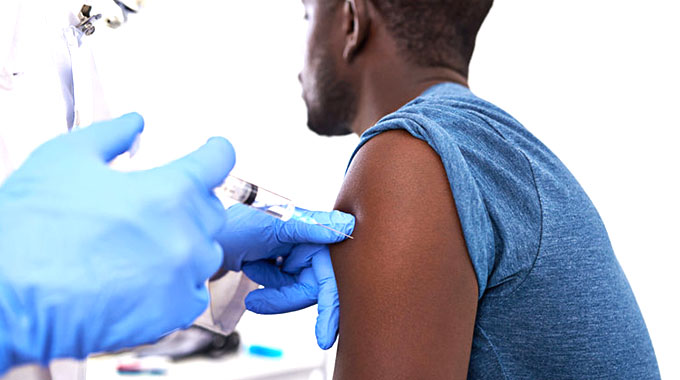
Sitshengisiwe Ndlovu
The World Trade Organisation is facing yet another turbulent time as some of its members insist on a waiver on some of the laws that regulate patents.
Access to the Covid-19 vaccine has been difficult to most countries. The countries that face challenges in procuring or manufacturing the vaccine are in the developing world.
The 55-member-states of the Africa Union have taken a common position in demanding a waiver on the instruments of the WTO trade related aspects of Intellectual Property Rights.
This comes on the backdrop of the HIV debate that took twenty years to conclude while pharmaceutical could not readily cede the patent rights of the HIV drugs.
Countries in Sub-Sahara were the worst affected by the HIV pandemic due to the high cost of drugs that were largely manufactured in developed countries under strict patent laws.
Where is the moral of rules in a progressive world when the rules take precedence over human life? This is an echo to the question posed by Jonas Salk who invented the polio vaccine. Jonas Salk questioned the morality of a patent on the polio vaccine.
To him that patent belonged to everyone, hence his famous question “ Could you patent the Sun?’’ These are the questions that are being presented to the WTO rules based trading system today.
Articles 7 and 8 of the WTO TRIPS actually posits existence of latitude where members can exercise the intellectual property rights in a manner that upholds the economic and social welfare of the people.
However, in practice this has been difficult as evidenced by HIV debate that took twenty years to negotiate while people were dying due to the high cost of drugs.
Before the full mighty weight of the Africa Union, South Africa and India have been vocal in lobbying access to Covid-19 vaccine.
These countries have been highlighting the struggles developing countries face in trying to apply the existing WTO latitudes found in TRIPs.
These governments have been trying to get the best deals for sub–Saharan countries and this has been met with similar resistance that characterised the HIV debate on Intellectual Property Rights.
The large pharmaceuticals companies are against compulsory licensing and totally against the production of their patented vaccines without the due processes being followed.
The due processes are cumbersome and yet quick access to medication is crucial in any disease let alone Covid-19.
These scientists have further lamented that easy access to patent rights would be a disincentive to innovation and increase the rise of dangerous viruses.
While the reasons advanced by the innovators of the vaccine may sound plausible, it is nevertheless curious why a why a country with 16 percent of the world’s population has bought more than 60 percent of the world supply of vaccines thereby creating “artificial scarcity” as observed by WHO and South African Foreign Minister Naledi Pandor.
The worldwide position is that medicines should be considered as public goods easily available to any situation in need.
This view has come under attack as it defies the reason of existence of any business-profit. Furthermore, availability of public goods is classified as a human right making the intellectual property rights conflict with human rights.
In other circles the trade related intellectual property rights have been viewed as a monopoly. Historically the piece of legislation has been skewed in favour of developing countries.
To that extent trade related intellectual property rights in the past was considered as a privilege given by the state to motivate innovation.
However, the privilege did not extend to medicine and agricultural science innovation.
The gender dimension in intellectual property has meant that women bear the brunt of the negative effects of the intellectual property rights.
Women are the unpaid caregivers in the home setup.
During the HIV pandemic that debilitated because of lack of access to medicine in an average family where women tended to look after the sick. In other countries women had to give up their chance to access medicine in favour of the husband who could be the breadwinner.
The WTO trade related intellectually property rights do not protect traditional knowledge.
Women in Africa are the custodians of traditional knowledge in various sectors mainly in agriculture as seed knowledge reservoirs, in basketry weaving and traditional medicines.
The process of registering a patent is in itself cumbersome and out of reach to many including women.
The world needs to be reminded that the long drawn out debates on patents on medicines are a toll on human life, especially in sub-Saharan Africa that is finding difficult to access a safe and affordable Covid-19 vaccine.
The WTO as a progressive organisation must consider the temporary waiver on trade related intellectual property rights of the Covid-19 vaccine.
Women are the worst affected by the impact of Covid-19.
Sitshengisiwe Ndlovu is president of OWITZIMBABWE: MBA/UNCTAD: Trade and Gender Linkages/ IAC Dip/Cert: Trade in Services and SDGs: Robert Schuman Center of Advanced Studies/IDEPCert: Making the African Continental Free Trade Agreement Work. She writes in her personal capacity. For more on trade matters visit her Blog on website: owitzimbabwe.org



 Online Reporter