Langton Nyakwenda
Zimpapers Sports Hub
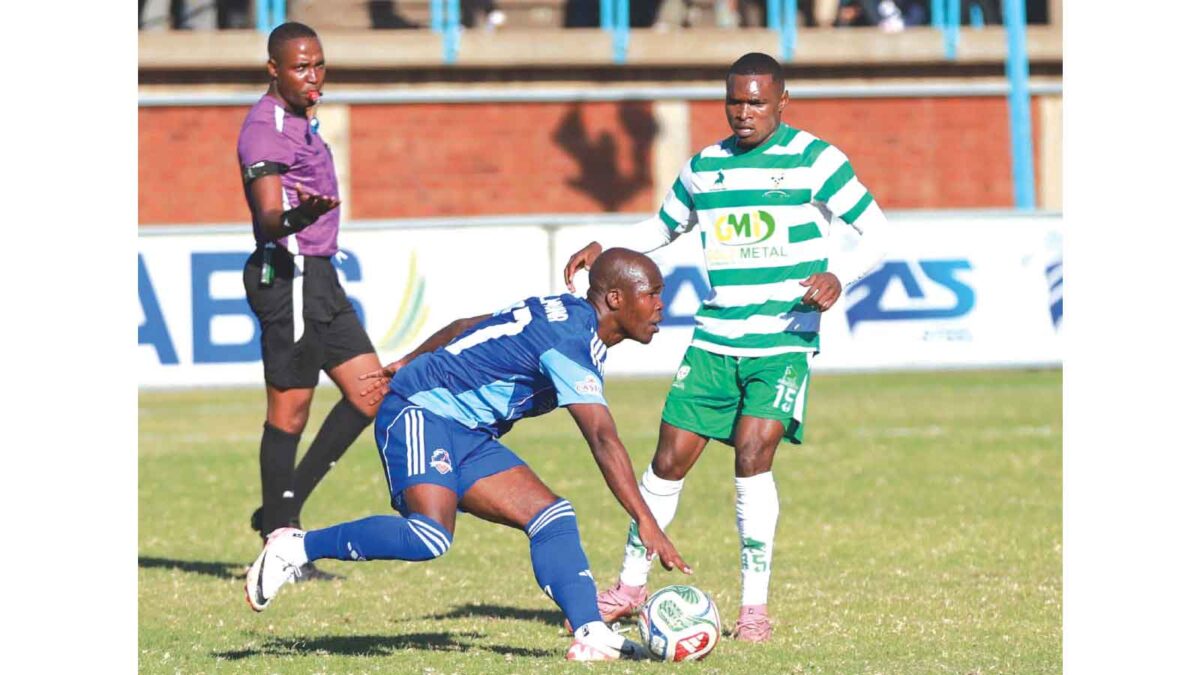
THE 2026 Castle Lager Premier Soccer League race has been a riveting one.
From the early stages when Harare giants Dynamos and CAPS United were still in the mix to a second half of the season that saw Hardrock seize control after posting nine wins in 14 games between Matchday 18 and Matchday 32.
The biggest defining feature of the 2026 race was perhaps Hardrock’s ability to peak when the pressure was greatest, while Scottland struggled to sustain the authority they had established midway through the campaign.
The opening 11 matches suggested that the championship could be heading back to CAPS United, as Makepekepe made a blistering start to the season.
They collected 25 points from a possible 33, boasting a 75 percent success rate and establishing a one-point advantage over Hardrock.
At this stage, CAPS United were seven points ahead of defending champions Scottland and eight clear of rivals Dynamos.
Their early-season performances were convincing, highlighted by victories over Dynamos in the first Harare Derby at Rufaro on May 10, Highlanders at Barbourfields and Hardrock at home.
But the Green Machine failed to turn that promising start into a sustained championship challenge.
Their subsequent slump, which yielded just one victory in six matches between Matchday 13 and Matchday 17, exposed a worrying inconsistency.
Four draws during that period cost them valuable ground, and their eventual collapse was compounded by defeats against FC Hunters, TelOne and Herentals.
Their 3-3 draw against Hardrock at Chahwanda on July 5 demonstrated that they still possessed the attacking quality to trouble the leading sides, but they lacked the consistency to remain genuine title contenders.
In retrospect, CAPS United’s failure to capitalise on their early advantage was one of the defining developments of the championship.
They had the opportunity to dictate the pace of the race but instead allowed their rivals to take control.
While CAPS United were losing momentum, defending champions Scottland were gradually finding their feet.
Their opening 11 matches had been underwhelming, with six draws and a 1-2 home defeat against Simba Bhora, leaving them seven points behind the leaders.
However, their response was impressive.
Mabviravira collected 16 points from six matches, an 89 percent success rate, and went on to establish a five-point advantage over Hardrock by Matchday 18.
Their 2-0 victory over CAPS United at the National Sports Stadium was particularly significant, not only because it demonstrated their championship credentials but also because it dealt a psychological blow to one of their biggest rivals.
They followed that with another important 2-0 victory over Hardrock at Rufaro.
At that stage, Scottland appeared to have the necessary ingredients to defend their championship.
They had quality, experience and a squad capable of winning difficult matches.
But their eventual decline was not simply about losing points.
It was about losing the consistency and authority that had made them such a formidable force.
The defeat against Highlanders at Barbourfields, the loss at ZPC Kariba and draws against Dynamos and FC Platinum represented a costly sequence of dropped points.
More significantly, Scottland failed to respond with the same conviction whenever Hardrock threatened to pull away.
Their involvement in the CAF Champions League also presented an additional challenge, with the demands of competing on two fronts potentially affecting their domestic campaign.
However, their struggles cannot be attributed to fixture congestion alone.
The uncertainty surrounding the technical department and reports of dressing-room divisions raised questions about the team’s internal stability at a critical stage of the season.
Perhaps the biggest difference between Hardrock and their rivals has been their ability to turn promising performances into consistent results.
Kasongo Boys were competitive from the beginning, collecting 24 points from their opening 11 matches, but they were not initially playing with the authority of eventual champions.
Their early victories against ZPC Kariba and Triangle United, together with the 4-1 demolition of Herentals and a 6-1 routing of FC Hunters, suggested a team with considerable attacking potential.
However, they still needed to develop the consistency required to sustain a title challenge.
Their 2-1 defeat to Dynamos in the resumed fixture initially appeared to have dented their ambitions.
Instead, it became part of a learning curve that ultimately strengthened their resolve.
The turning point was their extraordinary run between Matchday 24 and Matchday 32, when they collected 27 points from nine consecutive victories.
That sequence was particularly important because it came at a time when Scottland were beginning to show signs of fatigue, with the defending champions registering 16 points during this period.
Hardrock did not merely take advantage of Scottland’s mistakes.
They forced their rivals into a situation where almost every dropped point became potentially decisive.
Their 1-0 victory over Highlanders at Barbourfields on September 19, courtesy of Washington Navaya, was a major statement of intent.
Winning at Barbourfields is never a straightforward assignment, and the result underlined their ability to grind out victories in difficult environments.
Their 3-2 comeback victory against MWOS after trailing 2-0 at Chahwanda on Matchday 32 provided another illustration of their mental strength.
A stunning last-minute win against Dynamos at Rufaro on Matchday 31 also proved critical.
With the game heading for a goalless draw, Masimba Mambare scored a last-gasp winner that tilted the race in Hardrock’s favour.
Championships are often decided by such moments, when teams demonstrate the character to win matches that appear to be slipping away.
Hardrock’s midseason recruitment also deserves considerable credit.
The arrival of Prince Dube from Tanzania gave them an additional attacking weapon at a crucial stage of the season.
His four goals in his first six league appearances provided an immediate return, while his experience and movement added another dimension to their forward line.
Gerald Takwara brought stability and leadership to the defence, while Thubelihle Mavuso’s creativity and ability to provide key assists strengthened their attacking options.
The three additions addressed important areas of the team and helped Hardrock maintain their momentum during the decisive stretch of the campaign.
In contrast, Scottland appeared to struggle with issues that were not necessarily related to the quality of their playing personnel.
The Knowledge Musona substitution incident against FC Platinum at Rufaro on Matchday 28, when the former Warriors captain walked straight into the dressing room after being withdrawn in the 53rd minute, raised questions about the atmosphere within the camp.
It would be unfair to suggest that one incident alone caused Scottland’s subsequent problems, but it added to the growing perception that all was not well behind the scenes.
Insiders suggested that Mapeza was struggling to maintain control of a divided dressing room.
His eventual departure following the club’s Champions League elimination against Petro Atletico further disrupted a team that was already struggling to maintain its domestic momentum.
Peter Ndlovu’s appointment as interim coach brought an immediate response, with a 1-0 victory over CAPS United, but the subsequent goalless draw against Chicken Inn suggested that the problems would not disappear overnight.
Ultimately, the biggest difference between the two title contenders has been their response to pressure.
Hardrock have consistently found ways to win, even when they have not necessarily been at their best.
Scottland, on the other hand, have increasingly struggled to turn their dominance into maximum points.
Between Matchday 24 and Matchday 32, Hardrock collected 27 points, while Scottland managed just 16.
That 11-point margin tells the definitive story of the title race — a championship that once seemed destined for Scottland before steadily sliding into Hardrock’s hands.
The defending champions have also had to contend with the consequences of managerial changes and questions surrounding dressing-room harmony at a time when stability was desperately needed.
Hardrock, meanwhile, have enjoyed continuity, strengthened their squad at the right time and developed the winning mentality that separates serious title contenders from mere challengers.