admin
admin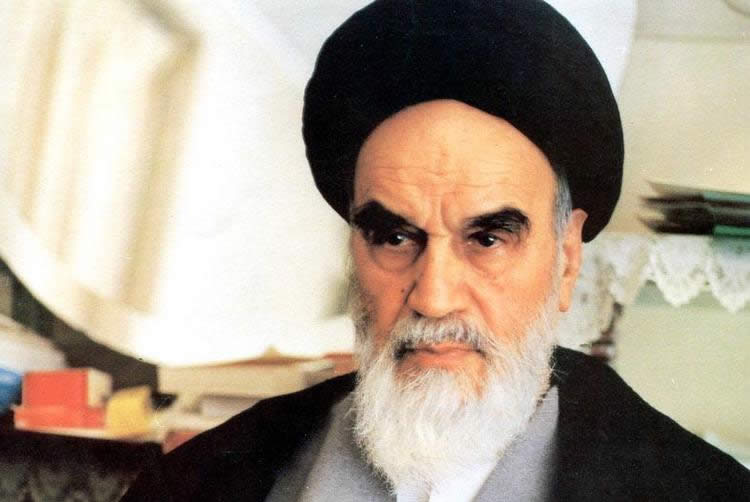
Zahra Mandireva Makwinja Correspondent
TODAY February 11, marks the 36th anniversary of the victory of the Islamic Revolution in Iran. As Muslim women we would like to take this opportunity to briefly examine how the Islamic revolution revived the status of Muslim women. Before the revolution, the ruling system, supported by the west, neglected the Islamic and cultural identities of the Iranian women, and imposed the state-imported Western culture in the name of modernity and progress.
As a result, a large number of Iranian women from both rural and urban areas, who had been deprived of their human rights for many centuries, were inspired to participate and play an active role in the victory of the revolution in order to reverse the prevailing sense of “loss of national and cultural identity” and to determine their own fate and destiny.
After the victory of the Islamic Revolution in Iran in 1979 and the establishment of the Islamic Republic, the government of Iran has been trying to make the nation aware of the actual rights of Muslim women. Imam Khomeini said that, “The woman has a great role in the society; she represents the realisation of human ideals.”
In the view of the special emphasis of the Islamic values and the country’s Constitution on the issue of women’s human dignity and the promotion of their status in various arenas as well as the necessity for enjoyment and realisation of women’s material and spiritual rights, the Islamic Republic of Iran has regarded the promotion of cultural, social, economic, and political status of girls and women as a key element in policymaking, legislation, and national planning.
A United Nations report ranked Iran 107 out of 148 countries on the Gender Inequality Index (GII), which measures reproductive health, empowerment and economic activity of women. Following the 1979 Islamic Revolution, giant steps have been taken by all of the women based on the Islamic laws.
Today 9 percent of the Iranian parliament members are women, while the global average is 13 percent. The election of the first Islamic parliament was in 1980 when there were 327 members among whom 4 were women.
Based on the United Nations Human Development Index, Iranian women and girls have had an outstanding progress in education, research, science, entrepreneurship, employment, and sanitation and despite the existence of severe and unprecedented unilateral sanctions against Iran, the Iranian women have moved towards excellence, progress, and predetermined goals.
Today, women make up almost 30 percent of the Iranian workforce (in all areas including science and technology), and the percentage of all Iranian women who are economically active has doubled from 6,1 percent in 1986 to 13,7 percent in 2000.
By the same token 27,1 percent of the ministers in government are women (ranks 23rd out of 125 countries).
The number of female participants admitted in state higher education centres in 2008-09 was 324 173, which is over 12 times higher in comparison to the last 30 years. Compared to the total number of people who passed the university entrance exam in 2008-09, women consisted 40,57 percent admitted to associate degree, 60,23 percent admitted to bachelor’s degree, 47,12 percent admitted to the master’s degree, and 47,36 percent admitted to the Ph.D. degree.
Today, women comprise more than 60 percent of the students in the state universities showing an increase of over 70 percent compared to 1976-77.
In addition, women constitute approximately 73 percent of the total number of medical sciences students in the country, who studied in Az?d (open) and State universities during the academic year 2008-09.
In 2007, nearly 70 percent of Iran’s science and engineering students were women.
In 2009, Fatemeh Bodaghi was appointed Vice President for Legal Affairs and a top advisor to the Iranian President.
Maryam Mojtahidzadeh, who runs the Women’s Ministry was also selected as an advisor to the president. In the social sphere, too, women have gained more rights after the Revolution in comparison to the pre-revolution era. For instance, by 1999, Iran had 140 female publishers.
A Muslim woman either with a job or not, is responsible for all of the family affairs, including cooking, washing, shopping and totally everything. She is the absolute manager of the house.
The man pursues the traditional formula and earns money for the family.
Sometimes what the man earns is not enough for the expense then the woman is of great help.
It is necessary to mention one important point that the employed Iranian women are not obliged to do any expense for the family or even for themselves. They can save their money to spend as they wish. This means that the husband is responsible for the expense of the family including food, clothes, shelter, and education of the children and so on.
After the triumph of the Islamic Revolution, the women of Iran regained their denied rights.
The freedom of the Hijab was back in vogue, and they started participating in all spheres of life, with a sense of honour and dignity. With regards to the role of women in the society, Imam Khomeini has said: “In the Islamic government, women along with men can actively contribute to the erection of an Islamic society as human beings and not as objects. Neither women are allowed to lessen themselves to a low stance nor do men have the right to think of them in that context.”
After 36 years of revolution, the Islamic government has taken giant steps in fulfilling the true teachings of the Prophet of Islam through acknowledging and promoting the significance of women’s contribution towards society.
This can be witnessed through growing presence of women in political, social and scientific progress in Iran.
To this effect the founder of the Islamic republic Imam Khomeini said, “Islam grants woman a say in all affairs, just as it grants man a say. Women from the Islamic point of view enjoy a dignified position; they have free will just as men have. God created them free beings and gave them dignity.”
Zahra Mandireva Makwinja is the Director of Fatima Zahra (as) Women’s Organisation.


 Online Reporter