admin
admin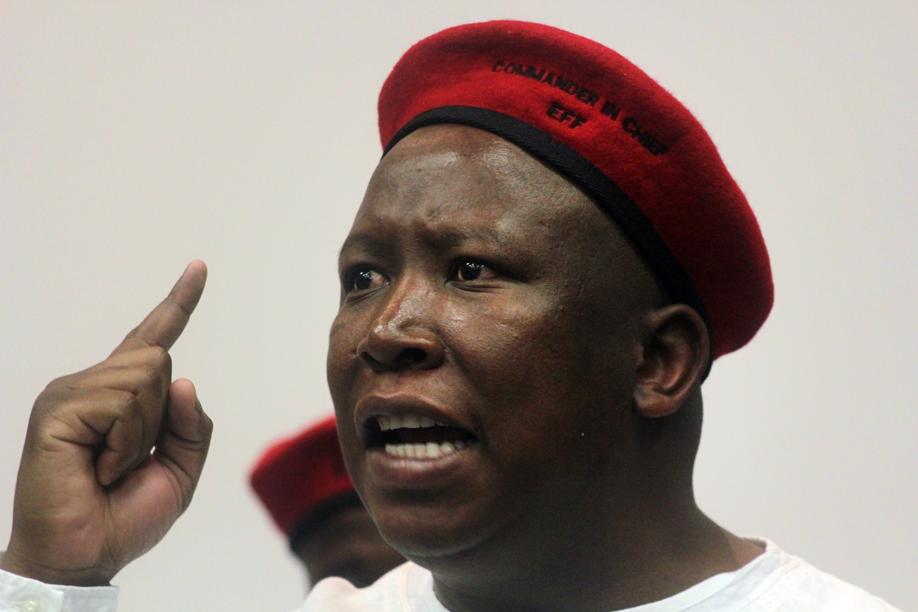
Decolonlality at large with Cetshwayo Mabhena
IN 2011 Fiona Forde, an enterprising Irish journalist set out to document Julius Malema’s dramatic life as an “inconvenient youth” who caused unthinkable trouble in the African National Congress and South Africa at large. What humbled Fiona Forde most was the discovery, dramatic in itself, that behind the man widely believed to be a drooling imbecile and an idiotic hooligan was a calculating, astute and intelligent political thinker and actor.
In a kind of “journalistic slumber” Fiona Forde was happy to be following the juicy story of a young and ridiculous political gladiator with an oversized ego. What sound journalist would not relish the tale of a poor peasant toddler who used political rhetoric to become a spoilt teenager and youth political leader with a taste for expensive clothes, fine single malt whiskeys and an eye for model type women?
Rolling in a purple suit and driving top of the range 4×4 vehicles as the ANC Youth League President, Julius Malema did not only look like a true Gitutu and a mafia wanna-be, but he seriously nauseated many blacks and disgusted racist whites who saw him as a ridiculous and scandalous pretender who used racist rhetoric to pursue his greedy logic. From publicly announcing preparedness to “kill for Jacob Zuma” to later calling the troubled Head of State “big head” Julius Malema defined himself as a walking representation of extremes and excesses of a peculiar kind.
Confronted with such dramatic personalities as Julius Malema, many observers are carried away by the performance and they miss the meaning of the man and the condition he represents. For the many South Africans who entertained and believed the mainly racist illusion that Julius Malema was a stupid idiot, his graduation with a Bachelors Degree in Politics this past week at the University of South Africa was another episode in a life of drama and spectacle.
For discerning interlocutors however, the point cannot be missed that behind the drama around Julius Malema lies an enduring design, and one that is not accidental but is a product of the sorry circumstances in which Malema and many other African youths have encountered.
There is absolutely no enigma to Julius Malema; he, like many other African youths is an angry and intelligent person who was radicalised by being born into poverty in a land of plenty and excess. Writing as J J Jabulani in 1972, Thabo Mbeki catalogued the reasons why he had to join the radical South African Communist Party and was prepared to kill and to die for freedom. The poverty of villagers who were pushed by Afrikaner colonists from their fertile lands to barren sandy soils, the death of black miners who inhaled deadly dust in the mines and the lightness of being black under a white supremacist government turned Thabo Mbeki into a militant guerilla.
For those among us who have carefully followed the stories of how apartheid and colonialist dispossession of blacks in Africa politicised and radicalised African youths, it is a monumental falsehood that Julius Malema could simply be an opportunistic glutton seeking to use the pretense of political leadership to enrich himself. There must be a cause behind the appetite for cash, some method in the madness.
Toddling at Seshengo
Julius Sello Malema was born on 3 March 1981. As the son of a single mother and a struggling nanny at the Seshengo village in Limpopo, Julius Malema was born into abject poverty. The narrative of Fiona Forde goes that when he failed to secure a buyer for the tins and bottles he picked up in the streets, the toddler would hide himself in the hedge of any neighbhour, watching the proceedings of cooking from his place of concealment, only to appear with mathematical precision as the dishing happened, earning himself a place on the table for the night. The worst happened when Florah, his mother, was seized by an epileptic attack at the house of the white people she worked for as a helper and boiling water scalded her to permanent disability. Unable to work, the white family threw her out and she surrendered to death in 2006.
Going to school on ill-fitting hand me down clothes, accompanied by a putrid stench from many days without a proper bath, Julius Malema was the butt of many jokes. He escaped into radical student activism and became an organiser of strikes and protests at school, willing every time to risk expulsion. Fast enough he won the trust of his schoolmates as a brave representative, and he became popular and set for greater things in the national students’ movement and the ANC Youth League eventually. Earlier in 1993, at the age of 12, Julius Malema was intercepted at the bus that was ferrying mourners to the burial of assassinated struggle icon Chris Hani. He had on himself a loaded Makarov pistol and a resolve to shoot Hani’s killer on sight, reports say.
Julius Malema grew up with anger and he expressed it through bloody fist fights, throwing stones at police cars and speaking acidic words. In 1998 he told a Minister of Education, Joe Phaahla that he was “contraception to transformation” for his slow motion in implementing the upliftment of blacks in the education sector. Taking after many other ANC Youth League leaders such as Ashby Solomzi Peter Mda, Anton Lembede, Oliver Tambo, Nelson Mandela, Peter Mokaba, Malusi Gigaba and Fikile Mbalula, Malema became a fire eating orator and differently from all of them, his languaging of political rhetoric took a slant towards agitated calls for Economic Freedom. In electing Economic Freedom as his political mantra, Julius Malema touched a raw African political nerve.
The Question of Economic Freedom in Africa
Decolonisation in Africa became a false start because African leaders prioritised political power at the expense of Economic Freedom. As large a liberator as Kwame Nkrumah sang “seek ye first the political and all else shall be added unto you.” From Ghana in 1957 and South Africa in 1994 political independence has not “added” Economic Freedom “unto” any African country. African economic opportunities and natural resources from land to minerals, wildlife and labour are still monopolised by white and imperialist capital. Economic Freedom therefore, remains in Africa the unfinished assignment of the decolonisation project. The dead black miners of Marikana, the Fees Must Fall call by poor black students and the cry against the Guptas and state capture in South Africa are all small battles within the big war for Economic Freedom in South Africa.
In one way or another, each African country has its fight for Economic Freedom. Julius Malema might be a faulty personality and a flawed leader. He might have not provided the strong answers for the strong questions that confront South Africa, but together with many African youths, in asking the critical question of Economic Freedom in Africa Julius Malema has taken an important position in African politics and history. In a well-argued book, The Failure of NATO in Libya, Horace Campbell has proven beyond doubt that Muammar Gaddaffi was removed and killed because he threatened western access to Libyan oil and African natural resources at large. Africans are still not free to determine their economic and social destinies in the present political and economic world order.
Economically Africa is still a big colony. Correctly, Julius Malema and multitudes of other Africans are asking for the question of Economic Freedom to take a front seat in the African historical and political agenda.
Cetshwayo Zindabazezwe Mabhena is a Pretoria-based Zimbabwean academic. Feedback:[email protected]


 Online Reporter