Online Reporter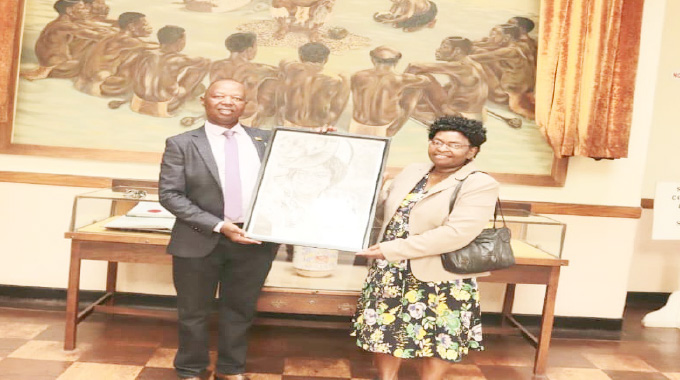
Nqobile Bhebhe, Senior Zimpapers Reporter
FORTY-THREE years, a single employer, and a revolving door of five different mayors. This gracefully summarises the storied career of Eliel Sithembiso Sibindi, who retired on December 31, 2025. Her departure marks the end of a chapter defined by unwavering loyalty, an understated elegance in professionalism, and a quiet, persistent excellence that became a cornerstone of the City of Bulawayo’s civic life.
Her journey began when she was a youth, joining the council at the tender age of 22. Over the decades, she blossomed from a spirited young recruit into the venerable and trusted Personal Assistant to five successive mayors. Sibindi’s narrative is less a tally of grand titles and more a masterclass in the art of consistency — the rare ability to show up day after day, year after year, adapting to the shifting winds of governance while serving her city with an impenetrable dignity. Of her 43 years within the municipal corridors, an incredible 23 were spent in the sanctum of the Mayor’s Office, a high-stakes environment where discretion, diplomacy, and resilience were not merely assets, but daily necessities.
Throughout the passage of time, she stood as the steady professional alongside a gallery of leaders: Japhet Ndabeni Ncube, Thaba Patrick Moyo, Martin Kizack Moyo, Solomon Mguni, and now Senator David Coltart. Five distinct men, five unique leadership philosophies, yet all supported by the same unflinching hand. Sibindi’s entire adult life was nurtured within the embrace of the council, having joined on June 14, 1982, fresh from her studies and ignited by a sense of national purpose.
“My whole adult life started here in Council. I achieved professional and personal growth working for Council,” she says with pride.
This longevity was no accident; it was a harvest of deeply held values.
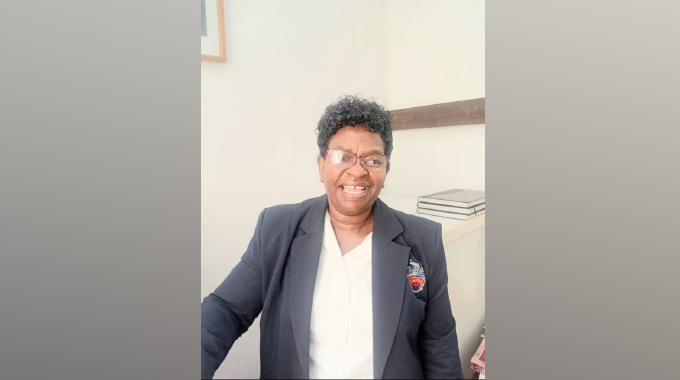
“I managed to work for the City of Bulawayo for such a long time through dedication, commitment and loyalty,” she reflected. “If you are not loyal you cannot work for an organisation for this long.”
Her path to the City Hall was paved by the fires of history. In 1979, at the height of the liberation struggle, she answered the call of the movement, though she was deemed too young for the front lines and was instead steered toward the power of education. A scholarship to Kenya for Secretarial Studies proved to be the pivotal moment of her youth. Upon her return in 1982, she stepped into the City of Bulawayo’s Treasury Department, beginning in the humble stores section — a modest but vital origin for a woman destined to become the gatekeeper of the city’s highest office.
“I had joined the liberation struggle in 1979, but we were viewed as too young, so we were seconded to go and study. I got a scholarship to study in Kenya, and that is where I did my Secretarial Studies. When I joined the City I was just returning home excited to serve and contribute to the development of a new Zimbabwe. I started working in the City Treasury Department — now the Financial Services Department, and this was in 1982 where I worked in the Stores section,” she said.
The transition to the Mayor’s Office was a metamorphosis. The role demanded a sophisticated alchemy of skills: managing complex diaries, guarding confidential correspondence, and orchestrating travel under the relentless gaze of public scrutiny. It required a velvet touch and an iron will to vet those seeking the mayor’s ear, diplomatically guiding them toward the correct channels while remaining an island of neutrality in a sea of political turbulence.
“Working in that office comes with a lot of challenges and I made sure that I don’t get tangled in the political issues. I had to stick to my professionalism while working with politicians. Working under five different mayors was an unforgettable experience, each with a different set of values, beliefs and leadership style. I had to remain consistent and professional in all scenarios. Adaptability and resilience are what made me carry out my duties seamlessly over the years,” she narrated.
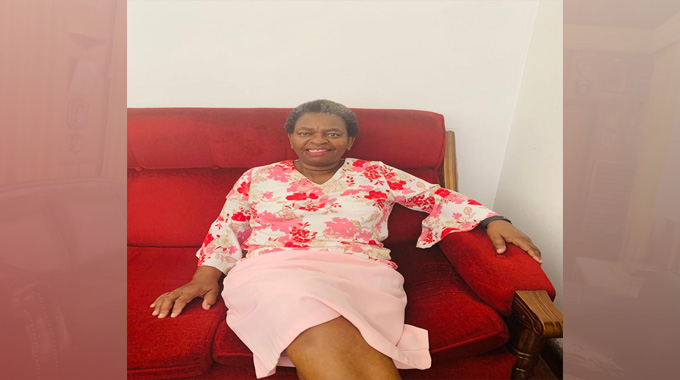
In the delicate dance of municipal governance, Sibindi found that diplomacy was her most valuable currency.
“Sometimes you deal with unruly characters who may be difficult to handle. But by employing diplomacy we managed to silence a lot of storms.”
These experiences distilled into a philosophy she now carries into her new life: the belief that while tempests are inevitable, they can always be mastered.
“This is a trait that I also carry with me as I retire, storms will come your way but you have to calm them. There are so many dramatic events that happened since the Mayor’s Office is also a political office. But as the Mayor’s Personal Assistant you have to calm the situation.”
From her prestigious vantage point, she watched Bulawayo transform, witnessing the birth of new suburbs and the recurring ebb and flow of urban challenges. Though water shortages remained a persistent shadow over the city, she observed that the light of professionalism often found a way forward. Whether welcoming a potential foreign investor or addressing the grievances of a thirsty community, the standard of care remained exquisite.
“What I observed is that while the City has experienced water challenges, more often there are solutions to addressing the water challenge. While I worked in the Mayor’s Office, the water challenge is just one of the many issues that the City attended to. We were co-ordinating stakeholders almost in a similar fashion, whether we were dealing with the water issue or handling potential investors. All the City’s stakeholders had to be treated with respect regardless of the issue they were bringing to the table.”
Despite her central role, she remains humble about her contribution to the city’s skyline and spirit, viewing progress as a symphony rather than a solo performance.
“An institution as big as the City of Bulawayo harnesses the skills and expertise of all of its employees. I cannot individually make an assessment of how I positively led to the growth and development of Bulawayo. It is always a collective effort from me accepting an appointment with the mayor then municipal processes follow for some investments. The development of Bulawayo cannot be pinpointed at individual but municipal processes whose goal is to collectively develop Bulawayo.”
Parallel to her career, Sibindi cultivated a rich personal garden, raising four children and eventually being blessed with six grandchildren. The high-wire act of balancing a demanding career with the warmth of home life was a challenge she met with grace.
“This has always been about balancing between work and home duties. I joined the City of Bulawayo when I was 22 years old. The City of Bulawayo was my only employer. I managed to raise four children and I retire with six grandchildren.”
If there is a pang of sorrow in this transition, it is simply the heartache of leaving behind a sanctuary she loved so dearly. Yet, retirement offers a new horizon. With her husband already settled into his own post-career rhythm, she looks forward to the quiet joys of their homestead and the sustaining projects that await them there.
“I have a retirement plan, but of course adjusting may bring some stress. I have a homestead and I have been able to educate all my children so it’s now between my husband and I to do projects that can sustain us. He retired before me, so I am joining him in retirement.”
As the final ink dries on her professional record, Sibindi’s parting words serve as a compass for the next generation.
“I leave a legacy of commitment, dedication and excellence. I’m proud to have served the City for all these years. I encourage employees to be loyal to their employers, hoping that the employers also take care of them. People should be patient. A lot of people, because of lack of patience, constantly change their work in pursuit of greener pastures but end up not achieving anything.”
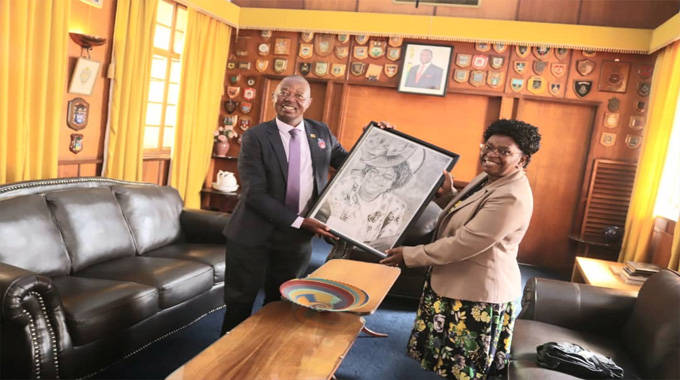
Her departure was marked by a poignant gesture earlier this week, as the municipality, led by Deputy Mayor Councillor Edwin Ndlovu, presented her with a portrait. It was not a formal part of a package, but a heartfelt salute — a simple, meaningful image of a woman whose steady, quiet excellence helped steer the great City of Bulawayo through forty-three years of history.