Online Reporter
Tichaona Zindoga
RECENTLY, while visiting a local retailer, I came across an entire stall dedicated to Labubu dolls. Yes, Labubu dolls. These toys are produced by the Chinese company Pop Mart and were inspired by Hong Kong artist Kasing Lung. In 2015, Lung introduced this quirky phenomenon — an “ugly”, grinning, elf-like creature — in his picture-book series, The Monsters.
Over time, and especially in the past year, Labubu has achieved remarkable global popularity, with celebrities and even royals owning these toys, which are often sold as collectible sets. Pop Mart — founded in Beijing in 2010 by Wang Ning — has propelled the craze through its blind-box concept, where buyers only discover, which figure they have purchased after opening the box.
The Labubu phenomenon is extraordinary, and its arrival in Zimbabwe is significant. Analysts note that its rise from niche collectible to global fashion and social media icon illustrates how Chinese cultural products are now shaping global tastes in organic, market-driven ways.
“One of the most sought-after items of 2025 isn’t a designer handbag or the latest tech gadget,” reads one Australian article. “It’s a plush elf with a snaggle-toothed grin.”
The article explains Labubu’s meteoric rise: “Labubu is a global sensation. From David Beckham and Rihanna to Dua Lipa and Blackpink’s Lisa, celebrities — and even members of the Thai royal family — have been spotted showcasing their Labubu collections.
“Labubu succeeded without central planning. It went viral organically: fanned by fandoms, fuelled by TikTok and amplified by celebrity endorsements. Now, China is starting to look ‘cool’ to the outside world.”
Lessons from China’s cultural confidence
China has modernised without losing its cultural soul — from language policies to thriving cultural industries, with Labubu and films like Ne Zha, serving as prime examples.
Moreover, the Global Civilisation Initiative — discussed further below — positions China as a global cultural leader and a major force in soft power. For countries like Zimbabwe, this presents an opportunity to collaborate and draw inspiration, rather than remain passive consumers — or worse, victims of cultural imperialism.
Where do we start?
China’s civilisation spans over 5 000 years, making its cultural depth immense. A comprehensive discussion would require far more than a single article. However, recent developments under President Xi Jinping offer valuable lessons on linking modernisation with cultural development.
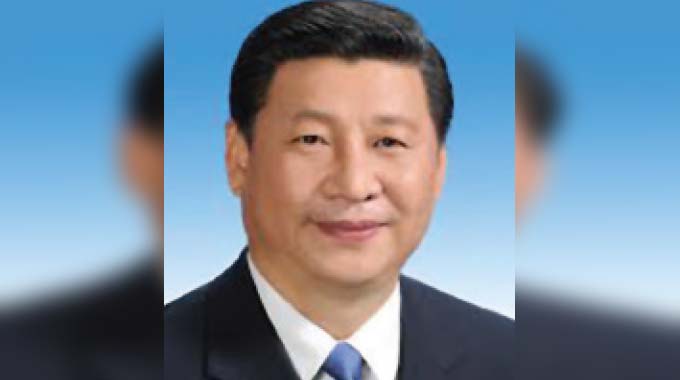
On September 24, 2014, during the opening ceremony of the International Conference Commemorating the 2565th Anniversary of Confucius’s Birth, President Xi emphasised that traditional culture is the “root and heritage of a country and a nation.”
He stated: “We should make the past serve the present, taking the past as a mirror for today, distinguishing what can be used and what cannot, and carrying forward while assimilating — instead of esteeming the past over the present or using the past to negate the present.”
Later that year, at the Forum on Literature and Art, Xi observed: “The biggest difference between humans and other animals lies in our cultural needs, which exist throughout life.” He stressed that as living standards rise, so do expectations for cultural products — demanding higher quality, taste and style. All cultural sectors — literature, drama, film, music, fine arts, photography and folk arts — must keep pace with the times and meet people’s evolving needs.
Xi was prescient in noting: “Today, the international community is paying attention to China, seeking to understand our outlook, life, style, values, heritage, traditions and temperament.” He argued that this understanding cannot come solely through press releases or official reports, but through art, storytelling and cultural expression.
One “ugly” doll is doing just that — adding to the growing stream of Chinese culture flowing into the world.
For Africa, Chinese culture — especially film — has long been popular, with academic studies highlighting its role in fostering collaborative projects in storytelling and film, contributing to mutual understanding.
China’s renewed cultural confidence under Xi Jinping has become a defining pillar of its modernisation drive. He has consistently emphasised that a nation’s rise is incomplete without the flourishing of its cultural identity, creativity and civilisational heritage. China’s 5 000-year history now inspires contemporary innovation, strengthens unity and provides moral grounding for development.
Culture is one of China’s “Four Matters of Confidence” — confidence in its path, theory, system and culture — now expanded to include confidence in its civilisation itself.
President Xi Jinping thoughts on culture and the global civilisation initiative
The ideas advanced by President Xi Jinping on culture later became known as “Xi Jinping Thought on Culture”.
This was formally introduced during the National Conference on Public Communication, Ideological and Cultural Work held in Beijing in October 2023. In his directive, President Xi emphasised the need to build stronger cultural confidence, adopt openness and inclusiveness, and uphold fundamental principles while breaking new ground.
These efforts, he noted, would provide a robust ideological foundation, spiritual strength, and favourable cultural conditions for building a modern socialist country and advancing the great rejuvenation of the Chinese nation.
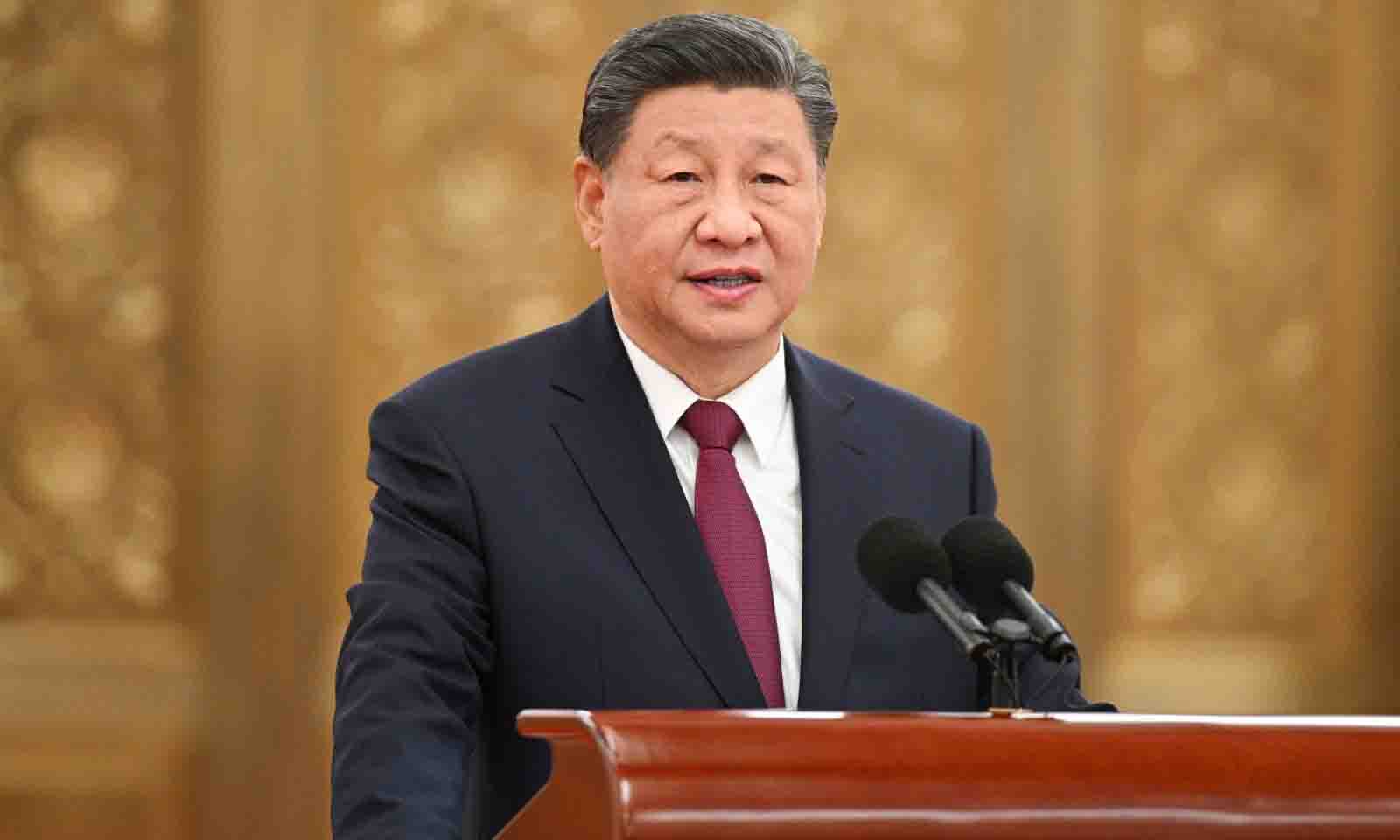
Earlier, in March 2023, President Xi Jinping proposed the Global Civilisation Initiative (GCI). The GCI asserts that no civilisation is superior to another and that addressing the world’s major challenges requires respect for diversity, dialogue among cultures and joint innovation.
It rejects the outdated “clash of civilisations” narrative and instead advocates mutual learning among civilisations as the cornerstone of peace and co-operation. In this vision, China’s resurgence does not threaten other cultures; rather, it invites them into a broader conversation about coexistence and shared progress.
President Xi has become well known for his metaphor, comparing the world’s civilisations to a beautiful garden. Speaking at an international forum in 2024, he remarked: “The Global Civilisation Initiative I proposed is exactly for the purpose of building a garden of world civilisations in which we can share and admire the beauty of each civilisation.”
China’s cultural confidence is not arrogance. It reflects a willingness to share its civilisation, development experience and modernisation journey because of its conviction in the authenticity and correctness of its path.
For countries and regions across the globe, including Africa, the GCI creates space for genuine cultural co-operation. It encourages partnerships in education, heritage preservation, creative industries, digital culture, art exchanges and media collaboration — based on equality rather than cultural dominance.
For nations like Zimbabwe, this presents opportunities to amplify local cultural narratives while accessing Chinese platforms, skills and audiences. At the same time, China signals its readiness to learn from African civilisations, integrate their stories into global cultural circuits, and foster enduring people-to-people ties.
This vision aligns with another of President Xi’s philosophies: building a community with a shared future for mankind. In this context, culture becomes both a bridge and a soft-power resource — a common heritage for all humanity.
Zimbabwe possesses a wealth of natural and intangible heritage that should be leveraged for commercial opportunities and economic value while asserting Zimbabwe’s soft power through cultural confidence.
Recently, I spoke with renowned sculptor Dominic Benhura, who has blazed a new trail in the Chinese market nearly five decades after his rise to prominence with the celebrated “Shona art”. Benhura has two pieces acquired by President Xi Jinping himself. His work has captivated Chinese media and art enthusiasts, and throughout the past year, he has been highlighted by Ambassador Zhou Ding as a local icon promoting cultural exchange.
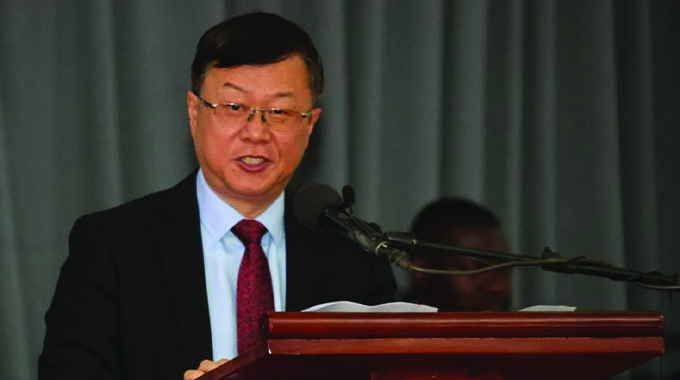
Similarly, Nyasha Mushekwi has raised Zimbabwe’s profile through his football career in the Chinese Super League. Meanwhile, the contemporary music group Fusion 5 Mangwiro has boldly ventured into entertaining Chinese audiences, building cultural bridges through music.
Growing in cultural confidence alongside China means fostering more exchanges and deepening bonds that strengthen mutual relations and contribute to building a community with a shared future for mankind.

*Tichaona Zindoga, a leading local expert and commentator on Zimbabwe-China issues, is the Director of Ruzivo Media & Resource Centre, a think tank based in Harare.