Online Reporter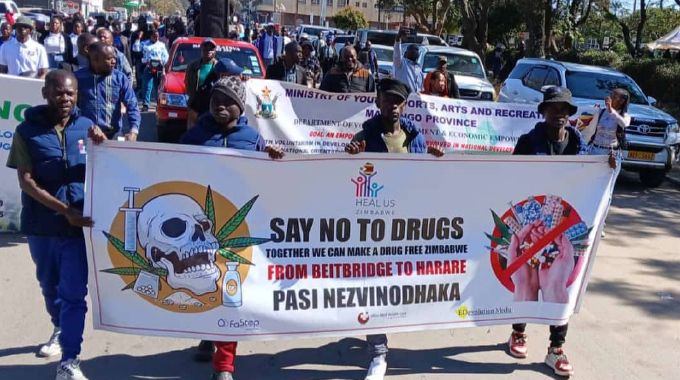
Thupeyo Muleya, [email protected]
THERE is something quietly powerful about a long road stretching into the horizon, especially when it is walked not out of obligation, but out of purpose. For three young men who once found themselves trapped in the suffocating grip of drug addiction, that road has become something entirely different — a path of redemption, of healing, and now, of hope for others. And this June, they will lace up their worn trainers once again, step into the open air, and begin a journey that is as much about saving lives as it is about reclaiming their own.
Three reformed drug addicts are set to embark on a second 23-day walkathon that will take them from the dusty frontier town of Beitbridge all the way to the bustling capital, Harare. But this is no ordinary trek. It is a mission wrapped in resilience, driven by lived experience, and anchored in a simple but urgent message: the time has come to confront the growing crisis of drug and substance abuse in Zimbabwe.
Behind the miles that await them lies a bigger ambition — not just to talk about the problem, but to build solutions. The trio is hoping to raise funds and mobilise support to establish a drug rehabilitation centre that will offer free services to those battling addiction. In a country where accessing treatment is often beyond the reach of many, such a facility could mean the difference between despair and recovery.
Alongside this, they hope to spark a broader, more active community response to a problem that has quietly but steadily crept into homes, schools and neighbourhoods.
The journey itself will unfold between June 26 and July 19, a period that will see them walking through towns, villages and cities, carrying their message mile after mile. It is a journey that demands both physical endurance and emotional strength, something these men have learned to cultivate in ways most can only imagine.
The three-man team — Columbus Mushore, Kudakwashe Mafuta and Terrence Shenje — operate under the banner of Heal Us Zimbabwe, a name that feels less like an organisation and more like a plea, a rallying cry for a society searching for healing. Together, they have set themselves the daunting task of covering roughly 600 kilometres from Beitbridge to Harare, pushing forward each day with determination that has been forged through personal struggle.
They will walk for 25 kilometres each day, resting only when their bodies demand it, before rising again to continue the journey. It is a rhythm that mirrors their own recovery — step by step, day by day — never rushed, never easy, but always moving forward.
Along the way, they intend to stop and engage, not just with crowds, but with individuals. At business centres, they will pause and share their stories. In schools, they will speak directly to pupils, many of whom stand at that fragile crossroads where curiosity can so easily turn into experimentation. By the roadside, they will wave down motorists, speak to villagers, and remind communities that addiction is not a distant problem — it lives among them.
For Mushore, who leads the walkathon and founded Heal Us Zimbabwe, the motivation is deeply personal. Having once lived the life they now warn others against, he speaks with a clarity that only experience can bring.
“We have the experience as rehabilitated drug abusers and we want to use our experience to discourage other Zimbabweans, especially youngsters from getting into untoward behaviour,” said Mushore.
He speaks not as an observer, but as someone who has walked through the darkness and found his way out — and now feels compelled to turn back and guide others.
“It is very expensive and an intensive process to rehabilitate an addict and hence we need to make sure people stay away from that vice for good. On our course to Harare from Beitbridge, we will interact with members of the community, the youth and those pupils in school sharing our experiences and discouraging those engaging in similar activities.”
There is a quiet urgency in his words, a sense that time is not an ally in this fight. The scars left by addiction are not easily erased, and the cost — emotional, financial and social — is one that families and communities continue to bear.
This will not be their first time undertaking such a journey. In 2024, they completed an inaugural walk, covering 540 kilometres from Plumtree to Harare. That journey, too, was born out of a desire to raise awareness, and it appears to have only strengthened their resolve. If anything, the road has become familiar terrain — not because it is easy, but because it has meaning.
This year’s walk carries the theme “Together we rise, Unite we heal,” a phrase that captures both the scale of the problem and the collective effort required to address it. Addiction, after all, does not exist in isolation. It seeps into families, disrupts communities and, if left unchecked, quietly erodes the promise of an entire generation.
As they prepare for the journey, the trio are also reaching out for support — to corporates, organisations and individuals — in the hope of gathering resources that will sustain them on the road and help them achieve their long-term vision.
Mushore is clear about where the greatest threats lie. In his view, crystal meth and illicitly brewed alcohol have become the most commonly abused substances, weaving themselves into the fabric of daily life in ways that are both visible and hidden.
And perhaps most striking is his call to action directed at communities themselves.
“We need to create a social contract so that we effectively do away with drug abuse and the drug peddlers. We live with them, they are destroying the young generation,” said Mushore.
It is a stark reminder that the problem does not exist in the shadows. Often, it is known, seen, whispered about — yet not always confronted with the urgency it demands.
Their decision to begin the journey at the country’s border is also symbolic. For them, it represents a starting point not just geographically, but metaphorically — a recognition that many of the harmful substances entering communities originate beyond Zimbabwe’s borders, flowing in through porous entry points.
Yet, for all the hardship ahead, there is also an openness to the journey.
Mushore makes it clear that anyone who believes in the cause is welcome to join them, even if only for a few kilometres. The road, after all, is wide enough for everyone who wishes to be part of the solution.
As they set their sights on Harare once more, their mission is as much about movement as it is about meaning. Each step will echo with stories of survival, each kilometre carrying a message that is urgent, necessary and deeply human.
And somewhere along that long stretch of road, between Beitbridge and Harare, three men who once struggled to find their way will be guiding others towards a different path — one marked not by escape, but by hope.