admin
admin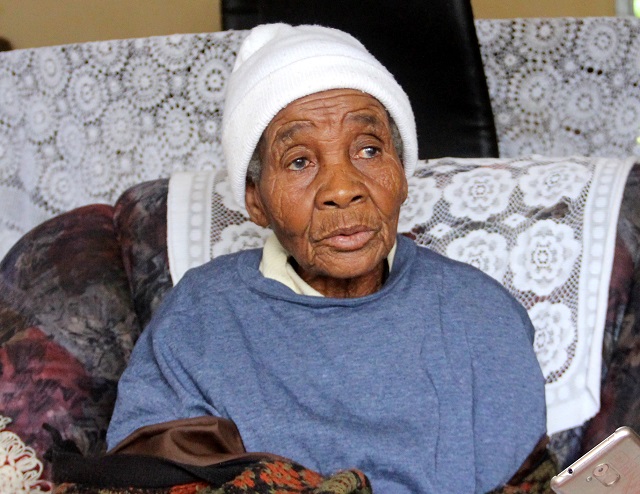

Mkhululi Sibanda, Assistant Editor
FOR the two elderly women, Loiusa Ndlovu and Eveline Ndlovu who are in their late 80s, the battle that took place at Tjewondo in Kezi around November 1978 between the freedom fighters and the Rhodesian forces left them bruised both emotionally and physically.
The two women found themselves on the receiving end of the brutal Rhodesian forces when they descended on their village.
As for Gogo Louisa Ndlovu now aged 90 she was thoroughly beaten by the Rhodesian forces for failing to respond with speed when they called her to go where they were, while for Gogo Eveline Ndlovu (89), the Rhodesian forces set alight her homestead after they had suffered a heavy loss to the Zipra forces on that fateful day.
Last week, a Sunday News crew caught up with the two elderly women, who said they would never forget the day when the Zipra forces clashed with the Rhodesian forces at Tjewondo, about 15km west of Maphisa Growth Point.
In fact Sunday News was tipped to the incident by a reader, Gibson Ndlovu who after reading the battle of Ratanyane also in Kezi in our previous edition wrote to the editor and said: “Please make a follow-up on a battle that took place near Tjewondo School in 1977/8 in which 11/12 enemy soldiers were killed. One guerilla involved was called Mahlanvana (igama lempini) who I am told utholakala eMaphisa and Tjewondo. The battlefield was next to a homestead koSutha (close to Tjewondo Sec School also close to councillor Phiri’s homestead). The Sutha homestead and another one were burnt to ashes by the regime when they came to collect bodies).”
On Thursday a Sunday News crew then visited Tjewondo and spoke to Gogo Loiusa Ndlovu who said: “I was here in my homestead when I saw an army truck parked near the road there (pointing to where the soldiers were) and one of the soldiers called me, but I thought he was not referring to me as they were in the next homestead. Then when I finally realised that they were calling me I went to where they were. To make matters worse that Rhodesian soldier spoke in Shona and we could not understand each other and that worsened the situation. He accused me of being stubborn and they looked for an axe ukuze bagamule inkalakatha yoswazi, uthi kwaba luswazi yini, kwakungumthando lowana. That is what they used to beat me up.”
Continued Gogo Louisa Ndlovu: “Just imagine being beaten by a man and my husband watching from our homestead quickly took the children and fled into the bush. After being beaten I staggered to my homestead and found no one at home. However, those two black Rhodesian soldiers were reprimanded by their white counterpart on why they beat up an elderly woman.”
When she got into her homestead, she did not stay long as she dashed to the bush and that is when she came across the guerillas.
“Abafana beganga (guerillas) asked me why I was in such a terrible condition and I told them I had been beaten up by the Rhodesian soldiers and I pointed to the direction where they were,” said Gogo Louisa Ndlovu.
“After some time I heard the sound of gun fire. I caught up with my husband, Ndabanengi Dube in the fields. We did not spend the night at our homestead. We were accommodated in the next village. We only returned home the following day. Uyazi mntanami there was a big difference between the way we were treated by the Rhodesian forces labafana. Abafana beganga would politely ask for food and would eat what was available and that gave us more vigour to support them.”
On the casualties during the battle, Gogo Louisa Ndlovu said she was not sure.
“What I know is that some Rhodesian soldiers died and when their counterparts came to collect the bodies, that is when they set alight imizi yaboSutha Ndlovu loPillow Sibanda,” she said.
Gogo Louisa Ndlovu’s grandson, Mr Mlamuleli Ndlovu said from what he heard from other villagers, after coming across her grandmother, the guerillas followed a stream, where there was also thick vegetation to where the Rhodesian soldiers had retired to and were preparing their food.
“That is where the battle happened and the Rhodesians suffered heavy losses. That is why they set alight the homestead owakoSutha because they thought the guerillas had been hiding there. The Sutha homestead was very close to the scene of the contact,” Mr Ndlovu.
Gogo Eveline Ndlovu whose homestead (koSutha Ndlovu) was set alight by the Rhodesian soldiers said she was at her home when she saw armed men in a squat position.
“I was preparing to go and work in our fields and then I heard a voice saying ‘gogo, gogo’ and when I looked around I saw armed people in a squat position. When I saw that I fell down with fear and they asked what was wrong with me. There is a small river near our homestead and that is what they followed and it gave them cover,” said Gogo Eveline Ndlovu.
“Then all of a sudden there was sudden burst of gunfire. We all fled from our home to the fields. From the fields we sought refuge at some far field homesteads. That battle happened at about 10am and in that afternoon we were attracted by heavy smoke from the direction of our village. I could sense that it was probably my homestead that had caught fire and indeed it was. Our main house and five huts were all razed to the ground by the Rhodesian soldiers. They also set on fire our barn and all the grain was lost.”
Gogo Eveline Ndlovu said what made matters worse was that her husband had just retired from his job in South Africa and had brought several suitcases containing new clothes for the family and all that was lost in the fire.
“We were left with nothing. People had to donate food and clothes to us. Abantu bakaNkulunkulu balomusa mntanami. We started from scratch. Fellow villagers also assisted us in rebuilding our homestead,” she said.
“On that day we were accommodated by other people and we returned the following day, to find our home in ruins. It was terrible.”
One of the guerillas who operated in the area, Cde Abel Nsewula said although he did not take part in that battle, he and other comrades were a few kilometres away.
“We had just split into smaller units on that day as the Rhodesians had set up an area ambush. They had covered areas such as Marinoha, Lingwe and Mbembeswana. We had split at an area around Mabonyane into groups of between four and seven,” said Cde Nsewula, who operated under the name, Cde Sifiso Njalo or Disco, in a telephone interview from Gokwe.
“The comrades who executed that battle were very few, they should have been four or seven, I can’t remember well. Among them was Stephen Maqhageni, who is now Zanu-PF councillor in Sun Yet Sen in the Matobo Rural District Council and Ngwenya. From what they told us later on, they were told by the villagers that the Rhodesian soldiers were preparing food at a certain spot near the homestead of Sutha. They then moved stealthily towards the enemy and when they were close they realised that a sentry who had been posted in the direction they were coming from had fallen asleep. That gave them room to scan the area nicely and they were able to hit their targets with precision. They did a lot of damage.”
Cde Nsewula without giving figures said a number of enemy forces died in that battle and that is why those enemy forces who came to collect their colleagues’ bodies vented their anger on villagers by either beating them up or setting alight the homesteads.
“During my operations in the Kezi area from early 1978 to the ceasefire the Tjewondo battle accounted for many enemy forces but where we killed many Rhodesians was the battle of Kafusi. But those two stand out,” he said.
Cde Nsewula said as for the Tjewondo battle, the guerillas had no choice but to engage the Rhodesians.
“We were surrounded and those comrades by engaging the Rhodesians there was meant to be a breakthrough so that we put them on the back foot,” said Cde Nsewula.



 Online Reporter