admin
admin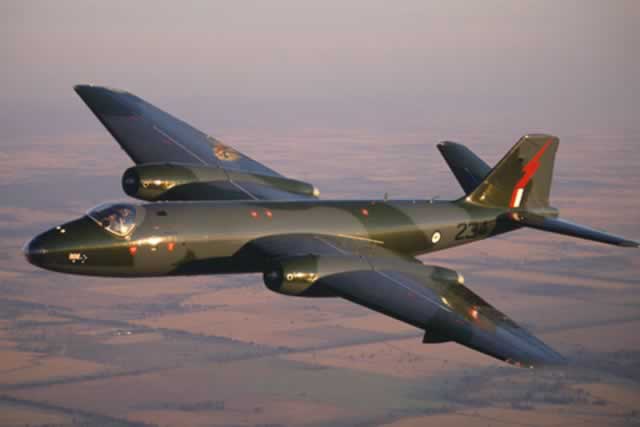
Sydney Kawadza Senior Feature Writer
In the Midlands provincial capital of Gweru is an important area rich in Zimbabwe’s history. It is in the “City of Progress” that the National Museums and Monuments of Zimbabwe set up the country’s Military Museum where history lies untapped for the benefit of the nation’s younger generations.
Lsocated along Lobengula Street behind the city’s main offices, the military museum houses the metallic birds of death that were a source of anguish during the liberation struggle, and pride after independence.
Gweru residents dismiss its importance to Zimbabwe’s history before and after independence.
The museum is a source of knowledge as its history has an important part in projecting the challenges endured during the liberation struggle, the challenges Zimbabwe faced as a young nation and how it conquered to become the great country it is today.
Zimbabwe celebrates 35 years of Independence on Saturday this week.
In 1980, as the then Prime Minister, now the President of the Republic of Zimbabwe, Cde Robert Gabriel Mugabe called on Zimbabweans to unite, to put the past behind and develop the country.
He said: “I urge you, whether you are black or white to join me in a new pledge to forget our grim past, forgive others and forget, join hands in a new amity, and together as Zimbabweans, trample upon racialism, tribalism and regionalism, and work hard to reconstruct and rehabilitate our society as we reinvigorate our economic machinery.
“The need for peace demands that our forces be integrated as soon as possible so we can emerge with a single national army.”
However, within two years of those inspirational words, the remnant forces fighting against the new dispensation decided to cripple that same army President Mugabe sought to unite.
On July 25, 1982, the former Rhodesian soldiers turned their backs on the hand of unity to attack Thornhill Airbase.
National Museums and Monuments of Zimbabwe militaria curator Mr Amos Zevure narrates how a group of disgruntled army officers could not stomach being commandeered by blacks and plotted to destroy the fleet at the airbase.
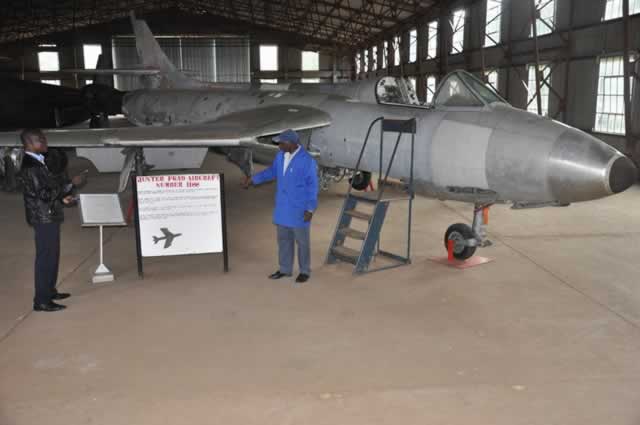
“Bombs were planted between the five aircraft by some demoted white officers from South Africa but were serving in the Rhodesian army. Fortunately, only one bomb exploded, damaging one Hawker Hunter FGA9,” he said.
“There was a problem because the whites did not believe that blacks could operate the aircraft and the fact that their beliefs were unfounded really made them angry, leading to such an attack.”
The plane is parked at the Military Museum in Gweru but not much is known of its rich history.
Air Commodore (Retired) Peter Samuel Nkulu, who assumed command of the base that fateful night, believes the history that is parked with the retired aircraft at the museum should always be told.
“That incident hit me hard because I did not expect anything like that to happen but we were having our challenges during that period where the three former forces were being integrated into a single unity,” he said.
“However, on that night I was visiting my aunt in Chikwaka when two vehicles picked me. I remember the driver as Sergeant Silver Hakuna who told me that an aircraft had been burnt at Thornhill Airbase and I was to assume command immediately.”
The base commander Air Vice-Marshall Hugh Slatter had been taken to the police for questioning and Air Commodore (Rtd) Nkulu, then a squadron leader, assumed command of Thornhill Airbase.
The police suspected a deliberate security laxity involving the command at the airbase.
“Our relationship with our white colleagues was somewhat frosty and always at arm’s length. The sheer challenge was to understand the integration which had white instructors training black officers.
“There was a lot of mistrust and the relationship was like a double edged knife. It was through sheer determination and forward looking that pushed us to soldier on. We had to understand that after coming from the liberation war, we were now in a different war of rebuilding our nation,” he said.
Air Commodore (Rtd) Nkulu, however, believes that incidents like the 1982 attacks should teach Zimbabweans to guard jealously their heritage.
“People have to look back and reflect on such events. It would teach them the necessary lessons and build on the necessary achievements that would see us remain a strong nation.
“We must not drop our guard because as the world changes, the enemy targeting to destroy our inheritance and sovereignty has also developed new tactics.”
He said Zimbabwe was a more treasured natural asset than the Chiadzwa diamonds.
The sabotaged plane had been operated during the liberation struggle by the Rhodesian army.
It was also used in Operation Hurricane where enemy forces targeted Zanla combatants operating in the north eastern parts of Zimbabwe especially in Marondera, Murehwa, Uzumba-Maramba-Pfungwe and Mudzi areas.
The plane did not see much action after independence before the sabotage attack.
The South Africa Truth Commission also captures the sabotage, adding that “Zimbabwean agents and SADF Special Forces operatives were involved in the attack on the Thornhill Airforce Base near Gweru on July 25, 1982, in which thirteen fighter trainers of the Zimbabwe Air Force were destroyed.”
Four senior air force officers, including Air Vice-Marshall Slatter, were arrested for this operation.
The officers confessed but were acquitted by trial judge who deemed their confessions inadmissible.
It was, however, concluded that the operation was undertaken by a South African Special Forces group led by a long-serving member of the Recces operating as an agent in Zimbabwe.
The commission has the names of four SADF Special Forces operatives who participated in that attack.
There are 12 aircraft of various ages and history at the museum.
Another Hawker Hunter, which was retired in 2000 after flying for 3 353:45 hours, is also at the museum.
The jet, used as a fighter aircraft, bomber and reconnaissance, was introduced in the then Royal Rhodesian Air force on May 15, 1963 based at Thornhill Air Force Base Number 1 Squadron.
Mr Zevure said the aircraft has both bad and good memories for the Zimbabwean people.
“The aircraft participated in many internal s and external operations including Operation Dingo, the codename for the Chimoio massacre of Zanla cadres in Mozambique,” he said.
The aircraft also took part in Operation Uric, codename for the Mapai attack to cut off Zanla forces supply route in Gaza province of Mozambique by the Rhodesian Forces.
Nevertheless, after independence, the aircraft was used by the Air Force of Zimbabwe during the Mozambique campaign from 1988 to 1992.
Some notable pilots who operated the aircraft include Air Vice Marshal Elison Moyo, Air Vice Marshal Shebba Brighton Shumbayaonda, Air Commodore Jasper Marangwanda, Air Commodore Biltim Chingono and Air Commodore Innocent Chnganze.
Also found at the museum is the Canberra R2504 jet bomber which had a capacity of carrying 6 000 bombs.
The large aircraft had a crew of only two.
“It was a big aircraft but very quiet. It was also fast enough to evade interception hence could take enemies by surprise. The Rhodesian army used the plane in cross-border incursions into Mozambique and Zambia attacking freedom fighters at their camps,” Mr Zevure said.
“Its capabilities for aerial surveillances saw it being used to monitor movement of freedom fighters along the borders.”
One of the plane’s notable operations involved attacks on freedom fighters in 1973.
“This was a year after the freedom fighters launched a sustained guerrilla warfare with an attack on Alternor Farm in Mazowe,” he said.
The Canberra at the museum was also used by the Rhodesian government’s joint operation command (JOC) that planned the attacks on Chimoio, Nyadzonya and Tembwe camps in Mozambique.
“The aircraft does not make a lot of noise and since it is fitted with cameras, the JOC used it to survey the landscape in the three camps to strategise on their attacks that left thousands of guerrillas and ordinary refugees dead,” Zevure said.
He however, commended the commanders who took over operations and making the Air Force of Zimbabwe the remarkable outfit that it is today.
“The whites did not believe that blacks could competently operate the fleet but we have seen our forces perform wonders in Mozambique, Democratic Republic of Congo and Angola,” he said.
As the metallic birds of death lie quiet in their hangers, it is worth remembering the history that is associated with the great nation called Zimbabwe.
Feedback: [email protected]



 Online Reporter