

 admin
admin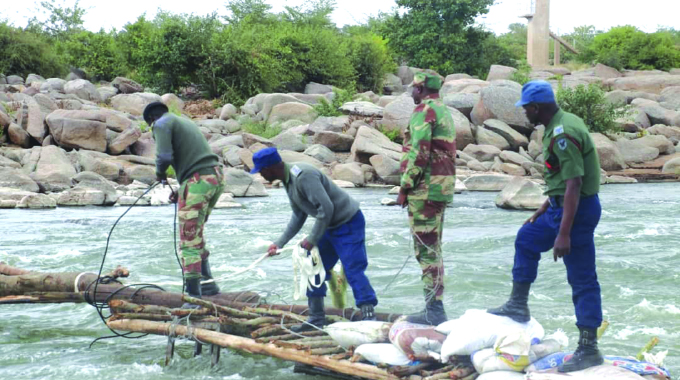
Thupeyo Muleya, Beitbridge Bureau
In the southern heart of Zimbabwe, the Limpopo River normally flows majestically, a lifeline stretching over 360 kilometres towards the Indian Ocean.
With its shimmering waters and rich banks, the river embodies beauty and peril, standing as a natural boundary that has shaped histories and lives since the dawn of colonialism.
Yet, beneath its tranquil surface, the Limpopo harbours secrets—whispers of life intertwined with tales of lawlessness.
For the communities that line its banks, from the Limpopo they do not just see water; it’s a source of sustenance and opportunity.
Farmers cultivate fertile lands, tourists seek adventure, and families thrive on the bounty it provides.
But this natural wonder also draws a darker crowd, transforming it into a conduit for those seeking to evade the law.
The river’s allure has not gone unnoticed by those with nefarious intentions.
As the sun rises and sets over its waters, a shadowy world comes alive.
Local villagers, international travellers, and even those from distant lands—like the Horn of Africa, Pakistan, and Bangladesh—find themselves caught in a web of crime that spans both Zimbabwe and South Africa.
Authorities from these nations face a perennial headache, battling issues of irregular migration, human trafficking, armed robberies, and smuggling.
Joint operations have become the norm, with security details from both sides of the border conducting synchronised patrols, racing against time to maintain a semblance of order.
The Covid-19 pandemic acted like a double-edged sword, closing borders to non-essential traffic and driving desperate individuals towards the river’s banks.
As restrictions tightened, a new breed of entrepreneurs emerged—small-time and big-time wheeler-dealers took advantage, their operations flourishing amid chaos.
Smugglers, equipped with plastic bins, inflatable boats, and donkey carts, began transporting goods and people under the cover of darkness.
When the riverbed dried up, the border became a porous passage, and illicit crossings surged.
It became a bustling marketplace of illegal activity, where one could pay between R50 and R100 to thugs manning the crossing points.
For transport from Musina Town to the river, people pay between R100 to R5 000 depending on what is being transported and the same applies on the Zimbabwean side.
Some of the known illegal entry points include Mai Maria, Panda Mine, Dite, Tshikwalakwala, Mawale, River Ranch (Beitbridge East) and Sentinel, Tshivhara, Shashe (Beitbridge West).
But the tide is turning. In response to the escalating chaos, South African and Zimbabwean authorities have ramped up their efforts to clamp down on criminal activities.
According to security officials from the two countries, groceries, electrical gadgets, dangerous drugs, cigarettes, stolen livestock, stolen vehicles, dangerous drugs, illegal firearms, and minerals among others, are being moved through the Limpopo River.
National police spokesperson, Commissioner Paul Nyathi recently said that more deployments and surveillance were being done along the border.
“We are carrying out a joint anti-smuggling operation with other stakeholders including the Zimbabwe Revenue Authority (Zimra),” said Comm Nyathi.
“Importers or exporters are encouraged to do so within the confines of the country’s customs laws. Where duty must be paid it must be done and we don’t condone smuggling. Our joint efforts are paying dividends. We have intercepted many goods that have been smuggled into our country and this cannot go on forever.”
Comm Nyathi said the task team was firm on the ground and warned that those found on the wrong side of the law would be brought to book.
He said none will be spared by the operation, including visitors who wilfully break the law.
The South African Border Management Authority (BMA) has fortified its presence, deploying Border Guards, while Zimbabwe has mobilised multi-agency forces, all united in their mission to reclaim control.
South Africa’s spokesperson, Deputy Assistant Commissioner of Communications and Marketing at the Border Management Authority (BMA), Ms Mmemme Mogosi, said the Limpopo River was one of the notorious areas used for illegal cross-border movements.
“The BMA, together with the South African Police Service (SAPS) and the South African National Defence Force (SANDF), continue to fight the issue of illegally transporting persons and goods through the river,” she said.
“The piloting of drone technology and body cameras to support the operations at Beitbridge during the past festive season has demonstrated the power of digital transformation to secure and enhance border management efficiency,” said Ms Mogosi.
Recent operations have seen impressive results.
Surveillance drones hover above the river, capturing evidence of illegal movements, while ground patrols sweep through hotspots. Last year’s festive season witnessed over 4 000 foot patrols and 3 000 vehicle patrols, a testament to the commitment to restoring order along the Limpopo.
As officials from both nations emphasise the need for collaboration, the voices of local leaders echo their sentiments.
Beitbridge East legislator, Cde Albert Nguluvhe, advocates for stronger ties and better resources for security personnel, recognising that the fight against crime requires unity.
“The battle against crime along our borders can only be won when we work hand in hand with our South African counterparts,” he insists. The Limpopo River, with its dual identity as a source of life and a stream of crime, stands at a crossroads.
As authorities ramp up their efforts and communities rally for change, uncertainty hangs over the river’s future.
Will it continue to be a vessel for illegal activities, or can it transform into a symbol of cooperation and hope?
Only time will tell, but one thing is certain: the Limpopo has seen it all, and its story is far from over.



 Online Reporter