admin
admin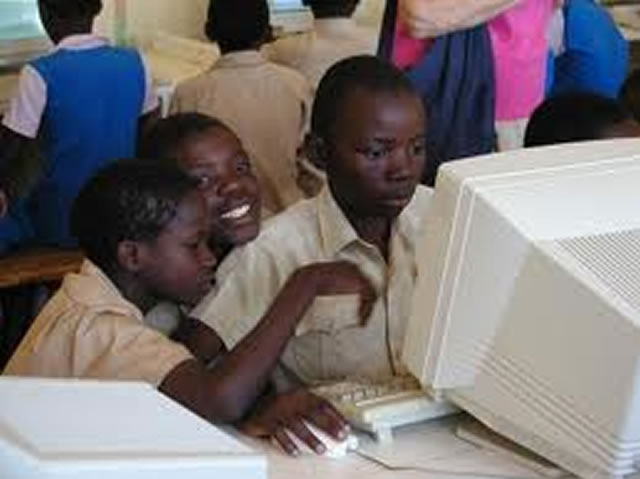

Kudakwashe Gwabanayi Features Correspondent
Deep down in the heart of Masvingo lies Songaniso Mission. The mission was founded by Reverend Jonas Mudadirwa Zvobgo, and popularised by his son, the late national hero Cde Eddison Zvobgo. The mission comprises a clinic, a primary school, a secondary school and a church was established to improve the standard of education and health of the people of Songaniso and as contribute to the religio-educational development of the people of the area.
The high school, Zivezano, is part of the mission, has shown as a educational beacon for the people of the area that people from as far as Zaka, Chiredzi and many other surrounding areas battle to secure places for their children there as it boasts a cheap boarding facility and a high pass rate.
The mission is lucky to have benefited from the Government’s Rural Electrification Programme which has made it possible for learners to study 24 hours a day. It can now compete with other Western-founded mission schools in the country.
Students at the mission have quickly embraced this development and have taken with them to school technological gadgets that have simplified studying and writing assignments.
Donors have also done their part, dropping off computers to assist the learners. In 2008, Eng Walter Mzembi, then Deputy Minister of Water and neighbouring Masvingo South constituency MP, ignited the technological revolution when he donated a computer to the school. His motive was to ensure that the school continued to offer quality education to the people of the district and surrounding districts
The mission is also a beneficiary of President Mugabe’s Computerisation Programme which aims at bringing all schools into the global village. The students have embraced it and are moving very fast on the technological lane. With the help of the computer literate teachers they now have learnt use of the internet, search engines, wordprocessing and basic knowledge of soft ware among other things.
The children can compare well with a student coming from Mucheke High in Masvingo. For the teachers only one or two have been chosen to teach the subjects or basic computers while the rest have remained behind.
As such the strides that been made for students to link with the global village, has not been the same for the teachers. Those who are supposed to be teaching the children are still lagging behind and have to ask for assistance from the children. Those who are not teaching computers but teach subjects like Maths, Agriculture Geography, History and Shona have been left behind.
One or two have been picked to teach computers at the school while the rest continue to use the conventional methods of teaching. Students have to some extent become more researched than the teacher, a situation that needs quick redress.
Prof Rungano Zvobgo, the board chairman of Zvobgo Holdings, who is also Great Zimbabwe University Vice Chancellor, said it was difficult to ignore the effect of technological advancement considering that Zivezano was not the teacher’s last stop.
“As a mission we want to thank the President for his visionary leadership and generous heart that has made it possible for students in our constituency to embrace technology. You will appreciate that every university in the country has put a Wi-Fi blanket cover so that students are connected in the global village, and they can research deeper on the internet.
We do not want our students to be lagging behind trying to catch up with trivialities like how to switch on a computer when they get into university.
“The same goes for the teachers, we have pleaded with them to advance their education so that they are able to push the children to their highest ability, so it means they may have to go back to university which again requires them to be technologically advanced.
“It is hence imperative that teachers go for refresher courses that will ensure that they continue to learn new things including ICT.
Prof Zvobgo, who has a vast experience in curriculum development, said that technological advancement had made learning easier and helped institutions to produce high quality graduates.
“Most universities have computer labs and are offering mandatory ICT programmes that help students embrace technology.”
However, when the students leave college and are absolved into the work environment, it is not everyone who gets a job where they use computers . . . especially in the civil service.
Teachers’ Union of Zimbabwe public relations and administration secretary Michael Kosana said the meagre salaries teachers were getting had made it difficult for them to access computers. He also said that it was very difficult for teacher to want to feed from the same trough with students on the computers that would have been donated to the school.
“We are having a situation where students are more knowledgeable than their teachers because of access to search engines. As a union, we have realised that our members need technological empowerment to operate in the same wave length with the students. We have approached an IT company to offer relaxed terms for our members so that they also have laptops.”
He said it had worked out much expensive for them to get brand new computers and hence opted for brand name computers which are being supplied by a local company Computer Warehouse.
“With as little as US$30 per month for six months a teacher can now own a laptop. We are still negotiating with the company to again lower the monthly premiums so that all our members can have access to these important gadgets.”
A representative of Computer Warehouse Ms Linda Gonyora said they import factory refurbished computers whose prices are in the reach of civil servants.
“We have realised that the missing link in the technological revolution is empowering the teachers as they have no access to computers at work, as the Government is still in the process of computerising its operations.”
“We are not limited to teachers only but all civil servants. The civil service contributes largely to the workforce in the country. We hope by doing this we will be helping them to get a computer not only for themselves but also for their children at as little as US$260.”
A chauffuer for a Government minister, who cannot be named for professional reasons, said the perk had helped him to get a laptop for his daughter, who is a commercials student at Midlands State University.
“I could not have afforded to buy my daughter a laptop after paying her school fees and accommodation costs. But since she is a fourth-year student it was a mammoth task for her to finish her project and dissertation without a laptop,” said the chauffuer.
It seems newly appointed Minister of ICTs Cde Webster Shamu has his work cut out for him as he champions President Mugabe’s dream of granting access to every Zimbabwean to the global village.
Feedback: [email protected]



 Online Reporter