admin
admin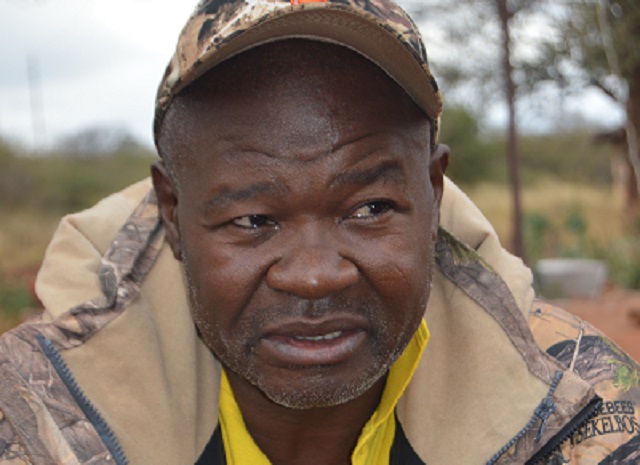

IN a bid to stop the Zipra strategy of massing as many regular troops as possible at Mlungushi, an old Zambian army cadet training centre, which was situated on the western shores of the Mlungushi Dam, about 100km from Lusaka, the Rhodesian forces carried several aerial attacks on the military facility. The camp had more than 5 000 well drilled regular forces.
The Zipra strategy was to have conventional troops seize the airfields at Hwange and Kariba and then pour troops into the country. One of the comrades who faced those bombings at Mlungushi and the almost week-long battle between the Zipra forces and Rhodesians just across in Zambia near Kariba is now the national secretary for security for war veterans Cde Dennis Ndlovu pseudo name Mpendulo Ncube. In an interview with our Assistant Editor Mkhululi Sibanda (MS) Cde Ndlovu gives an account of the battles. Below are excerpts of the interview:
MS: Cde Ndlovu you are one of the well known war veterans in Matabeleland South and you featured prominently during the Land Reform Programme. People might want to know who Dennis Ndlovu is, I mean give us a brief background of yourself.
Cde Ndlovu: I was born on 3 May 1958 at Singwambidzi area under Chief Maduna in Filabusi or Insiza District as it is called. I went to a nearby school which was St John’s then but now is called Vugwe. What is funny about this set-up is that the school is in the neighbouring district of Mberengwa, but just two kilometres from family’s homestead which falls under Insiza. In fact our village sits on the border between Insiza and Mberengwa. After my schooling at St John’s I then moved to Bulawayo where I stayed with my mother in Makokoba township.
MS: What then motivated the young Dennis Ndlovu to join the armed struggle?
Cde Ndlovu: When I was growing up at my rural home we used to listen to the elders lamenting the unjust rule of the Ian Smith regime. They would talk about those who had been detained because of their active participation in the liberation struggle, some of whom were locals like Nyamazana and Makhahlela Mkhwananzi. Also during the drinking sessions the elders would sing protest songs against the Rhodesian government. Some of the songs were “Amabhunu senzen’ saze saphelel’ entolongweni” (starts singing) and other songs were lamenting the payment of dog taxes and being forced to construct contour ridges (amakandiwa) at our fields.
So as a youngster I was touched by what I was hearing and then started developing an interest in politics. However, I was fully seized by the revolutionary spirit when the late Vice-President Joshua Nkomo addressed a rally at Avoca soon after his release from Gonakudzingwa. The crowd was big and the response from the big crowd was something else.
MS: Tell us more about the rally.
Cde Ndlovu: The crowd was so ecstatic that they wanted to lift the vehicle in which Dr Nkomo was driving in. He delivered a moving speech which turned almost everyone into a warrior while the response from the crowd turned the meeting into an electric atmosphere. From that day I vowed that I had to make a contribution in the fight against the colonial government.
MS: Then when did you leave the country to join the armed struggle? Take us through the circumstances that led to that decision.
Cde Ndlovu: As I said earlier on that at one point I moved to Bulawayo, that was when there was an incident which forced me to leave the country.
MS: Tell us about that incident.
Cde Ndlovu: What happened was that one day when I was walking in the city centre on a pavement there came a white boy riding his bicycle and people gave way to him. However, I did not give him the way so he bumped onto me and in anger I gave him a thorough beating and quickly fled from the scene. When I got home I told my mother what happened in town and she told me that I was in trouble as the police would come looking for me. I then went to the Wenela offices where I registered under those who wanted to work in the South African mines. I managed to leave the country before the police had located me.
In Wenela I worked for just one month after which I teamed up with a friend called Magagula and left for Botswana to join the armed struggle. That was in 1975.
MS: Tell us about your stay in Botswana.
Cde Ndlovu: In Botswana we first stayed in Lobatse where we reported our presence at the local police station. A Zapu representative by the name Cde Mpofu came and spoke to us. He then arranged our movement to Francistown where we found other cadres who were on their way to join the armed struggle in Zambia. We stayed in Botswana for sometime after which we were flown to Lusaka. From Lusaka we were driven in Zapu trucks to Nampundwe Transit Camp. In 1976 I was among the 2 001 troops who were chosen to undergo full military training at Mlungushi where we did both guerilla and conventional warfare.
At Mlungushi unlike at other Zipra camps where instructors were either Russian or Cuban, those in charge of us were Zambians with a few from the Zipra ranks such as Cdes Khupe and Marshal Mpofu who now works at Mhlahlandlela Government Complex in Bulawayo. We spent the whole of 1977 under-going training, it was an intensive military schooling exercise. We continued staying at Mlungushi as it was during the period where conventional battalions were being formed. It was the build-up to the final onslaught on the Rhodesian forces. Some of the comrades that I trained with were Cde Cobra who is an RSM for the army, Enoch Sibanda and Cde Dube who now lives in his rural home in Gwanda District.
MS: Any attacks on Mlungushi during your time there?
Cde Ndlovu: Several attacks were made on the camp and I was one of the cadres who survived those bombardments. It was difficult for the Rhodesians to fully penetrate that camp because it was heavily fortified and was occupied by well trained guerillas. In fact the bombings hardened us and we were no longer afraid of the sight of the Rhodesian jet fighters. That is why we were able to withstand the Rhodesian forces when we were deployed to the front just across the Zambezi River near Kariba in 1979.
MS: So you are one of the comrades who participated in that famous battle that took almost a week where Zipra forces under the command of now Retired Major-General Stanford Khumalo held their own against the Rhodesian Special Air Services, Rhodesian Light Infantry and the Air force?
Cde Ndlovu: Yes, I participated in that battle considered to be the most fiercely fought in the history of Zipra under the command of Madliwa ( Rtd Maj-Gen Stanford Khumalo). The battle started with the Rhodesian Air Force prodding our positions but all along we had been ready for them. That gave us the chance to show them who we were. We were dug in and our anti-air units were very good because they dealt very well with the Rhodesian air force as they repelled the wave of attacks the enemy directed at us. We managed to control the space while the ground troops held their own. I was part of the infantry and my company was under the command of Cde Lovemore. There were other two companies which were commanded by Spox Mthunzi and Jesus. Our battalion was a full conventional force as besides the anti-air units there were also engineers, the infantry and the intelligence officers.
MS: As the battle raged on for days how did you manage to eat?
Cde Ndlovu: We were cooking at night when there was a lull in the attacks. During the day the enemy would first send the air force to prod our positions after which the ground force would make follow-ups as the enemy tried to mop up the area and that was when we the infantry units would jump out of our trenches and face the enemy. When the enemy aircrafts came for bombings we the infantry would quickly duck for cover back into our trenches and leave the anti-air units to deal with them.
Unfortunately during the battle we lost one of the senior commanders, Cde Mahewu who was the artillery commander. I was hit by a splinter on the foot and it took me three months for it to heal. However, on the fifth day Cde Madliwa announced that we should make a tactical withdrawal as the Rhodesians in frustration after realising that they were losing the battle had started bombing the Zambian infrastructure such as bridges in a bid to cut off our supply lines and also to sabotage the Zambian economic activities.
MS: That was towards the ceasefire and after the announcement of the ceasefire where did you go?
Cde Ndlovu: After that battle I was taken to Kabwe Hospital for full treatment. When the war was over and we left Zambia our units went to Gwayi River Mine Assembly Point. I was there until the time of integration when I was sent to Guinea Fowl along the Shurugwi Road where I was attested into the Zimbabwe National Army as a sergeant. I served in the army as a quarter master for some years and then left to work in South Africa. I returned to the country around 1997.
MS: Now you are one of the political activists under Zanu-PF here in Insiza. When did you get into politics?
Cde Ndlovu: I took politics seriously in the run-up to the 2000 parliamentary elections. I realised as an ex-freedom fighter that the imperialists were bent on reversing the gains of the revolution through MDC so I had to put my head on the block and defend the revolution. I was also very active in the correction of the land imbalances here in Insiza. I led a number of farm occupations and I am proud of that because as revolutionaries we fought for the land. I also benefitted from the land reform exercise and I am a proud owner of 120ha plot where I am doing fairly well.


 Online Reporter