admin
admin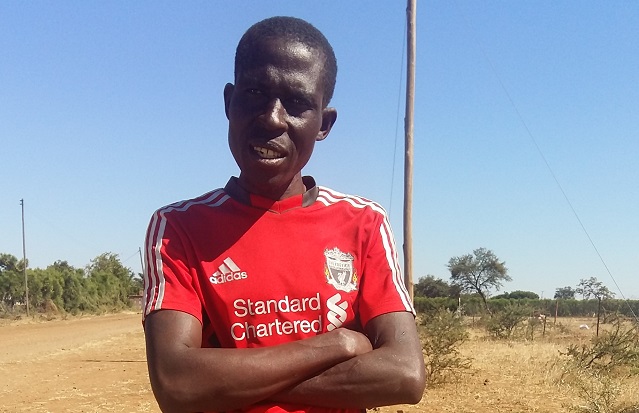

Tinomuda Chakanyuka
“A PROPHET is not without honour except in his own hometown. Could this Biblical maxim be true of the controversial witch-hunters popularly known as tsikamutandas?
These infamous witch sniffers traverse the length and breadth of the country on their witch hunt, flushing out goblins, sorcerers and voodoo among villagers. Interestingly or rather ironically a tsikamutanda hardly, if ever, conducts rituals in his home area. Criticism of the witch-hunters and their acts has thus often been premised on this observation. That is the case with the tsikamutandas who have set base in Ntabazinduna, Matabeleland North Province for the past five or so months on a mission to “rid the area of its evils”.
Sunday News has established that none of all the 15 witch-hunters that are camped at Ntabazinduna come from the area.
Some come from as far as Gokwe, Mberengwa, Mutoko and Marondera. If these witch-hunters are genuine, then why do they often, if not always, take their acts everywhere else but their home areas? Is it that there is more evil elsewhere and not among their kith and kin? Sceptics may quiz. Could these chaps be genuine witch-hunters but without honour in their own towns, or there are blatant crooks craft enough to take their act away from their kin for fear of being exposed?
An old Shona adage goes, “muroyi royera kure vedzinza vagokureverera”, directly translated to mean bewitch as far from your own community as possible so that your kin may testify in your defence. Sunday News recently caught up with 39-year-old Kumbulani Moyo, one of the witch-hunters operating in Ntabazinduna who comes from Gokwe’s Nembudziya area.
Moyo, whose trade name is “Gava” gave an insight into his work, how he was recruited into the practice and also dispelled some of the stereotypes associated with witch hunting. Gava is a Shona name for a jackal — an animal well known for its cowardly, nocturnal, and gregarious nature. Moyo’s nom de guerre could never be more apt. He explained why his kind often take their practice far from where they grew up.
“It’s difficult for people who watched you grow up and those you grew up with to appreciate your gift. The trickiest part is your motives can easily be misconstrued. Imagine if I flush out a goblin at my neighbour’s homestead, other villagers will suspect malice and accuse me of trying to settle personal scores. It’s easier to be appreciated if people don’t know you which is why most of us operate away from our home areas. If another tsikamutanda from a different area will come to my area they are easily accepted,” he reasoned.
Gava said he started his practice in 2001 as a 24-year-old errand boy for a tsikamutanda operating in Plumtree after his boss — Gejo identified a rare talent in him. As a member of the Christo 12 Apostles church Gava said he always had the gift of prophecy in him as a young boy, an attribute he says tickled Gejo.
“It all started when I was in Plumtree working for a tsikamutanda called Gejo who was operating in the area. My boss took me from Gokwe to assist him in his work as an errand boy. He told me that he had seen a rare talent in me and wanted me to become his protégé and so he started teaching me the practice of witch-hunting. With time I had graduated from being an errand boy to his assistant and apprentice. I could also lead rituals and flush out goblins,” said Gava.
Asked if he underwent some form of initiation ritual to join the tsikamutanda practice, Gava said, “There is no ritual. One simply must have that sort of gift which you nurture over time through guidance of more experienced witch-hunters”.
After his boss passed on around 2005, Gava continued on his own but later joined another crew called Wafa-wafa where he is one of the senior members in a squad of 15 witch-hunters. Wafa-wafa, Gava said, is a group of prophets and traditional healers who have joined forces against evil. He explained that the group is made up of tsikamutandas but chose the name Wafa-wafa to capture the risky nature of their practice.
“It’s a matter of life and death my brother. If a goblin defeats you then you are gone but if you are strong you will kill it, hence the name Wafa-wafa. We are all tsikamutandas but we just chose to have a unique name which captures the nature of our job.
In the group there are prophets and traditional healers who complement each other in their work.” But aren’t prophets and traditional healers like the Jews and Samaritans?
“The power comes from the same God, it’s just that we receive it through different avenues. Prophets get their power through Jesus Christ and traditional healers get theirs through ancestors. It is such an understanding that has seen us being able to work together complementing each other,” Gava explained.
The soft spoken tsikamutanda is proficient in Ndebele, Shona, Kalanga, Tonga and English an attribute he says helps him carry out his practice in most parts of the country without strain.
“I can easily communicate in all those languages which makes my work easy. Even if a demon manifest and starts speaking in English I can deal with it. Sometimes I double up as an interpreter in our group because of my ability to speak different languages,” said Gava.
While he acknowledges some rich pickings from witch hunting, Gava says for him it is more about ridding society of evil spirits than money. In his 15 years of practice Gava, a father of four, says he has been able to fend for his family, send his children to school and build a decent homestead in his home area – Gokwe.
“While for others this is a form of employment for me it is a calling. My priority is to fight evil spirits. Of course I have managed to lead a decent life from proceeds of the practice but for me that is not important,” he said.
Gava and his crew have since opened a butchery at Ntabazinduna business centre, to sell meat from cattle they are taking from villagers after allegedly helping them. For treatment of diseases, witch-sniffers demand payment in chickens or goats, while for exorcism they demand a cow per homestead. If one does not have livestock, they are forced to pay in cash.
Before they come into the area, which they often do at the request of traditional leaders, villagers are made to pay a mandatory $2 fee first. Gava dismissed claims that witch hunters intimidate people into surrendering their livestock and sometimes perform magic tricks to hoodwink innocent members of the public.
“When we come into an area we don’t force people to take part in our rituals. It remains individuals’ personal choice to take part or not. So these allegations that we steal from people are misplaced. We don’t use tricks or magic but power from God.
The goblins that we flush out are genuine, those snakes that we capture at people’s homesteads are real my friend, trust me,” he said.
For the past four months Gava and his colleagues have been camped in the Ntabazinduna and episodes of drama have never been in short supply. The team has built a makeshift shrine were multi-coloured clothes are distinctly hung around walls enough to send chills down anyone’s spine. At the entrance of the shrine is a wooden staff, which is a major tool of Gava’s trade.
Gava and his crew claim to have fought all sorts of evil in Ntabazinduna, from snakes that have sex with female community members, strange looking objects, demons that prevent spinsters from getting married and goblins that decimate families.
@irielyan



 Online Reporter